Choosing the right case erector is a strategic decision that impacts throughput, labor efficiency, uptime, and long-term packaging costs. While many machines may appear similar on the surface, the differences in performance, reliability, and flexibility can significantly affect real-world results. This guide outlines the three most important factors to consider during a case erector evaluation and provides practical insight to help operations and packaging leaders make confident automation decisions.
Table of Contents
- Why Case Erector Evaluation Matters
- Factor 1: Performance and Throughput
- Factor 2: Reliability and Durability
- Factor 3: Flexibility and Ease of Operation
- Additional Considerations Beyond the Core Factors
- Conclusion
- Frequently Asked Questions About Case Erector Evaluation
Why Case Erector Evaluation Matters
Case erecting automation often sits at the front of a packaging line. If it underperforms, the entire line suffers. If it is unreliable, downtime spreads across upstream and downstream processes. And if it lacks flexibility, changeovers become costly interruptions.
When evaluating how to choose a case erector, decision-makers should look beyond initial purchase price. The true value of a machine lies in how consistently it performs under real production conditions.
A thoughtful case erector evaluation focuses on three core factors:
- Performance and throughput
- Reliability and durability
- Flexibility and ease of operation
Balancing these criteria leads to better automation decisions and stronger long-term results.
For a broader overview of the operational advantages of automation, see our guide on how case erectors can benefit your company.
Factor 1: Performance and Throughput
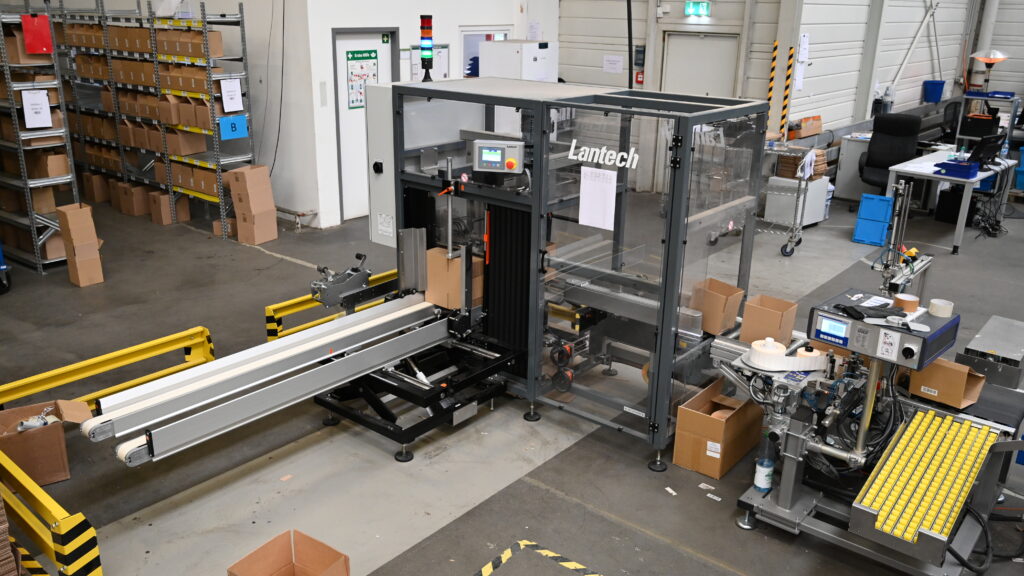
Performance is often the first metric teams consider — and for good reason. A case erector must keep pace with production demands without becoming a bottleneck.
Speed in Context
Throughput should not be evaluated in isolation. A machine rated for high cycles per minute must also maintain consistency under varying case sizes and operating conditions.
Ask:
- Can the machine reliably achieve its rated speed?
- Does performance drop during longer shifts?
- How does it handle fluctuating production volumes?
In many facilities, manual case forming averages around 2–3 cases per minute per operator. In higher-volume operations, multiple employees may be required to achieve 30 cases per minute. A properly sized automated case erector can deliver that output with far greater consistency and far less labor dependency.
In one real-world example, Bunnik Plants transitioned from manual case forming to automated case erecting and significantly improved output consistency while reducing labor demands by more than 40%.
Performance is not just about peak speed — it is about sustained output.
Consistency and Case Quality
A machine that runs quickly but produces poorly squared cases creates downstream issues. Cases that are not perfectly formed can cause sealing failures, misaligned packing, and product damage.
During a case erector evaluation, observe:
- Squareness of formed cases
- Consistency of bottom flap folding
- Stability of output under continuous operation
Consistent case quality directly supports packaging automation efficiency.
Matching Capacity to Growth
One of the most common mistakes in case erector buying considerations is undersizing equipment. A machine that meets today’s throughput may limit tomorrow’s expansion.
Consider projected production growth over the next three to five years. Investing in appropriate performance capacity today prevents costly retrofits later.
Factor 2: Reliability and Durability
Performance means little without reliability. Case erector reliability directly impacts uptime, labor planning, and total cost of ownership.
Uptime and Production Stability
Reliable case erecting automation minimizes:
- Unexpected stoppages
- Operator intervention
- Maintenance-related delays
Machines designed for real-world production environments should consistently deliver high uptime — ideally above 98% in properly maintained conditions.
During evaluation, ask:
- What is the documented uptime performance?
- How often are adjustments required?
- What is the average service interval?
Reliability affects more than output — it influences morale, scheduling, and customer delivery performance.
Build Quality and Component Selection
Durability begins with design. Look for:
- Heavy-duty frames
- Quality mechanical components
- Accessible wear parts
- Logical cable and pneumatic routing
Machines operating in manufacturing environments face vibration, dust, humidity, and constant use. A well-built case erector withstands these conditions without frequent realignment or recalibration.
Build quality reduces long-term repair costs and protects your investment.
Serviceability and Support
Reliability also depends on how quickly issues can be resolved. During a case erector evaluation, consider:
- Ease of access for maintenance
- Availability of spare parts
- Training requirements
- Service network responsiveness
A machine that is easy to maintain reduces downtime and simplifies technical training for in-house teams.
Case erector reliability is not just mechanical — it is operational.
Factor 3: Flexibility and Ease of Operation
Modern packaging environments demand adaptability. SKU proliferation, seasonal fluctuations, and varying case sizes require flexible equipment.
Changeover Efficiency
In facilities processing multiple case formats, changeover speed is critical. Lengthy or complex adjustments reduce line efficiency.
Evaluate:
- Average changeover time
- Number of manual adjustments required
- Clarity of format settings
In many modern systems, changeovers can be completed in minutes rather than extended downtime periods. Short changeovers protect throughput and reduce production disruption.
Operator-Friendly Design
Case erecting automation should simplify work — not complicate it.
Operator-friendly machines typically feature:
- Intuitive controls
- Clear adjustment points
- Logical access to magazines and glue systems
- Minimal physical strain during replenishment
Ease of operation reduces training time and lowers the risk of errors.
Facilities experiencing labor turnover benefit especially from equipment that can be learned quickly and operated confidently.
Adaptability to Line Integration
Even stand-alone systems must integrate smoothly into broader packaging workflows.
When evaluating how to choose a case erector, consider:
- Compatibility with upstream conveyors
- Alignment with downstream packing or sealing
- Space constraints and footprint
Compact footprint design is particularly important in facilities where floor space is limited.
Flexibility ensures the machine supports evolving production requirements rather than restricting them.
Additional Considerations Beyond the Core Factors
While performance, reliability, and flexibility form the foundation of any case erector evaluation, additional elements may influence the final decision.
Total Cost of Ownership
Evaluate not only purchase price, but:
- Labor savings potential
- Energy consumption
- Maintenance requirements
- Downtime costs
- Expected service life
Lower upfront cost does not always equate to lower lifetime cost.
To estimate potential labor savings based on your production rates, use our automatic case erector savings calculator.
Ergonomics and Workplace Safety
Manual case forming can involve repetitive motion, bending, and lifting. Automating this process improves ergonomics and reduces physical strain.
Look for features such as:
- Comfortable loading heights
- Accessible blank magazines
- Clear safety guarding
Improved safety contributes to long-term workforce stability.
Vendor Partnership
Finally, consider the supplier relationship. Strong technical support, training resources, and long-term parts availability contribute significantly to operational success.
A case erector is not simply a machine purchase — it is a long-term production partner.
Conclusion
Evaluating a case erector requires more than comparing specifications. The most successful automation decisions consider performance and throughput, reliability and durability, and flexibility and ease of operation together.
A machine that delivers consistent output, maintains high uptime, adapts to changing formats, and supports operators effectively will create long-term value across your packaging operations.
When conducting a case erector evaluation, focus on how the machine performs in real production environments — not just on paper. Prioritizing case erector performance, case erector reliability, and case erector flexibility leads to stronger packaging automation outcomes and more confident investment decisions.
Choosing the right case erector is not just about speed. It is about building a stable, efficient, and scalable packaging operation.
If you’re unsure which configuration best fits your production environment, take our short case erector selection quiz to identify the right type of machine for your operation.
FAQ
1. What should I consider when evaluating a case erector?
When conducting a case erector evaluation, focus on three primary factors: performance and throughput, reliability and durability, and flexibility and ease of operation. Performance ensures the machine can meet production demands. Reliability determines how consistently it operates without downtime. Flexibility allows the system to adapt to different case sizes and evolving production needs. Evaluating these elements together provides a clearer picture of long-term value than comparing purchase price alone.
2. How do I compare different case erectors?
To compare different case erectors effectively, look beyond cycle speed specifications. Assess how reliably each machine maintains output under real production conditions, how easy it is to change formats, and how accessible components are for maintenance. Request demonstrations, review uptime history, and evaluate service support availability. A structured comparison based on case erector performance, reliability, and flexibility provides a more meaningful evaluation than reviewing brochures alone.
3. Why is reliability important in a case erector?
Case erector reliability directly impacts production stability and total cost of ownership. An unreliable machine can cause frequent stoppages, increase labor intervention, and disrupt downstream packaging processes. High reliability supports consistent uptime — often above 98% in well-maintained Lantech systems — which reduces downtime costs and improves delivery performance. When evaluating case erecting automation, reliability is often the deciding factor in long-term success.
4. How does flexibility affect case erector performance?
Flexibility determines how easily a case erector adapts to different case sizes, SKU variations, and production changes. Machines with quick and intuitive changeovers minimize disruption and protect throughput. Flexible systems also support future growth and evolving packaging requirements. During a case erector evaluation, consider how adaptability and operator friendliness influence overall line efficiency and operational resilience.
5. Is throughput the most important factor when choosing a case erector?
Throughput is important, but it should not be the only factor when choosing a case erector. High speed is valuable only if it is consistent and sustainable. A machine that runs slightly slower but delivers superior reliability and flexibility may generate greater long-term value. The most effective case erector buying considerations balance throughput with durability, ease of operation, and total cost of ownership.