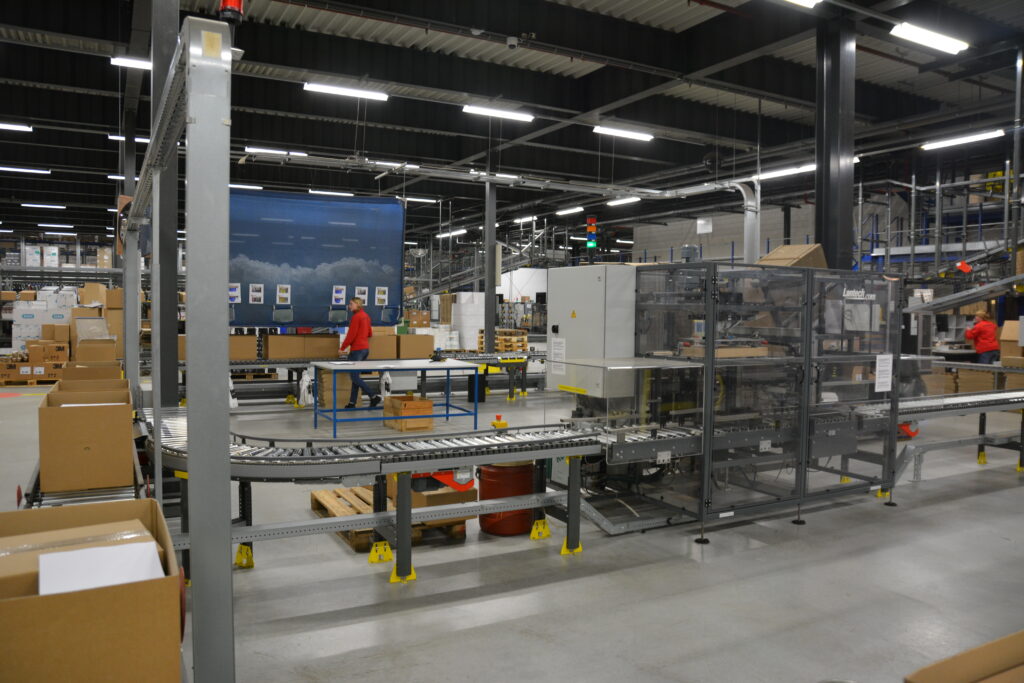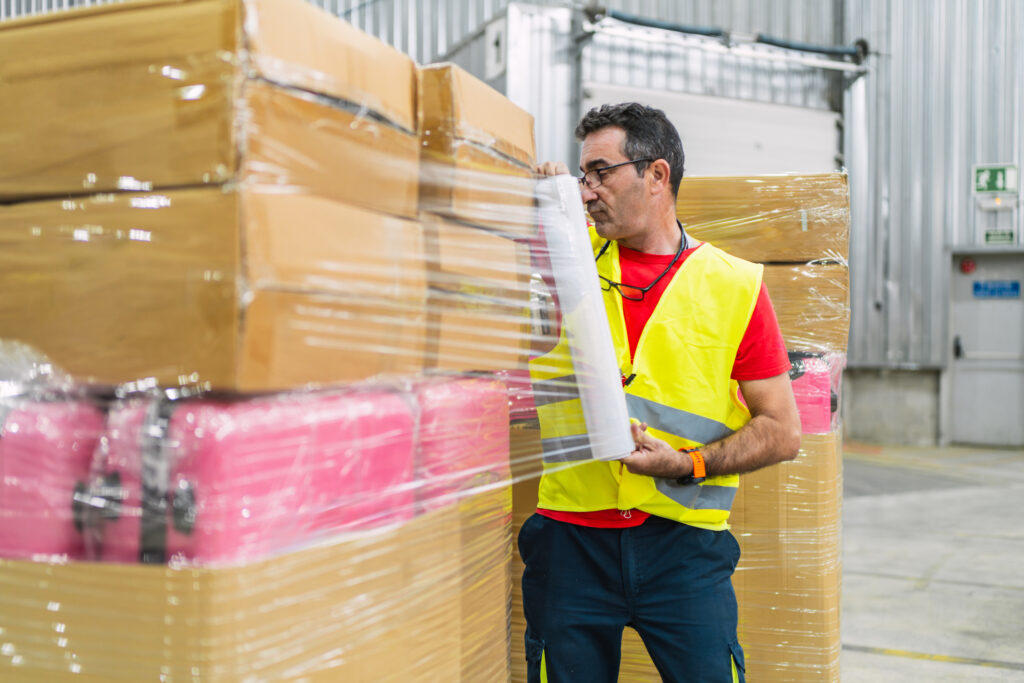
Consumer Packaged Goods (CPG) manufacturing environments operate at the intersection of high-speed production, fragile packaging, and strict quality requirements. From food and beverage to personal care, household goods, and cosmetics, CPG pallets must move quickly and safely through production, warehousing, and distribution — often under tight retailer compliance standards.
Yet many CPG facilities continue to struggle with pallet instability, damaged product, excessive film usage, and inconsistent wrapping performance. Lightweight packaging, mixed materials, and rapidly changing SKUs make these loads particularly sensitive to poor containment.
This is where proper containment force becomes critical. By measuring and controlling the force applied during stretch wrapping, CPG manufacturers can protect products, reduce film consumption, and achieve measurable ROI — without slowing production. This article explores how certified containment force, supported by Lantech LeanWrap® technologies such as Metered Film Delivery®, Load Guardian®, and Pallet Grip®, delivers predictable stability and financial returns across CPG packaging operations.
Table of Contents
- Why CPG Loads Are Hard to Stabilize
- Financial and Operational Impact of Poor Containment in CPG
- The Importance of Certified Containment Force in the CPG Industry
- Key Lantech Technologies That Improve ROI
- ROI Comparison Table
- Common CPG Load Scenarios and Solutions
- How to Implement Certified Containment in a CPG Facility
- Conclusion
- FAQs
Why CPG Loads Are Hard to Stabilize
CPG pallet loads present several structural challenges that increase instability risk:
- Lightweight packaging: Bottles, pouches, cartons, and thin corrugated cases deform easily when subjected to uneven force.
- Shifting center of gravity: Tall pallets with lightweight upper layers are prone to tipping if containment force is inconsistent.
- Multi-material pallets: Mixed combinations of corrugated, plastic, shrink film, and flexible packaging create uneven friction between layers.
- SKU variability: Frequent changeovers between products alter load dimensions and weight profiles throughout the day.
- Seasonal volume spikes: Peak production periods increase throughput demands, magnifying the impact of wrapping inconsistencies.
These factors make pallet stability in consumer goods more complex than in single-product manufacturing environments.
Financial and Operational Impact of Poor Containment in CPG
When containment force is not properly controlled, CPG manufacturers experience both visible and hidden costs:
- Crushed cartons and deformed packaging, leading to retailer rejections
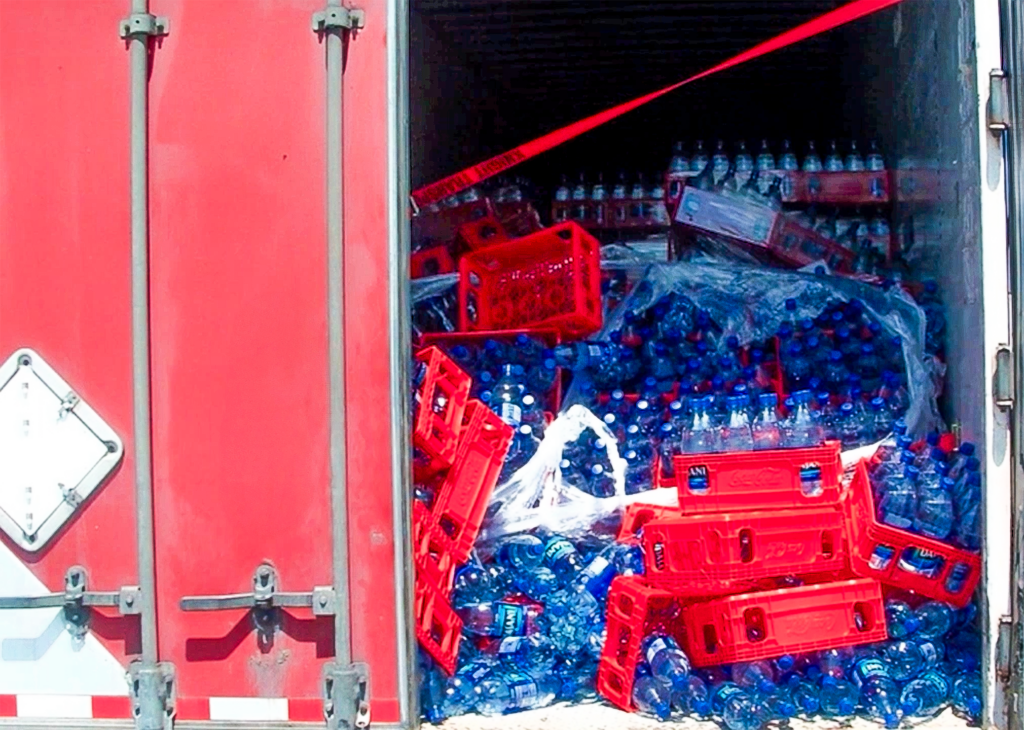
- Leaking bottles and damaged closures, especially in liquid products
- Increased chargebacks and compliance penalties
- Rework labor and line interruptions caused by unstable pallets
- Customer dissatisfaction and brand damage
To compensate, many plants apply extra wraps or tighter settings. This increases film usage but does not guarantee stability — especially for fragile packaging. The result is higher cost-per-pallet with inconsistent protection.
The Importance of Certified Containment Force in the CPG Industry
Certified containment force provides a structured approach to stabilizing CPG loads by:
- Applying the right amount of force, not excessive film
- Preventing product deformation caused by over-wrapping
- Ensuring repeatable results across shifts and SKUs
- Supporting compliance with retailer handling requirements
Lantech’s containment force recommendations emphasizes that safe-to-ship pallets are achieved by measuring and controlling force, rather than relying on visual inspection or operator judgment. This is especially important in CPG plants where packaging damage may not be immediately visible but can lead to downstream failures.
Key Lantech Technologies That Improve ROI
Metered Film Delivery
Metered Film Delivery is central to achieving optimal containment force. The system measures the perimeter of each pallet and delivers a precise length of film per revolution, ensuring consistent containment force regardless of pallet size or geometry.
In the Metered Film Delivery in the Food & Beverage Industry case study, this approach enabled a CPG operation to:
- Reduce film usage by 25%
- Improve load consistency across varying pallet sizes
- Maintain stable, safe-to-ship loads without over-wrapping
This film reduction resulted in a savings of $54,750 annually.
Load Guardian
Load Guardian standardizes wrap profiles by guiding operators through a structured setup process based on load characteristics. The system then applies consistent and appropriate wrap settings to achieve the target containment force.
For CPG plants, this means:
- Reduced reliance on operator experience
- Ensures safe-to-ship loads every time
- Consistent wrapping performance during high-throughput production and throughout shifts
Pallet Grip
Pallet Grip forms a reinforced film cable at the base of the pallet by rolling the bottom six inches of film, locking the load to the pallet. This is especially valuable for lightweight consumer goods that are prone to sliding.
Benefits include:
- Reduced pallet shift during forklift handling
- Improved stability for all loads, especially tall, lightweight loads
- Fewer load failures during transport and warehousing
ROI Comparison Table
| Metric | Before | After |
|---|---|---|
| Annual pallet volume | 350,000 | 350,000 |
| Film consumption | Baseline | 25% reduction |
| Annual film savings | — | $54,750/year |
| Wrap consistency | Variable | More repeatable/controlled |
| Damage / rework | Higher risk on fragile packaging | Reduced risk (containment + load-to-pallet lock guidance) |
Common CPG Load Scenarios and Solutions
Bottled and Shrink-Wrapped Beverages
Lightweight bottles and shrink film reduce interlayer friction. Metered Film Delivery ensures consistent force without crushing bottles, while Pallet Grip anchors the load.
Household and Cleaning Products
Tall cartons with uneven weights benefit from balanced containment force on all pallet sides, preventing lean and collapse.
Flexible Pouches and Cartons
Soft packaging deforms easily under excessive tension. Optimal load containment prevents over-wrapping while maintaining stability.
Mixed Case Pallets
SKU variability requires automated adjustment. Load Guardian ensures correct containment settings without manual trial-and-error.
How to Implement Optimal Load Containment in a CPG Facility
- Analyze load failures and damage reports
- Measure existing containment force
- Identify over-wrapping and under-wrapping patterns
- Standardize wrap profiles using automation
- Implement advanced stretch wrapping technology such as Metered Film Delivery, Load Guardian, and Pallet Grip
- Train operators on containment principles
- Document film savings, damage reduction, and ROI
This approach ensures improvements are repeatable and scalable across production lines.
Conclusion
For CPG manufacturers, certified containment force delivers one of the highest-impact, fastest-payback improvements available in packaging operations. By combining containment measurement with automated stretch wrapping technologies, plants can:
- Reduce film usage
- Protect fragile packaging
- Minimize damage and chargebacks
- Improve consistency during high-speed production
Certified containment transforms stretch wrapping into a controlled, engineering-driven process — delivering measurable ROI while supporting quality, safety, and brand integrity across the supply chain.
FAQ
1. Why are CPG pallets more prone to instability?
CPG pallets often combine lightweight packaging, tall stacking heights, and mixed materials such as corrugated cases, shrink film, flexible pouches, and plastic bottles. These characteristics reduce friction between layers and shift the center of gravity upward, increasing the likelihood of load movement, leaning, or collapse during handling and transport. Frequent SKU changeovers and seasonal volume spikes further increase variability, making consistent pallet stability difficult without measured containment force.
2. How does certified containment force improve product protection?
Certified containment force improves product protection by ensuring that the correct amount of stabilizing force is applied consistently to every pallet. Instead of relying on visual judgment or operator preference, containment force is measured and controlled to prevent both under-wrapping (which leads to shifting and tipping) and over-wrapping (which can crush or deform fragile packaging). This balance is especially critical for bottles, pouches, cartons, and lightweight consumer goods.
3. What ROI can CPG plants expect from automated stretch wrapping?
CPG plants typically achieve ROI through a combination of reduced film usage, lower damage rates, decreased rework labor, and fewer retailer chargebacks. Automated stretch wrapping with containment force control also improves uptime and consistency on high-speed lines. While exact savings depend on pallet volume and packaging mix, many operations see meaningful cost-per-pallet reductions and fast payback when film waste and damage-related losses are addressed together.
4. Which Lantech technologies are most beneficial for CPG packaging lines?
The most impactful technologies for CPG applications include:
- Metered Film Delivery, which delivers precise film length per wrap to maintain consistent containment force
- Load Guardian, which standardizes wrap profiles and removes operator guesswork
- Pallet Grip, which anchors the load to the pallet and reduces bottom-layer shifting
Together, these technologies support repeatable, measured containment across a wide range of CPG load types
5. How much film can CPG manufacturers save with Metered Film Delivery?
Metered Film Delivery reduces film waste by eliminating over-wrapping and applying only the film required to achieve the target containment force. In documented food and beverage applications on lantech.com, this approach has resulted in significant film savings while maintaining safe-to-ship loads.
To quantify savings precisely for this article, you may want to add:
– Baseline film usage per pallet
– Film reduction percentage observed after optimization
6. How do unstable CPG loads affect retailer chargebacks?
Unstable pallets increase the risk of damaged packaging, leaking products, crushed cartons, and compromised retail presentation. These issues often result in rejected shipments, chargebacks, or compliance penalties from retailers. Even when product damage is not immediately visible, instability can lead to downstream failures that negatively impact service levels, brand perception, and customer relationships.