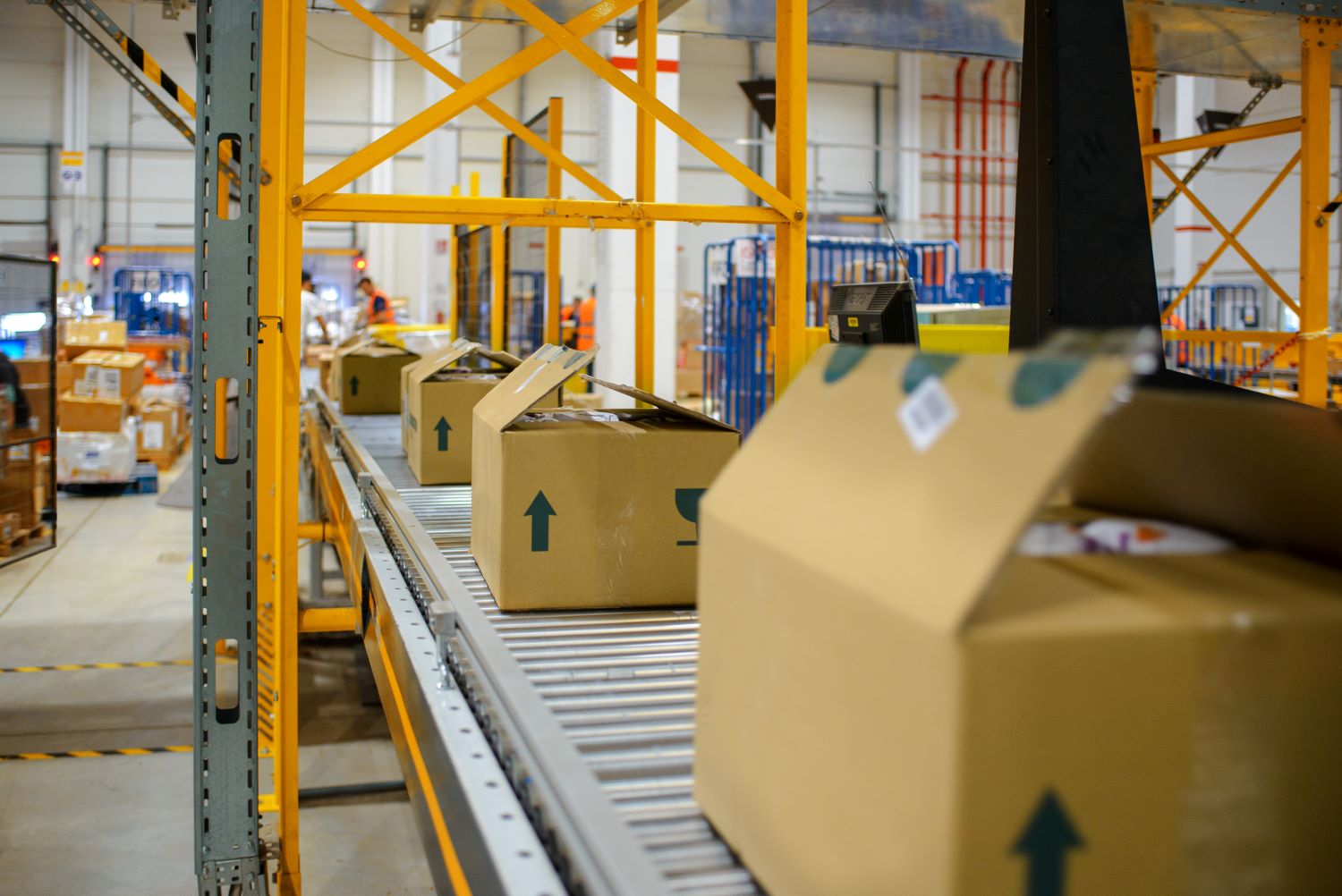
In today’s manufacturing environment, efficiency is a key challenge for businesses of all sizes. This article will be useful for managers, technologists, and analysts seeking to optimize packaging processes. It discusses the importance of packaging automation, its benefits for business, and implementation options. Readers will learn which technologies to use, who they are best suited for, and why automation is important for competitiveness.
- This article will help you understand who will benefit most from packaging automation.
- You will learn about the key technologies that make up automated packaging systems.
- You will find out how packaging automation improves production efficiency.
Table of Contents
- What is packaging automation?
- Key advantages of packaging automation
- Types of packaging automation equipment
- Cost savings from automation
- Real-life examples of packaging automation implementation
- Conclusion
What is packaging automation?
Packaging automation is a set of solutions that includes the use of machines, robotics, and software to automatically perform packaging operations, replacing manual labor. Automated packaging systems allow for quick and accurate dosing, sealing, labeling, marking, sealing, and other operations with minimal human involvement. Automated packaging systems include packaging forming machines, product stacking robots, labelers, sealing systems, control scanners, ERP integration, and control modules. This approach allows you to standardize processes, reduce errors, improve hygiene and safety, and ensure high productivity.
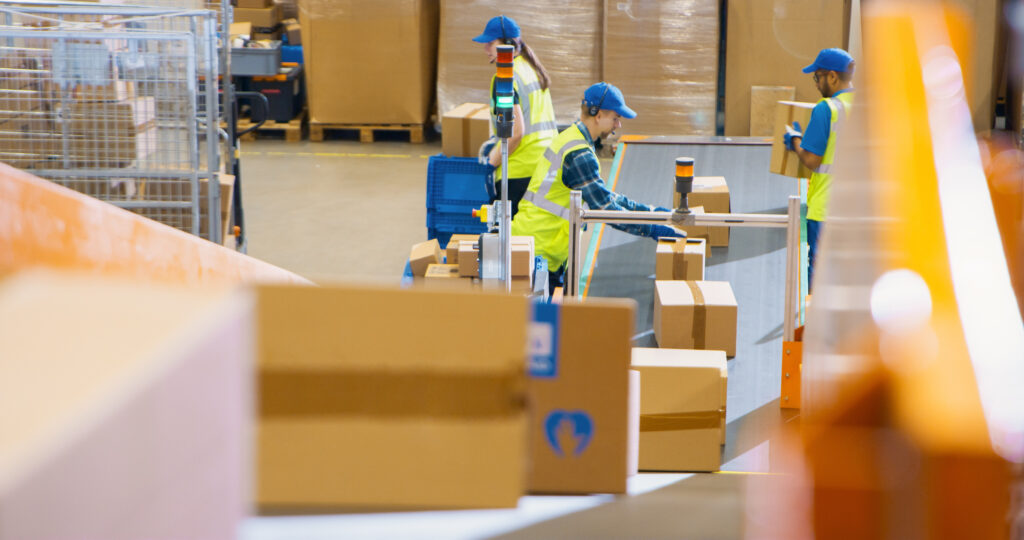
The automated process works according to a clear algorithm: first, the machine receives the product (for example, on a conveyor), then the packaging is formed or dosed, followed by sealing or sealing, labeling, and quality control. Special modules scan barcodes or QR codes, check the weight, label compliance, and tightness, and send the data to the central accounting system. The system can be easily adapted to different packaging formats, product volumes, and line speeds—from several dozen to hundreds of units per minute. This technical solution is particularly effective for large batches, high standardization, or strict hygiene requirements.
List of basic equipment used in packaging automation systems:
- Case erectors
- Sealing/sealing machines
- Labelers
- Case sealers, palletizers
- Pallet wrapping machines
Key advantages of packaging automation
Packaging automation provides a number of advantages that directly affect economic efficiency, product quality, and production safety. It allows you to optimize resources, reduce human error, and ensure consistently high productivity. Both large manufacturers and medium-sized enterprises are interested in implementing automated solutions, as even partial automation can lead to significant improvements in business performance.
In addition to the direct economic effect, automation helps to achieve high precision in operations, improve repeatability, and ensure consistent quality regardless of personnel changes or production shifts. It also makes it easier to scale production—all you need to do is upgrade your equipment or change settings without hiring additional employees. This is especially relevant in conditions of seasonal fluctuations in demand or a shortage of qualified personnel.
- Reduced labor costs – automated lines require fewer operators, reducing training costs, social benefits, and working hours. In addition, dependence on the human factor is reduced, making production more stable and predictable.
- Reduction of waste and errors – automatic control reduces the number of defective units, incorrect labeling, or packaging. This reduces rework costs and reduces the volume of scrapped products.
- Increased throughput – machines operate without stopping, speed up packaging, and allow large volumes to be processed in a short time. Automation is particularly effective for high-speed lines or multi-shift operations.
- Improved quality control – built-in scanning, weighing, and parameter checking systems ensure that each unit meets established standards. This increases customer confidence and allows for effective certification audits.
Types of packaging automation equipment
Automating packaging processes requires specialized equipment adapted to the requirements of a particular production facility. The choice depends on the type of product, line speed, packaging conditions, and production scale. Below are the main types of equipment, with an explanation of their functions and optimal areas of application.
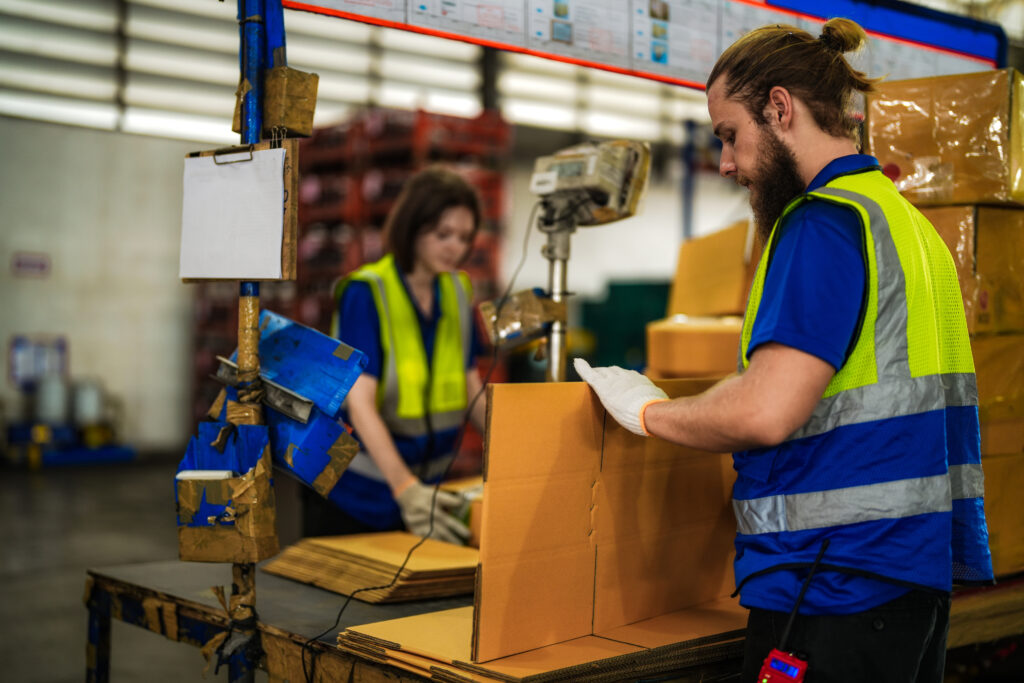
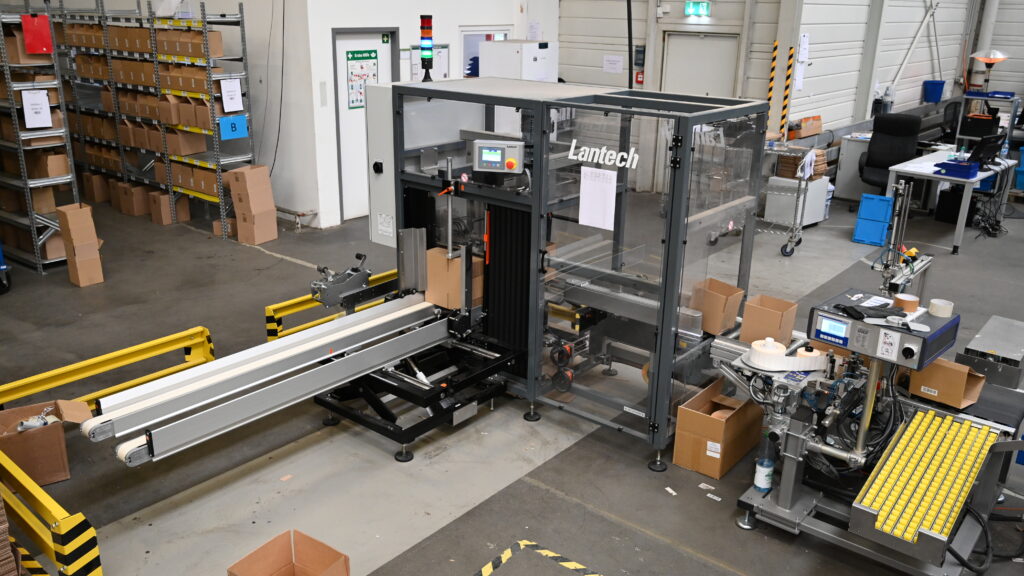
- Case Erectors: used to automatically assemble cardboard boxes from flat blanks. This speeds up the preparation of packaging material and minimizes operator intervention. Case erectors can deliver strong payback in almost any environment where blank cases need to be erected—not only in high-volume, highly standardized operations. With a wide range of machine types and configurations available, they can be tailored to handle varying levels of complexity and specific process requirements across many different production lines.
- Case Sealers/sealing machines: used in the final stage of packaging to securely close boxes, bags, packages, or trays. They can use heat sealing, glue, or tape. Ideal for food, pharmaceutical, cosmetic, and household goods where product integrity and preservation are important.
- Labelers: apply labels, barcodes, or QR codes to packaging with high accuracy and speed. They are used to mark products in accordance with traceability standards, which are important in the food, pharmaceutical, and logistics sectors. Some models integrate with databases to automatically update label information.
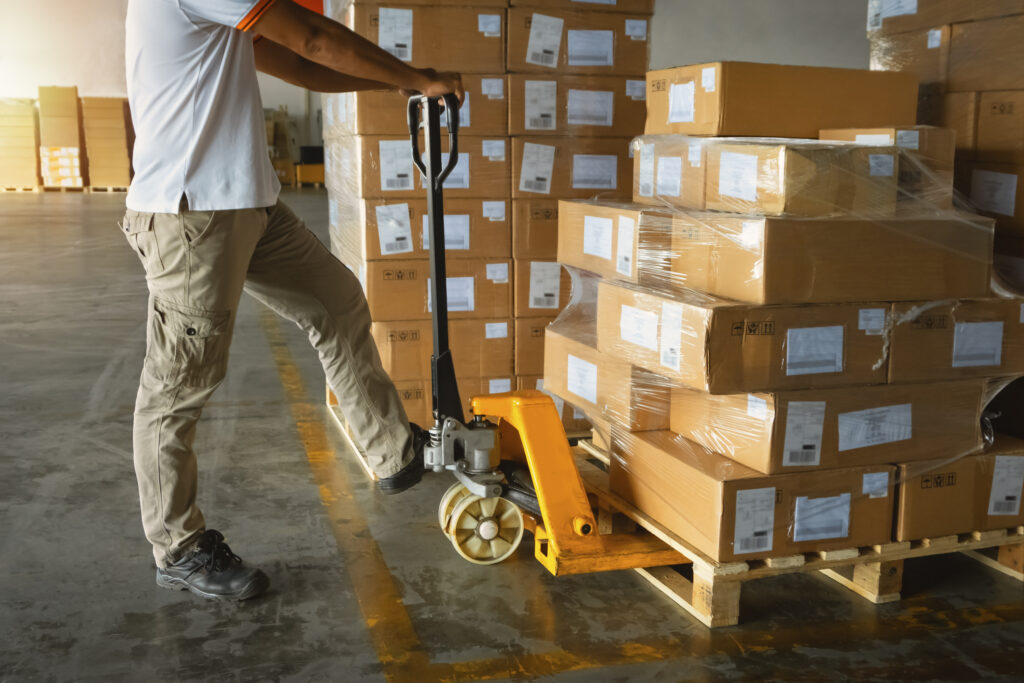
- Palletizers: designed for mechanically stacking products into boxes or on pallets. They reduce the workload on employees, speed up the process, and ensure stable stacking. They are often used in large warehouses, distribution centers, and high-volume manufacturing.
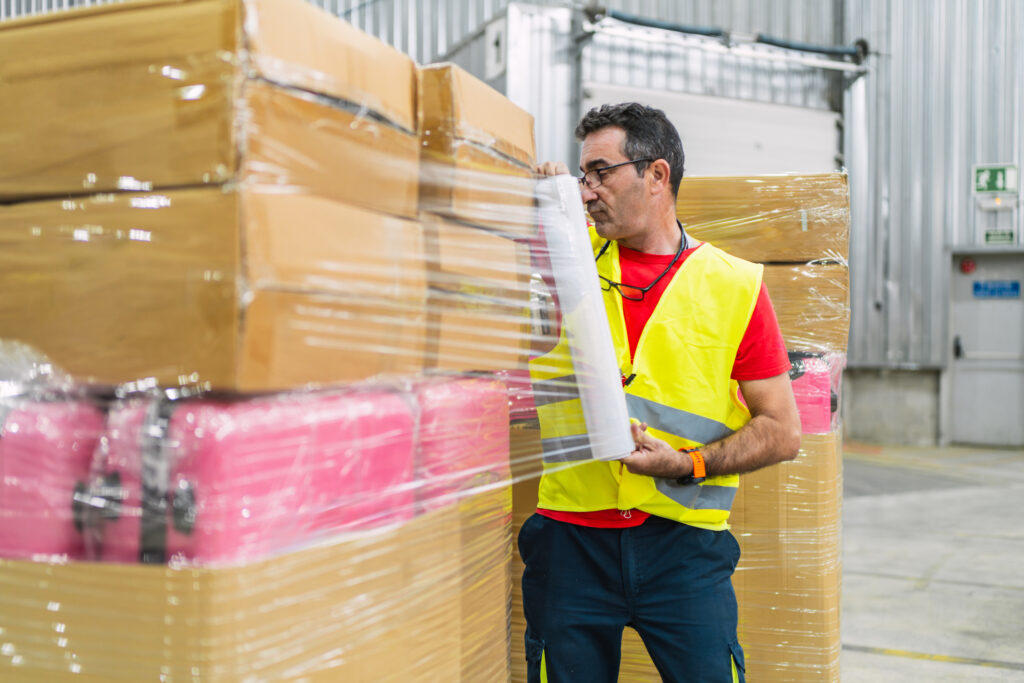
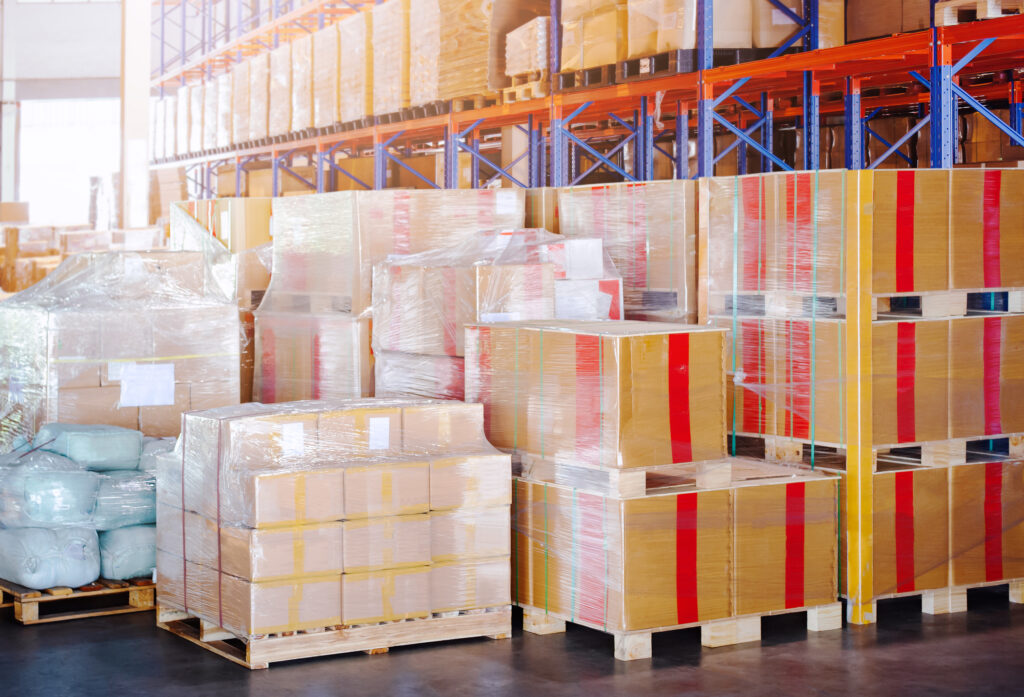
- Pallet Wrappers / Stretch Wrappers: used to apply stretch film to stabilize loads on pallets for transport. Their primary purpose is to keep products securely contained so they can move from point A to point B safely, without shifting or damage caused by transit movement. Stretch wrappers add value in almost any operation where pallet loads need to be stabilized—not only in high-volume environments. With a wide range of wrapper types and configuration options available, they can be matched to different load characteristics, throughput levels, and process requirements to ensure consistent, repeatable load containment across diverse applications.
- Integrated systems: these are comprehensive solutions that combine several functions – container forming, packaging, sealing, labeling, sorting, and palletizing. They are best suited for large-scale serial production, where full automation and synchronization of all stages of the process are important.
- Checkweighers and scanners: installed at the final stage of the line for automatic weighing of products and barcode verification. They are used to prevent errors and defects, as well as to collect statistical data on production.
- Manipulators and Pick-and-Place systems: designed for the precise movement of products from one stage to another. Most often used in electronics, pharmaceuticals, cosmetics, and small parts processing.
Cost savings from automation
Some packaging automation requires a significant upfront investment, including equipment purchase, integration, and staff training. However, these investments often begin to pay back quickly—driven first and foremost by reduced labor requirements. By automating repetitive, manual tasks, companies can reallocate labor to higher-value activities, reduce dependence on hard-to-staff roles, and stabilize operations in tight labor markets. Additional early savings come from improved consistency, fewer handling-related disruptions, and more predictable line performance.
In the medium and long term, automation further drives cost savings through increased uptime and productivity. Equipment can operate reliably across extended shifts, delivering consistent throughput with less unplanned downtime and time loss. Material costs are reduced through more precise control, waste minimization, and optimized use of packaging components. Over time, maintenance costs are often lower than the ongoing expense of recruiting and training operators—particularly as processes and technologies evolve. Consistent, high-quality packaging also helps reduce damage, returns, and complaints, supporting stronger financial performance and brand reputation.
Real-life examples of packaging automation implementation
Case study — healthcare product packaging: A healthcare products manufacturer implemented Lantech case erectors and case sealers across eleven packaging lines, automating the formerly manual box forming and sealing tasks. This automation helped reduce operating costs by an estimated $750,000 per year while eliminating ergonomic risks associated with repetitive case forming. Read more of this story here.
Case study — film reduction in food & beverage: In the food and beverage sector, a high-volume operation reduced its annual stretch film consumption by 25% by deploying a Lantech stretch wrapping system equipped with advanced film delivery technology. That translated to a savings of $54,750 annually—a great example of packaging automation delivering both labor reduction and material cost benefits. Read more of this story here.
Case study — labor optimization in warehouse logistics: A warehouse logistics provider previously relied on multiple employees to hand wrap pallet loads. After installing a Lantech S300 Semi-Automatic Stretch Wrapper, the operation significantly increased productivity, achieving a 40% reduction in wrap time. This improvement allowed pallet loads to move through the wrapping station faster and more consistently, supporting higher throughput while reducing operator involvement and bottlenecks in outbound shipping. Read more of this story here.
Case study — stretch wrapping for high throughput: In a high-throughput production environment, a manufacturer implemented a Lantech automated stretch wrapping solution to improve load quality and line efficiency. As a result, the company was able to increase production speeds, achieve a consistent, sustained containment force, and reduce stretch film usage per load by 26%. These gains improved outbound flow while lowering material costs and ensuring repeatable, safe-to-ship loads at higher operating speeds. Read more of this story here.
Conclusion
Packaging automation is a strategic investment in improving the efficiency, quality, and safety of production processes. The use of automated systems allows you to standardize operations, reduce losses and costs, speed up throughput, and improve customer service. Although the initial costs are significant, the long-term effect in the form of reduced costs, production stability, and competitive advantages makes this investment profitable.
FAQ
1. What is packaging automation?
Packaging automation is the use of machines and software to replace manual operations in the packaging process, ensuring speed and accuracy.
2. What technologies are included in packaging automation?
Typical packaging automation solutions include box formers or case erectors, sealers, labelers, palletizers, pallet wrappers, and integration with accounting systems.
3. Is it profitable to automate small-scale production?
Yes, even for small businesses, automating can be profitable if there are standardized products and repetitive operations.
4. How long does it take to recoup the investment?
Usually from several months to several years, depending on the scale, level of automation, and production volumes.
5. Is it possible to implement automation gradually?
Yes, a phased approach allows you to start with one process and gradually expand the system, reducing risks and optimizing investments.