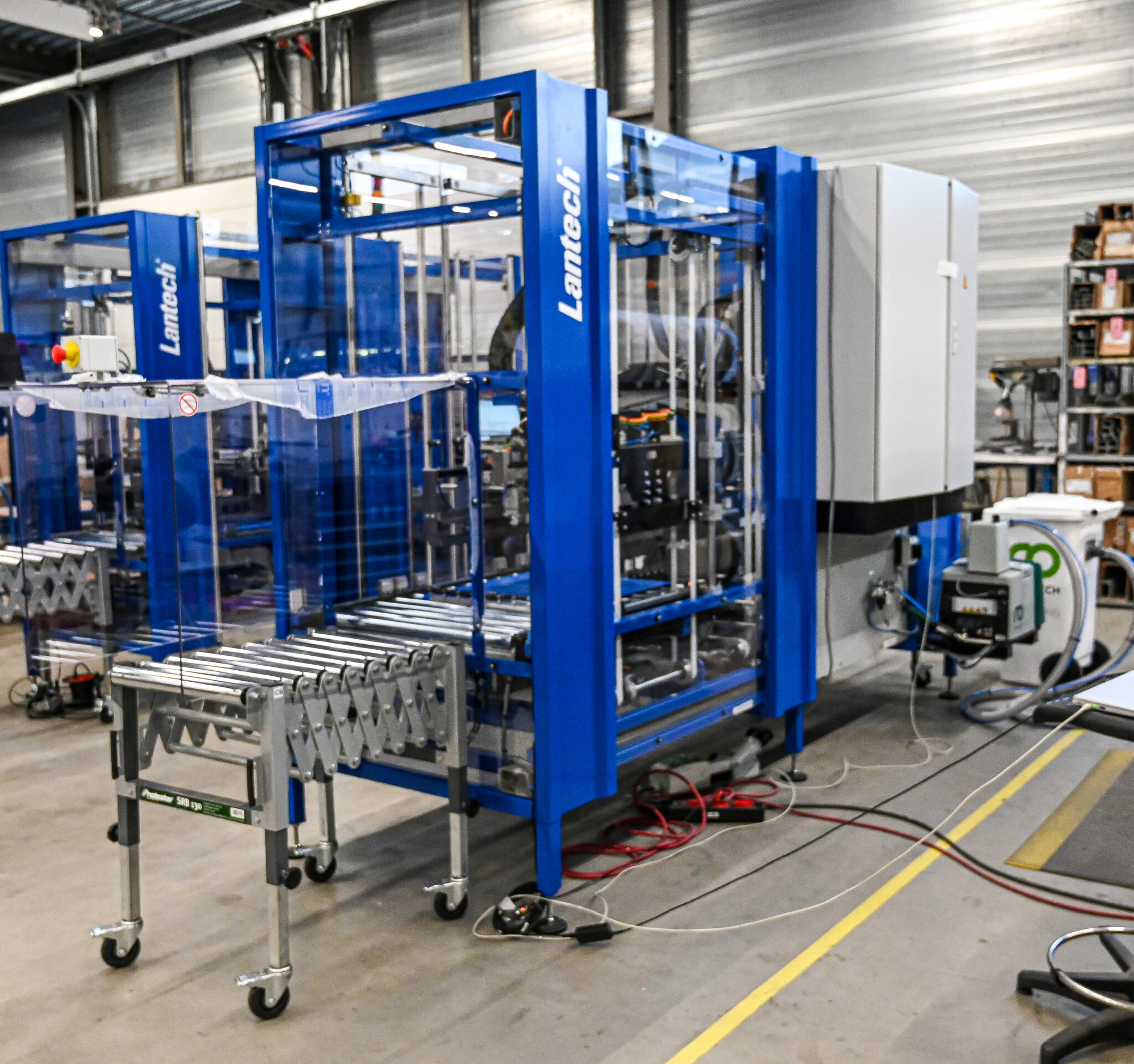
In modern packaging environments, leaders are balancing throughput expectations, workforce constraints, and operational risk, and case sealing is often one of the first processes where those pressures collide.
Warehouses, manufacturing plants, and fulfillment centers are under constant pressure to do more with fewer people. Hiring is difficult, retention is unpredictable, and repetitive manual tasks increase the risk of fatigue and injury. In this environment, even simple processes become bottlenecks when they rely on consistent human availability.
Case sealing is one of those processes.
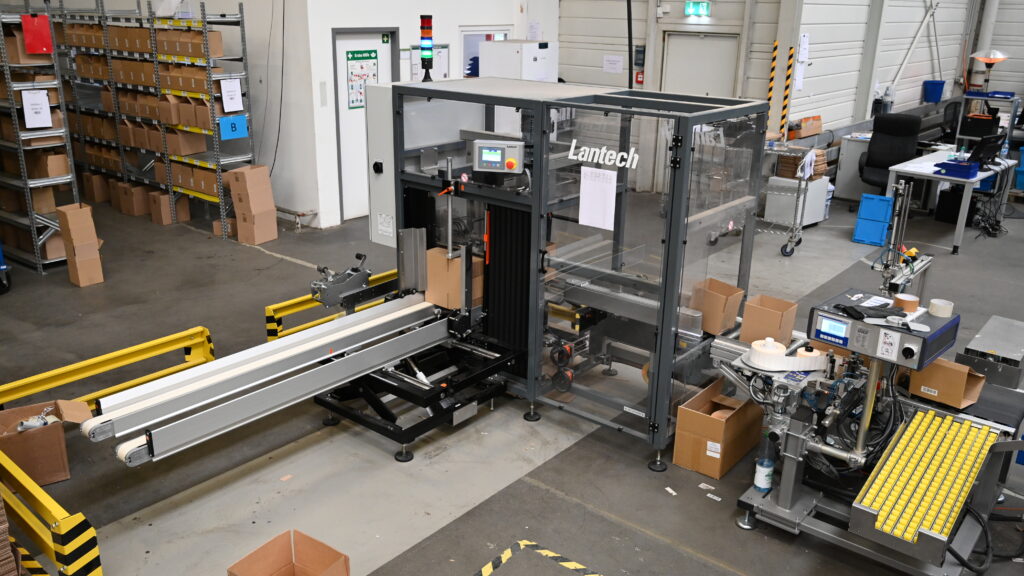
Folding box flaps and applying tape is a simple task, but it is also tedious, time-consuming, and repetitive. It ties up labor resources that could be used for higher-value work and exposes operators to repetitive-motion risks. This is the primary problem that a Lantech case sealer is designed to solve.
This Lantech case sealer review focuses on the real reasons customers move to automatic case sealing: labor challenges first, with consistency, reliability, and tape usage improvements as important — but secondary — advantages.
Table of Contents
- The Most Common Case Sealing Problems in Packaging Operations
- How Lantech Case Sealers Solve Labor Challenges
- Key Features That Enable Reliable, Hands-Off Operation
- Performance and Operational Benefits Beyond Labor
- Applications Across Industries
- Choosing the Right Lantech Case Sealer
- ROI and Cost Benefits of Automated Case Sealing
- Conclusion
- FAQs
The Most Common Case Sealing Problems in Packaging Operations
Labor Availability and Utilization
The most common reason operations evaluate automated case sealing is simple: they cannot afford to dedicate people to sealing boxes anymore.
In many facilities, case sealing becomes a single-purpose job:
- Folding flaps
- Either taping or guiding boxes into a semi-automatic sealer
- Monitoring tape application
This role adds little strategic value, yet it consumes hours of labor every shift. As labor markets tighten, assigning people to repetitive, low-skill tasks becomes increasingly difficult to justify.
Repetitive Motion and Operator Risk
Manual case sealing requires thousands of repeated movements per shift:
- Folding flaps
- Reaching
- Pressing tape
Over time, this creates fatigue and increases the risk of repetitive-motion injuries. While case sealing is not complex, it is physically demanding when performed continuously.
Automating this task removes unnecessary strain from operators and supports safer, more sustainable work environments.
Inconsistent Output from Manual Processes
When people perform repetitive tasks all day, variability is inevitable. With manual sealing:
- Tape length varies from box to box
- Tape placement is inconsistent
- Operators compensate by adding extra tape
While these issues matter operationally, they are typically symptoms of labor dependency, not the core problem.
Bottlenecks in Otherwise Automated Lines
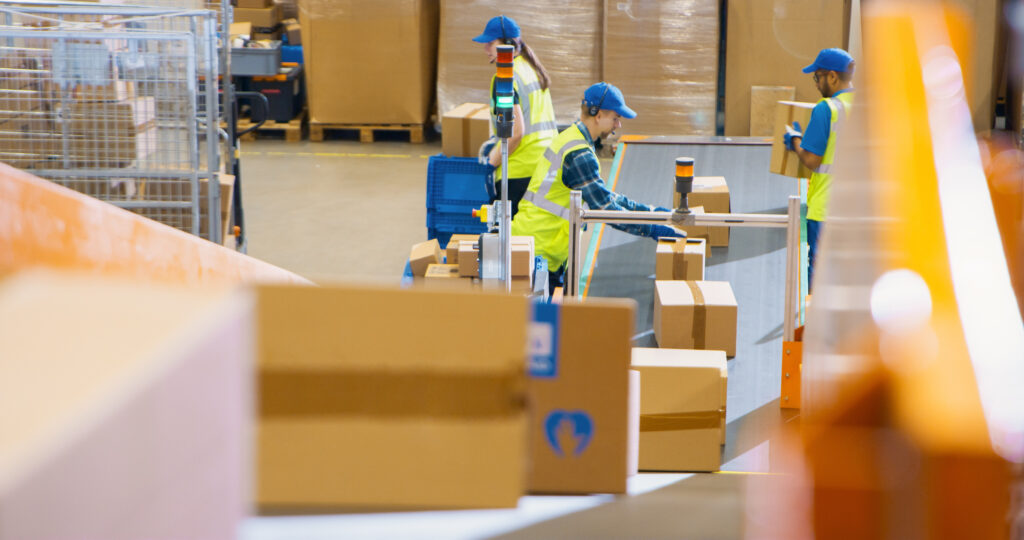
In facilities with upstream automation — such as case erecting, packing, or labeling — manual sealing often becomes the weakest link. When boxes move away from the pack station, operators must walk, wait, or queue cases just to fold flaps and seal them.
This creates congestion, idle time, and inefficiency in systems that are otherwise designed for flow.
How Lantech Case Sealers Solve Labor Challenges
A Lantech automatic case sealer provides automation for a task that is simple — but not worth a person’s time.
Removing People from Low-Value Work
The primary value of an automatic case sealer is that no one needs to be there to close flaps and apply tape. The machine performs the same function, every time, without fatigue or variation.
This allows operations to:
- Reassign labor to higher-value tasks
- Reduce dependency on hard-to-fill positions
- Stabilize staffing requirements across shifts
For many customers, this labor reallocation alone justifies the investment.
Automation Where It Matters Most
Case sealing is a perfect candidate for automation because:
- The task is repetitive
- The process is predictable
- The outcome must be consistent
By automating sealing, companies eliminate one of the most labor-intensive — yet least value-added — steps at the end of the line.
Supporting Flow Instead of Interrupting It
Automatic case sealers can integrate naturally into conveyorized systems. Boxes move through the sealing process without stopping, waiting, or being manually handled.
This is especially important when there is physical distance between packing and sealing or when multiple packers feed a shared line.
Key Features That Support Reliability and Ease of Use
Lantech case sealers are designed around a simple idea: if a machine is easy to use and reliable, it does not require constant attention.
Total Control System: Reliability by Design
The Total Control System is the foundation of all Lantech case, tray and lid handling equipment performance. Rather than relying on complex adjustments or constant operator intervention, the machine controls the sealing process mechanically and predictably which:
- Minimizes downtime: Quick changeover between different case sizes, zero machine jams, reliable and easy to use
- Reduces waste: Overcomes case variations and poor construction of blanks so all cases can be used
- Forms and maintains square cases: Forms perfectly square cases and keeps them square, so they pack, stack and protect products better.
This results in:
- Low jam rates
- Consistent performance across shifts
- Minimal troubleshooting
Designed for Seamless Line Integration
Lantech case sealers are designed to integrate easily into both upstream and downstream automation, making them a natural fit within fully or partially automated packaging lines. Whether positioned after an automatic case erector, a packing station, or before labeling and palletizing, the machines are built to communicate cleanly with conveyors and adjacent equipment.
Their compact footprint, predictable case handling, and consistent cycle timing allow them to slot into existing layouts without creating bottlenecks or requiring extensive line redesign. As operations add automation in stages, Lantech case sealers support that evolution—helping maintain flow, reduce manual handoffs, and ensure the end-of-line process keeps pace with upstream throughput.
Compact Footprint
Space is often limited at the end of a packaging line. Lantech case sealers are designed with a compact footprint, making them easier to integrate without reconfiguring large sections of the facility.
This allows automation to be added without major layout changes in many cases.
Easy-to-Use Controls
Case sealing does not have to require specialized technical skills. Operators interact with Lantech sealers through intuitive controls designed for quick setup and straightforward operation.
This reduces:
- Training time
- Setup errors
- Dependence on highly skilled labor
Performance and Operational Benefits (Beyond Labor)
While labor is the primary driver, automatic case sealing delivers additional advantages that improve overall operation.
Consistent Seal Quality
Each case receives the same tape application:
- Same length
- Same placement
- Same pressure
This consistency improves downstream handling and shipping reliability.
Controlled Tape Usage
Mechanical application removes the variability of hand taping. Operators no longer compensate for uncertainty by adding extra tape, which helps stabilize tape consumption over time.
While tape savings alone rarely justify automation, controlled usage is a meaningful secondary benefit.
Reduced Downtime from Jams
Proper case handling and alignment significantly reduce the likelihood of misfeeds and jams. Fewer interruptions mean smoother flow and less reactive maintenance.
Sustainable Workflows
By removing people from repetitive sealing tasks, operations can design roles that are less physically demanding and more engaging, supporting long-term workforce sustainability.
Applications Across Industries
Automatic case sealing is used wherever labor efficiency and consistency matter:
E-Commerce and Fulfillment Centers
- High labor turnover
- Long conveyor runs
- High volume of repetitive sealing
Food and Beverage
- Continuous operation
- Consistency requirements
- Labor-intensive end-of-line processes
Manufacturing and Distribution
- Mixed automation environments
- Need to align upstream and downstream processes
- Labor reallocation priorities
Pharmaceuticals and Consumer Goods
- Predictable processes
- Emphasis on consistency and reliability
Choosing the Right Lantech Case Sealer
When selecting a Lantech case sealer, the primary consideration should still be how the machine will help solve labor challenges on your line — freeing up operators from repetitive flap-folding and taping so they can contribute to higher-value tasks. Beyond that core business driver, key technical criteria help match the right machine to your throughput requirements, box variability, and existing automation infrastructure.
Selection Criteria
Throughput Needs Determine how many cases per minute your line must seal. Throughput influences whether a basic automatic sealer or a more advanced model with flexible handling is appropriate.
Case Size Range Standard machines handle a set range of case widths, heights, and lengths. If your operation runs a mix of box sizes, models with random size handling can eliminate manual format changeovers.
Integration with Automation If your packing line already has conveyors, case erectors, or labeling systems, choose a sealer that will integrate smoothly, minimizing idle labor time between stations.
Flexibility vs. Simplicity Some models provide robust automation for a wide variety of case sizes and lines — ideal for fast-moving distribution centers — while others focus on reliable, straightforward sealing at a fixed format range.
Tape vs. Hot Melt Options While tape is common, some operations benefit from optional glue (hot melt) sealing depending on packaging requirements and material preferences.
Lantech CS300 — Reliable Workhorse for Standard Sealing
The CS300 is the foundational fully automatic case sealer in the Lantech lineup, built to automate repetitive case sealing and eliminate manual labor at the end of the line. It reliably folds flaps and applies tape at speeds up to about 30 cases per minute (depending on box size), covering a broad range of typical case dimensions.
Best for:
- Operations with stable case sizes
- Facilities targeting labor elimination and duty reassignment
- Simple conveyor lines with predictable box flow and little customization
Key strengths:
- Compact footprint for easy integration
- High throughput for most standard case sealing needs
- Fully automatic flap folding and tape closure eliminates repetitive tasks traditionally done by operators
Lantech CS1000 — Customizable and Expanded Case Range
The CS1000 builds on the CS300’s capabilities with expanded configurability and options, including the ability to handle a wider range of formats and seal with either tape or hot melt adhesive. It also offers the same reliable throughput of up to 30 cases per minute, but with greater flexibility for mixed packaging needs.
Best for:
- Packaging lines that plan to put the sealer as part of an automated line and need custom controls
- Operations that might benefit from hot melt closure in addition to tape
Key strengths:
- Tape or hot melt options support different material and seal preferences
- Customizable format settings improve flexibility without manual intervention
- Reliable automation that continues to reduce labor dependency
Lantech CS Random — Flexible Random Case Handling
In many fulfillment centers and distribution environments, case sizes vary frequently, and traditional automatic sealers require manual changeovers to adjust to each size. The CS Random model addresses this directly: it automatically detects and adjusts to mixed case sizes as they arrive at the sealer.
Best for:
- Operations running mixed box sizes without predictable batches
- Facilities where manual format changes would otherwise consume labor and time
- Packaging lines that serve multiple product streams into a single end-of-line
Key strengths:
- Automatic size detection and format adjustment eliminate manual intervention between different box runs
- Maintains consistent sealing performance across variable case runs
- Ideal for dynamic e-commerce or multi-SKU environments
Lantech CS Random High Speed — High-Volume Random Sealing
The CS Random High Speed is designed for operations that not only require flexible size handling but also sustain elevated throughput, configurable up to about 25 cases per minute with random size input — even when multiple packaging lines merge for sealing.
Best for:
- High-volume distribution centers with mixed case formats
- Facilities that need automated sizing and reliable performance at elevated speeds
- Lines where multiple conveyors feed into a shared sealing station
Key strengths:
- High-speed automatic adjustment to case variability reduces both labor and cycle time
- Communication with upstream systems supports smoother flow and integration
- Supports tape or hot melt sealing with modular options
Match Machine Capabilities with Labor Strategy
Across all models, the core benefit remains the same: taking repetitive, low-value work off your labor roster and embedding consistent automation instead. Whether your line runs consistent case sizes or needs agility with random formats, Lantech offers sealers that align with your automation maturity and workforce strategy.
- CS300 and CS1000 are great starting points for operators focused on removing manual sealing tasks and reclaiming labor time.
- CS Random is ideal when labor challenges are compounded by box variety.
- CS Random High Speed suits environments where both labor optimization and high throughput matter.
Each configuration allows you to prioritize labor relief while retaining the secondary benefits of improved seal consistency and reduced tape variation — but the primary ROI driver remains labor enablement and risk reduction.
ROI and Cost Benefits
The strongest ROI case for a Lantech case sealer is labor.
Labor Reallocation
Removing even one repetitive, single-purpose role can generate rapid payback — often in months rather than years — depending on shift structure.
Reduced Injury Risk
Lower exposure to repetitive motion reduces potential injury-related costs and lost time.
Operational Stability
Automation provides predictable output regardless of staffing variability, overtime, or turnover.
Secondary Cost Controls
- Fewer reworked cases
- Less tape variability
- Fewer jam-related stoppages
Conclusion
A Lantech case sealer automates one of the simplest — yet most labor-intensive — tasks in packaging.
The primary problem it solves is not tape usage or speed. It solves labor challenges.
By removing people from repetitive, low-value, and physically demanding work, case sealers allow operations to:
- Use labor more effectively
- Reduce risk
- Improve consistency
- Support scalable automation strategies
For operations struggling with labor availability or utilization, automatic case sealing is often one of the most practical and impactful automation steps available.
FAQ
1. What is the main problem Lantech case sealers solve?
Labor. They eliminate the need for operators to perform repetitive flap folding and sealing tasks.
2. Do case sealers reduce tape usage?
Yes, through consistent, measured application — but tape savings are a secondary benefit, not the primary reason customers automate.
3. Are Lantech case sealers easy to operate?
Yes. They are designed with simple controls and minimal setup to reduce training and operator dependency.
4. How do case sealers improve safety?
They remove repetitive motion tasks that contribute to operator fatigue and injury risk.
5. What types of operations benefit most?
Operations with labor shortages, repetitive sealing tasks, conveyorized lines, or upstream automation.