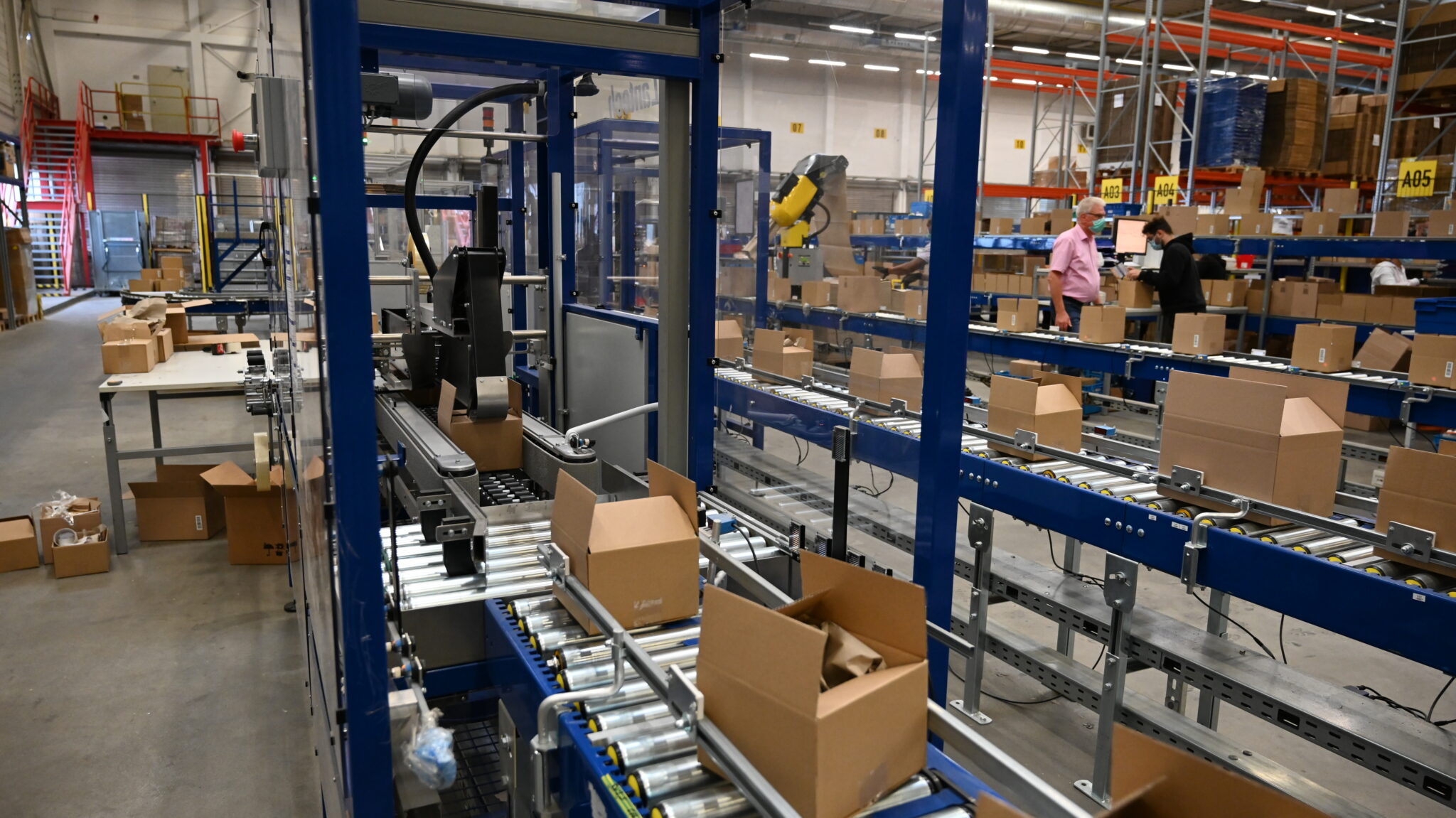
As manufacturing and distribution facilities continue to look for ways to streamline operations and respond to labor shortages, end-of-line automation has become a powerful lever for efficiency. One essential tool in this automation journey is the automatic case sealer—a box sealing machine designed to consistently close and seal corrugated boxes without manual intervention.
Whether your business ships hundreds or thousands of cases per shift, an automatic case sealer can help you cut packaging material costs, reduce packaging waste, and optimize labor deployment. This article explores five key benefits of investing in an automatic case sealer, explains how the technology works, and outlines where it fits within a modern automated packaging line.
Table of Contents
- What is an Automatic Case Sealer?
- Benefit 1: Labor Savings
- Benefit 2: A Better Working Environment
- Benefit 3: Consistency in Packaging
- Benefit 4: Reduced Waste of Packaging Materials
- Benefit 5: Greater Production Flexibility
- Choosing the Right Case Sealer for Your Operation
- Conclusion
- FAQs
What is an Automatic Case Sealer?
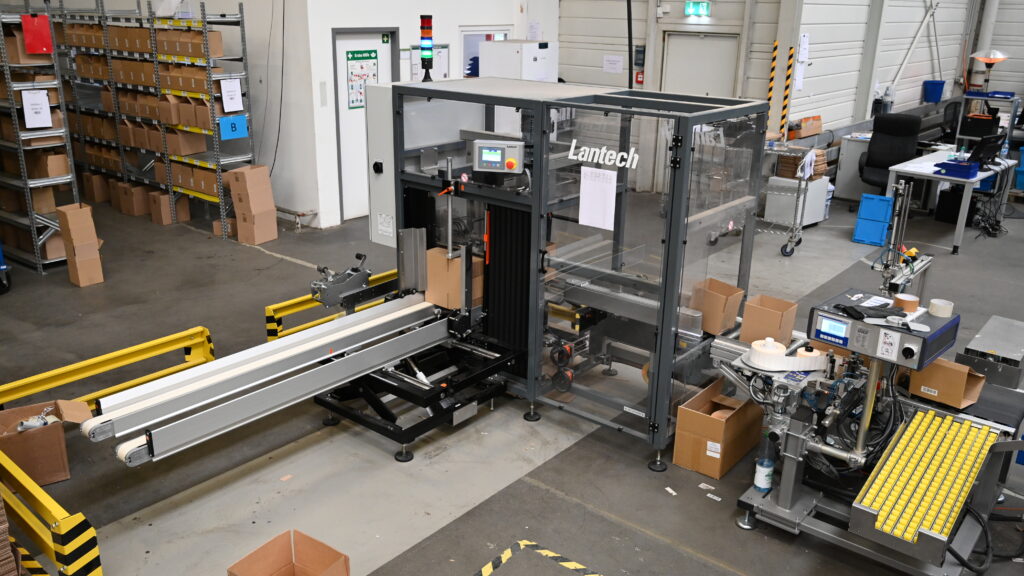
An automatic case sealer is a piece of end-of-line packaging equipment that automatically folds and seals the top flaps of a filled box. Once product is packed into a case, it is transferred to the machine via a conveyor which folds the flaps in sequence and then applies tape or adhesive to close and seal the box securely—all without human assistance.
Why Businesses Are Automating Their End-of-Line Processes
With upstream automation—like automatic case erectors, case packers, and labelers—already common, downstream automation has become the next frontier. If workers must still fold flaps and feed boxes into a sealer manually, the true potential of line automation is never realized.
Automation closes this gap by aligning all stages of the packaging line, reducing dependency on manual labor, and boosting overall packaging automation efficiency.
How an Automatic Case Sealer Works
Automatic case sealers are often integrated into a conveyor system. After a filled case enters the machine, the side belts or bottom belts guide it smoothly through the sealing head. The equipment automatically folds the leading, trailing, and side flaps before applying tape or adhesive across the top seam.
The result is a clean, uniform seal ready for shipping or palletizing.
Semi-Automatic vs. Fully Automatic Case Sealers
- Semi-Automatic Case Sealer: Requires an operator to fold the top flaps and push each box through the sealing head. It’s often a lower-cost entry point for operations that are moving beyond manual taping.
- Fully Automatic Case Sealer: Automatically folds all flaps and seals the top and bottom of the case, eliminating the need for operator oversight. More advanced machines are ideal for high-speed or high-volume production environments, but simple automatic case sealers are often also a great fit for those who are moving from a manual taping process.
In this blog, we explore the levels of automation in more detail.
Where a Case Sealer Fits Into Your Packaging Line
Case sealers typically follow the case packer or manual packing station and precede downstream systems like labelers, weigh stations, and palletizers. In a fully automated line, they serve as the link between filling and unitizing processes, ensuring every box is properly sealed and prepared for distribution.
Benefit 1: Labor Savings
One of the most immediate and measurable advantages of an automatic case sealer is labor efficiency.
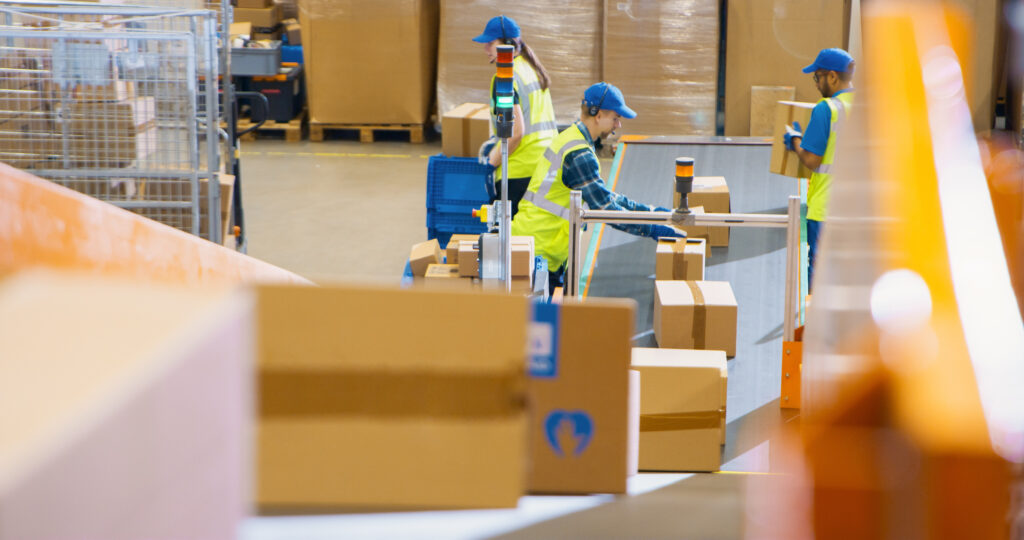
In a manual sealing setup, employees must fold box flaps, apply tape, and ensure proper closure. This task not only consumes valuable production time but can also require multiple operators on high-volume lines. Automating this step can free up personnel for higher-value activities such as quality control, equipment monitoring, or process improvement initiatives.
Automatic case sealers require minimal supervision once set up. Operators can often manage several machines simultaneously or shift to more strategic assignments. This reallocation boosts workforce productivity and helps offset challenges with staffing shortages or turnover.
Key takeaway: By removing repetitive taping tasks, companies reduce labor costs, increase throughput, and make better use of skilled employees.
Benefit 2: A Better Working Environment
Reduced Physical Strain on Employees
Repetitive motion is one of the biggest contributors to workplace fatigue in packaging operations. Manual taping stations often involve lifting, folding, and pressing down tabs for hours at a time. Over months or years, this repetitive motion increases the risk of strain injuries.
Automatic case sealers improve ergonomics by eliminating the need for repetitive bending and pressing actions. Workers no longer have to stand at a sealer continuously or maneuver cases into position—tasks automatically handled by the system’s conveyors and folding arms.
Improved Safety and Ergonomics
Transitioning from manual to automated case sealing not only enhances throughput but also builds a safer, more comfortable working environment. Employees can focus on activities that demand judgment, precision, or equipment oversight instead of monotonous mechanical movements. This contributes to higher morale, lower fatigue levels, and a reduction in injury-related downtime.
Benefit 3: Consistency in Packaging
Uniform Tape Application and Clean Seals
Automatic case sealers deliver uniform results. Each box receives a consistent amount of tape applied at the same tension and centered position. This consistency prevents loose flaps, wrinkles, or over-applied tape—defects common when taping by hand.
The result is a cleaner, more professional-looking box that stands up to transit and handling pressures. The machine’s calibrated tape heads ensure that every case receives just the right amount of sealing material, optimizing efficiency on both the packaging floor and in distribution.
Professional Presentation and Improved Brand Image
For many companies, the shipping carton is the first physical interaction customers have with the brand. A poorly sealed box can lead to negative impressions or even product damage. Consistent, neat seals reinforce brand credibility, especially in industries where packaging is part of the customer experience.
Fewer Product Returns or Damage
Improperly taped boxes can open during transport, resulting in lost or damaged goods. Automated sealing mitigates this risk, minimizing customer complaints and costly returns. Over time, the reliability of automated sealing translates to fewer logistics disruptions and stronger brand reputation.
Benefit 4: Reduced Waste of Packaging Materials
Precise Tape Usage Lowers Material Consumption
A well-tuned automatic case sealer not only improves consistency but can also help cut packaging material costs. Manual sealing can lead to excessive or inconsistent tape usage as operators overcompensate to ensure closure. Automatic systems apply the optimal amount every time, significantly reducing unnecessary consumption.
This precision helps reduce packaging waste and supports sustainability initiatives by minimizing material overuse. Even small reductions in tape per box can translate to tangible annual savings, especially in high-throughput operations.
Less Rework or Scrap from Sealing Errors
Improperly sealed boxes often must be reopened, retaped, or replaced, leading to wasted corrugated material and labor time. Automatic sealers produce accurate seals that hold through storage and shipping, minimizing costly rework and allowing operators to focus on more productive activities.
Automation contributes to measurable packaging line cost reduction while also advancing corporate goals for waste minimization and resource efficiency.
Benefit 5: Greater Production Flexibility
Integration with Upstream and Downstream Equipment
In automated operations, upstream and downstream integration is critical. When an upstream case erector or packer can produce or fill cases faster than the sealing step can handle, manual intervention becomes a bottleneck. Automatic case sealers eliminate this bottleneck by keeping pace with upstream automation.
When packaging lines are automated upstream, full automation downstream often becomes necessary to maintain continuous flow and prevent labor inefficiencies. Automatic sealers maintain throughput and synchronize seamlessly with conveyors, coders, and palletizers.
Scalability as Your Production Volume Grows
As production needs change, an automatic sealer can easily adapt. Most systems are built to handle a variety of box sizes and styles, making them scalable investments. Adding new models or adjusting equipment settings requires minimal downtime—allowing packaging operations to scale efficiently without major line redesigns.
Choosing the Right Case Sealer for Your Operation
Key Considerations
When selecting a case sealer, evaluate the following factors:
- Process and set-up: Where will the case sealer be located in relation to the packing station?
- Box Variety: Do you run multiple case sizes or consistent dimensions? Machines with automatic size adjustments can handle variation efficiently.
- Throughput: Match the speed of the case sealer with your upstream packing rate to avoid bottlenecks.
- Space and Utilities: Ensure you have adequate floor space, power, and compressed air for installation.
A good rule of thumb: if you have already automated case forming and packing, a fully automatic sealer is the logical next step.
Determining Return on Investment (ROI)
ROI on a case sealer comes primarily from one source: labor savings. Other things like material efficiency and operational flow are worth noting, but a majority of the cost savings will come from reallocating labor costs from this task.
While the timeline for ROI varies by plant size and production rate, most operations recover the investment relatively quickly. Many companies find that combining automatic case erecting, packing, and sealing results in the strongest overall return.
Conclusion
By improving labor efficiency, creating safer work environments, ensuring consistent sealing quality, and reducing material waste, automatic case sealers form a critical link in modern end-of-line automation. Their ability to integrate seamlessly into existing systems ensures scalability and long-term operational efficiency.
For today’s packaging professionals, adopting a fully automatic case sealer is not merely an equipment upgrade—it’s a strategic investment in efficiency, reliability, and sustainability. As demand for speed and precision grows, automation continues to define how the best operations save costs, protect their workforce, and optimize material use for years to come.
FAQ
1. What’s the main difference between a semi-automatic and a fully automatic case sealer?
A semi-automatic sealer requires an operator to manually fold box flaps and feed each case, while a fully automatic sealer performs both tasks automatically, improving throughput and consistency.
2. How does an automatic case sealer help reduce packaging waste?
It regulates tape application precisely, eliminating excess overlap or double-taping. This reduces overall material usage and helps companies minimize waste.
3. Can automatic case sealers handle different box sizes?
Many models feature automatic adjustments to accommodate multiple case sizes without manual setup, which is ideal for operations with mixed product runs.
4. How do I know when it’s time to automate my case sealing process?
If your upstream packaging is already automated or you frequently experience bottlenecks at manual sealing stations, it’s likely time to upgrade to an automatic case sealer.
5. What is the typical ROI on an automatic case sealer?
While exact results depend on production volume, reductions in labor costs and material waste typically enable a payback period measured in months, not years.
6. Can a case sealer be added to an existing packaging line?
Yes. Most automatic case sealers are modular and can integrate seamlessly into your existing conveyor or end-of-line layout, making them a flexible investment for future growth.