A dragging film tail is easy to dismiss. It’s a few inches of loose stretch film hanging off a pallet after it’s been wrapped — a minor finishing detail in the context of a $100M warehouse automation project. Until it flags a false sensor reading on an AMR. The robot stops. The line backs up. Nobody is nearby to clear it. And the efficiency gain the entire system was designed to deliver quietly disappears.
Film tail management has always been a nuisance in manual operations. In an automated warehouse, it’s a system-level failure point — and for solution design engineers, it’s one worth figuring out as the project is being designed.
Contents
- What a film tail actually does to an automated system
- The load integrity problem that starts before the dock door
- The downstream risk you don’t control
- How TurboTak eliminates film tails at the source
- Designing film tail management into the spec from the start
What a Film Tail Actually Does to an Automated System
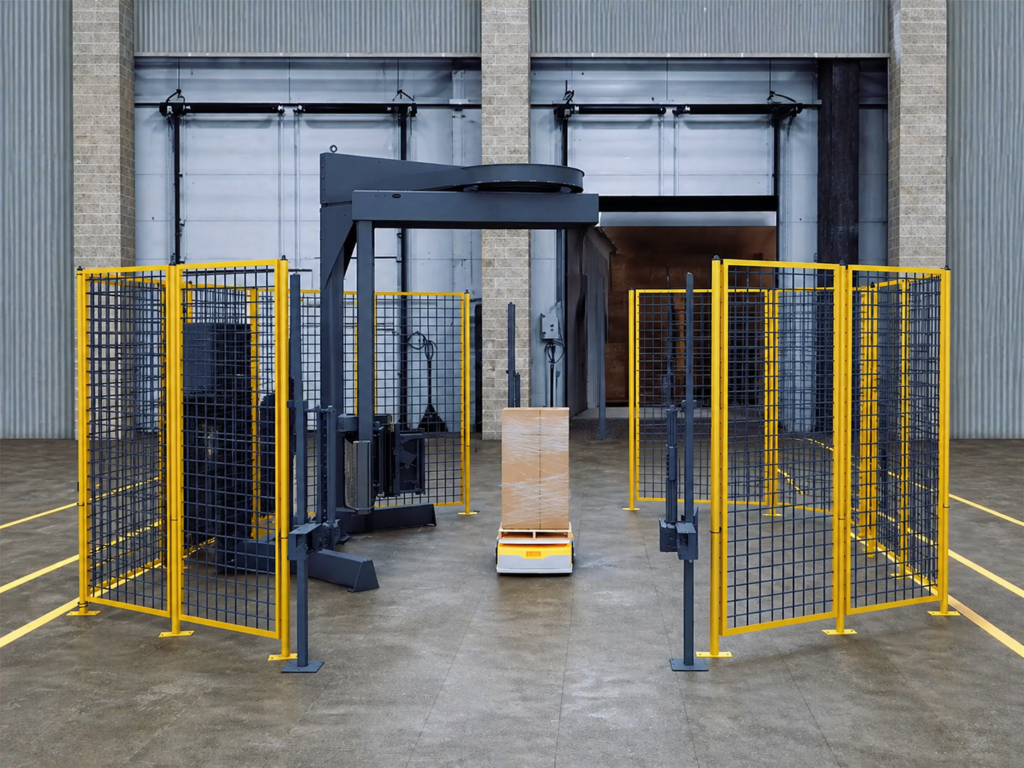
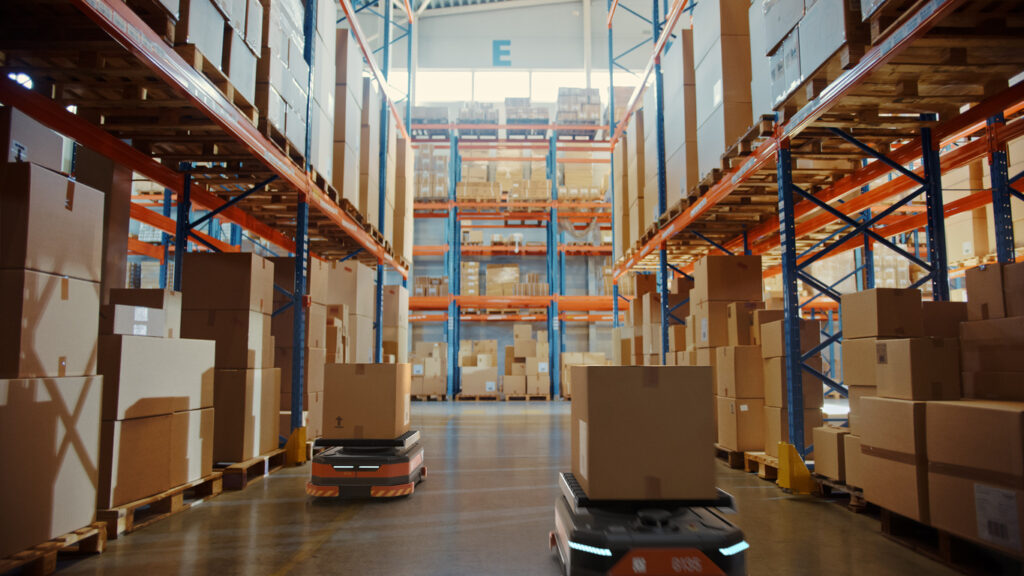
In an AMR-integrated warehouse, a loose film tail doesn’t create a wrapping problem. It creates a system shutdown.
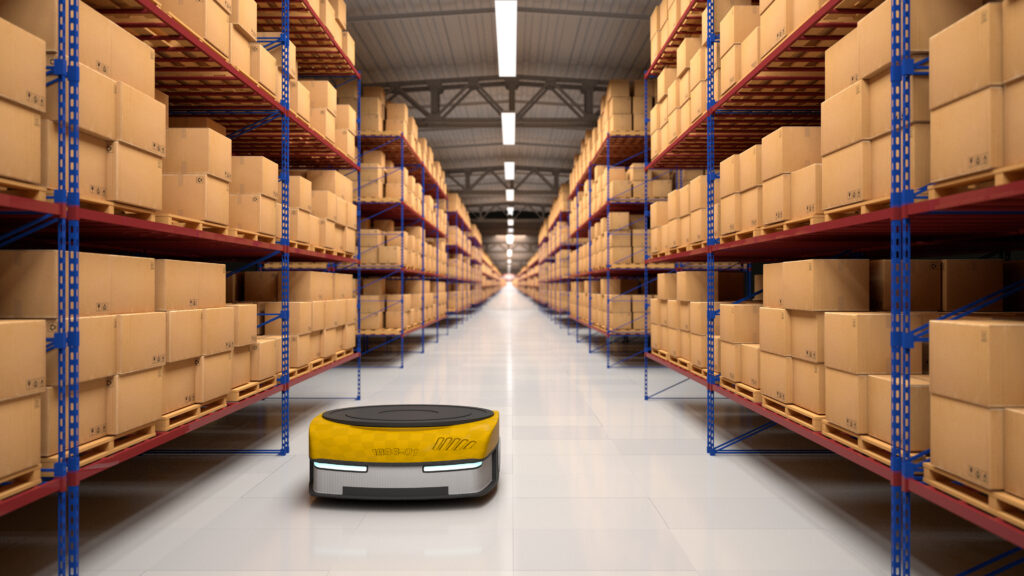
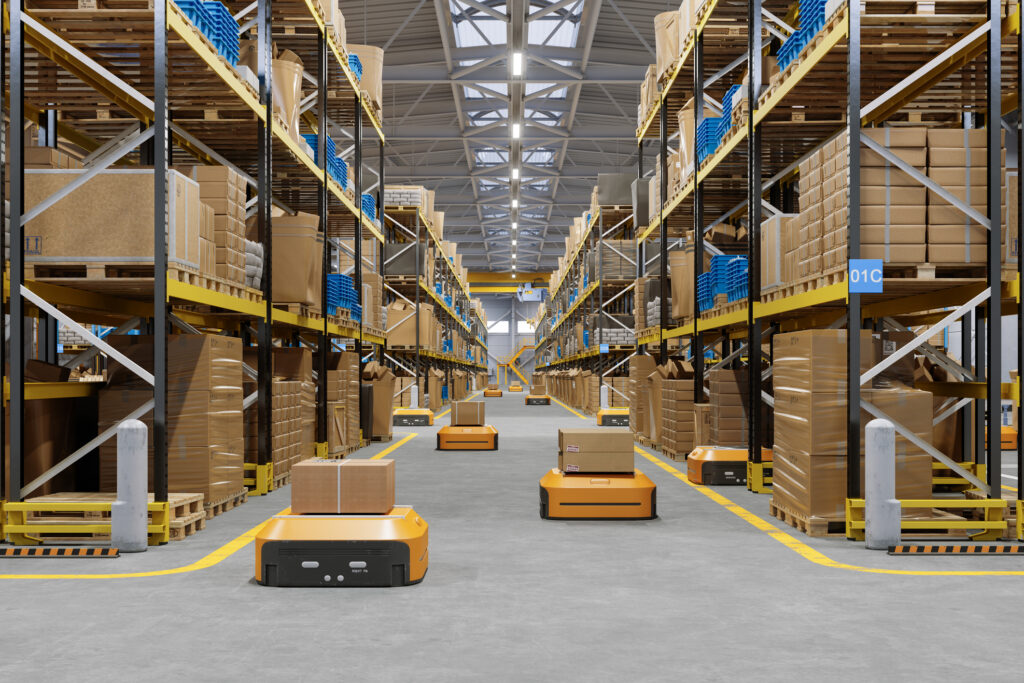
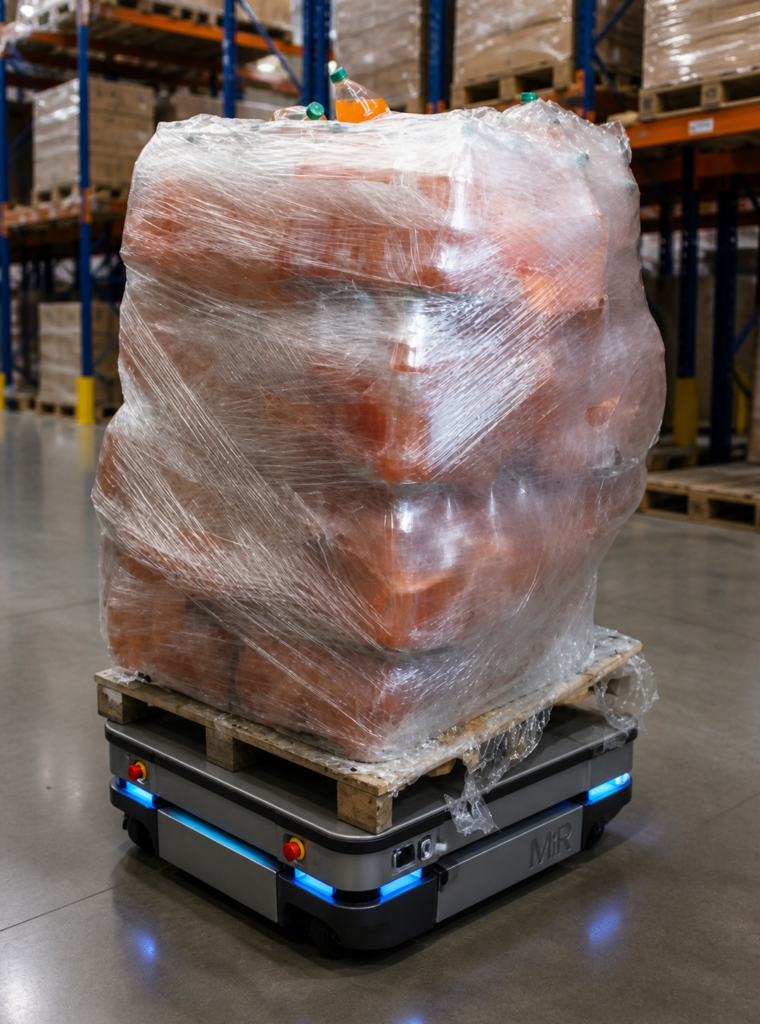
AMRs navigate by sensor — lidar, cameras, and proximity detection. A dragging film tail reads as an obstacle. The robot stops and waits for a human to clear it. In a facility built around continuous, autonomous throughput, that human intervention is exactly what the system was designed to eliminate. Every stop accumulates. Every accumulation becomes a backlog. Every backlog becomes a call.
The same logic applies to conveyors and automated storage and retrieval systems. A film tail that catches on a conveyor roller doesn’t stay attached to the pallet — it unravels. What started as a minor finishing issue becomes a tangled jam that requires manual extraction and, depending on the system, takes the line down entirely.
Learn more: Eliminate automation shutdowns with the Lantech SL400AMR stretch wrapper
For solution design engineers, this is a project-level risk calculation, not a product feature discussion. A film tail that stops a $2M AMR fleet on a Tuesday afternoon isn’t a packaging problem. It’s a client escalation.
The Load Integrity Problem That Starts Before the Dock Door
There’s a second failure mode that gets less attention: a loose film tail can begin unraveling before the pallet ever leaves the building.
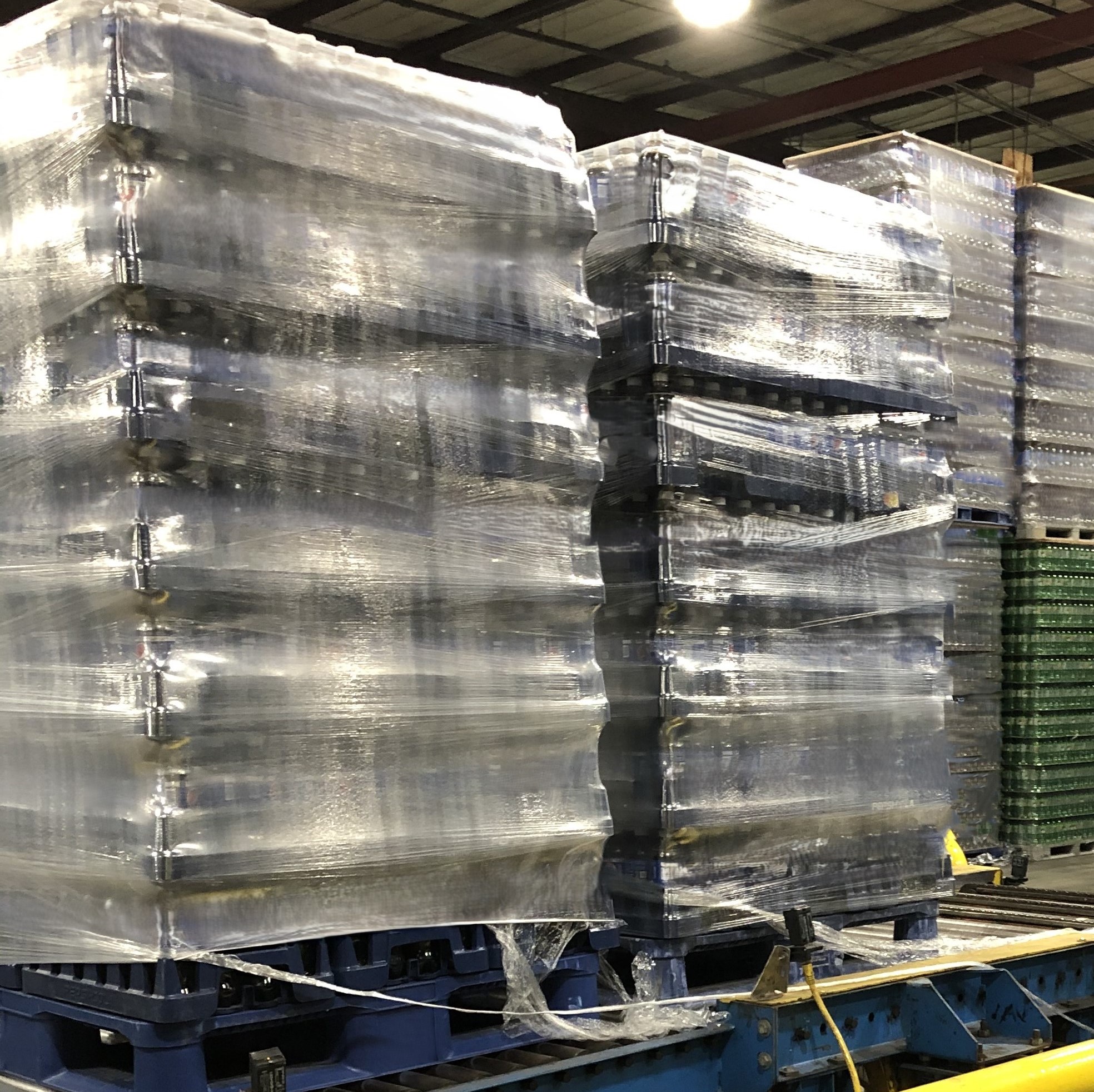
Stretch film works because it’s under tension, and that tension provides containment force that holds a load together. When a film tail is left loose after the wrap cycle, that containment force is compromised. The film begins to unravel from the tail outward — quietly, at the wrap station, before the load is staged or picked up by an AMR. By the time the pallet reaches outbound, the containment force that was engineered into the wrap profile is already degraded.
The consequences show up in transit. Shifted loads. Damaged product. Returns. The root cause traces back to a film tail that wasn’t managed at the wrap station.
This isn’t a hypothetical. Film tail management has always been a latent risk in stretch wrapping — in highly automated environments, the speed and volume of throughput simply accelerates how quickly a small failure compounds into a larger one. At 15 pallets per hour across multiple wrap stations, even occasional film tail events add up to a measurable drag on load quality and a meaningful increase in damage claims.
The Downstream Risk You Don’t Control
Here’s the part that applies even to operations that haven’t fully automated yet: wrapped loads don’t stay in the facility where they were wrapped.
Cross-docking operations, distribution networks, and 3PL fulfillment centers are increasingly autonomous. A pallet wrapped at a manual or semi-automated facility will, at some point, move through an automated sortation system, an AMR-served staging area, or an AS/RS environment somewhere further down the supply chain. The film tail that was a minor annoyance at the outbound dock becomes an active obstruction in the next facility’s automated system.
The solution design engineers specifying those downstream systems are building to a standard of zero unplanned stops. When a wrapped load arriving from an upstream facility causes a sensor trigger or a conveyor jam, it doesn’t matter that the wrapping happened somewhere else. The system goes down. The backlog accumulates.
This has a direct implication for how film tail management should be positioned in the specification process — not as an option for highly automated facilities only, but as a baseline requirement for any wrapped load entering a supply chain that includes automation downstream.
Read more: Why End-of-Line Wrapping Keeps Getting Left Off the Integration Checklist
How TurboTak Eliminates Film Tails at the Source
Most film tail management approaches on the market rely on moving components — wipe-down arms, brushes, or heat-based systems that press or melt the tail to the load. In high-cycle, high-volume environments, those moving parts are a liability. They get hit. They wear down. They require maintenance that slows throughput and creates its own downtime exposure.
TurboTak® takes a different approach. Using two precisely sequenced bursts of high-velocity air — no heat, no moving parts, no exposed components — TurboTak nails the film tail to the underlying layers of film after the cut. The first burst positions the web. The second nails it to the load. The result is a film tail that isn’t there, from the perspective of any sensor, conveyor, or automated system that encounters the pallet downstream.
The design is compact and self-contained. It’s built to survive the kind of chaotic, high-volume environments where current film tail devices fail — distribution centers, cross-docking operations, and automated fulfillment facilities running continuous cycles across multiple shifts.
TurboTak comes standard on the SL400AMR.
Learn more: See how TurboTak technology eliminates film tails with high-velocity air
For solution design engineers specifying end-of-line equipment for AMR-integrated layouts, that’s the specification detail that removes a known failure mode from the project before commissioning begins.
Designing Film Tail Management Into the Spec From the Start
The most expensive version of film tail management is the one that gets retrofitted after a go-live incident. A sensor trigger on day three of operation. A conveyor jam that shuts down an outbound line during peak. A client call at 10pm asking why the AMR fleet has stopped.
Each of those scenarios is avoidable at the design phase. The specification decision that eliminates them is the same one that determines which stretch wrapper goes on the drawing.
In a project where load integrity, AMR compatibility, and system uptime are non-negotiable deliverables — and in $50–150M automated DC projects, they always are — film tail management belongs in the spec alongside conveyor interfaces, AMR communication protocols, and integration documentation. It is not a finishing detail. It is a system reliability requirement.
The organizations that get this right don’t discover it after the first incident. They build it into the equipment specification before the RFP goes out.
Conclusion
Film tails are easy to underestimate until they stop a system that cost tens of millions of dollars to build. For solution design engineers, the risk calculation is clear: a loose film tail in an AMR-integrated warehouse is a system failure waiting to happen, and it’s a failure that’s entirely preventable at the specification stage.
Key takeaways from this post:
- A dragging film tail triggers AMR sensors, stops autonomous vehicles, and creates backlogs that accumulate until a human intervenes — eliminating exactly what the system was built to deliver
- Film tails that begin unraveling before a load leaves the wrap station degrade containment force and increase the probability of in-transit damage
- Even facilities that haven’t fully automated yet are sending wrapped loads into automated downstream environments — film tail management is a supply chain requirement, not just an in-facility one
- Most film tail devices rely on moving components that wear and fail in high-cycle environments; TurboTak uses pressurized air with no heat and no exposed parts
- TurboTak’s two-stage air burst design eliminates film tails at the source — it comes standard on the Lantech SL400AMR
To learn more about how the SL400AMR is designed to integrate with AMR workflows and eliminate the end-of-line failure points that create system-level problems, visit lantech.com/new-sl400amr-stretch-wrapper/.
FAQ
1. What is a film tail and why does it cause problems in automated warehouses?
A film tail is the loose end of stretch film left on a pallet after a wrap cycle completes. In manual operations, film tails are a minor nuisance. In automated warehouses, they trigger AMR proximity sensors, causing autonomous vehicles to stop and creating backlogs that require human intervention. They can also catch on conveyor systems, causing jams and equipment damage. In AMR-integrated facilities, a single film tail event can halt an entire automated line until the obstruction is cleared.
2. How does a loose film tail affect load integrity during transit?
Stretch film works by maintaining tension (known as containment force) across the wrapped load. When a film tail is left loose after the wrap cycle, it can begin to unravel — degrading the containment force that was engineered into the wrap. By the time a pallet reaches the outbound dock, containment force may already be compromised, increasing the risk of load shifting, product damage, and returns during transit.
3. Does film tail management matter if my facility isn't fully automated?
Yes. Wrapped loads travel through multiple facilities in a supply chain, and increasingly those downstream facilities — cross-docks, distribution centers, 3PL fulfillment operations — run automated systems. A film tail that’s tolerable in a manual outbound operation can trigger a sensor fault or conveyor jam in the next facility’s AMR fleet. Film tail management is a supply chain reliability requirement, not just an in-facility one.
4. What's wrong with existing film tail management devices?
Most film tail devices on the market rely on moving components — wipe-down arms or heat-based systems — that are vulnerable to impact and wear in high-cycle environments. These devices require regular maintenance and have survivability issues in the fast-paced conditions of modern distribution centers. They are not designed for the volume or pace of highly automated warehouse operations.
5. How does TurboTak® eliminate film tails without heat or moving parts?
TurboTak uses a patented two-stage system of high-velocity air bursts to eliminate film tails after the wrap cycle. The first burst positions the film web precisely; the second, more focused burst “nails” the tail to the underlying layers of film. The system is compact, self-contained, and has no exposed components — making it durable enough to withstand the demands of continuous, high-volume operations. TurboTak comes standard on the Lantech SL400AMR.