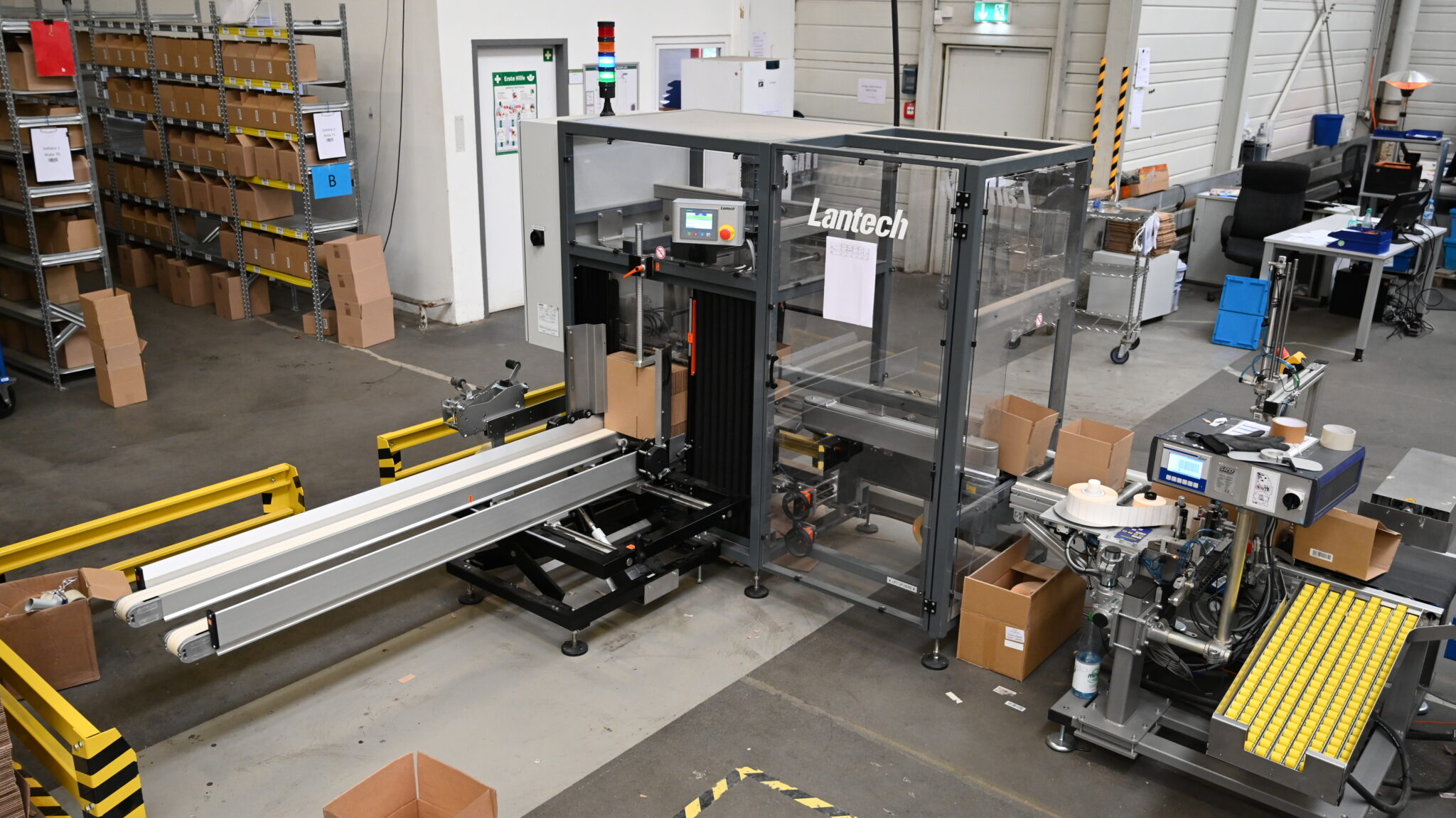
Choosing a case erector is a critical decision for companies seeking to improve the efficiency and reliability of their packaging line. This article will be useful for production engineers, logisticians, plant managers, and technical specialists considering automation options. We will look at the main criteria for choosing a case erector, the features of different types of equipment, and practical tips for avoiding common mistakes. You will learn how to choose the best machine for your line, taking into account the specifics of your production and budget.
Table of Contents
- What is a case erector and why automate the packaging line
- Types of case erectors
- Key factors in choosing a case erector
- How to choose a case erector for your needs
- Common mistakes when choosing equipment
- Conclusion
What is a case erector and why automate the packaging line
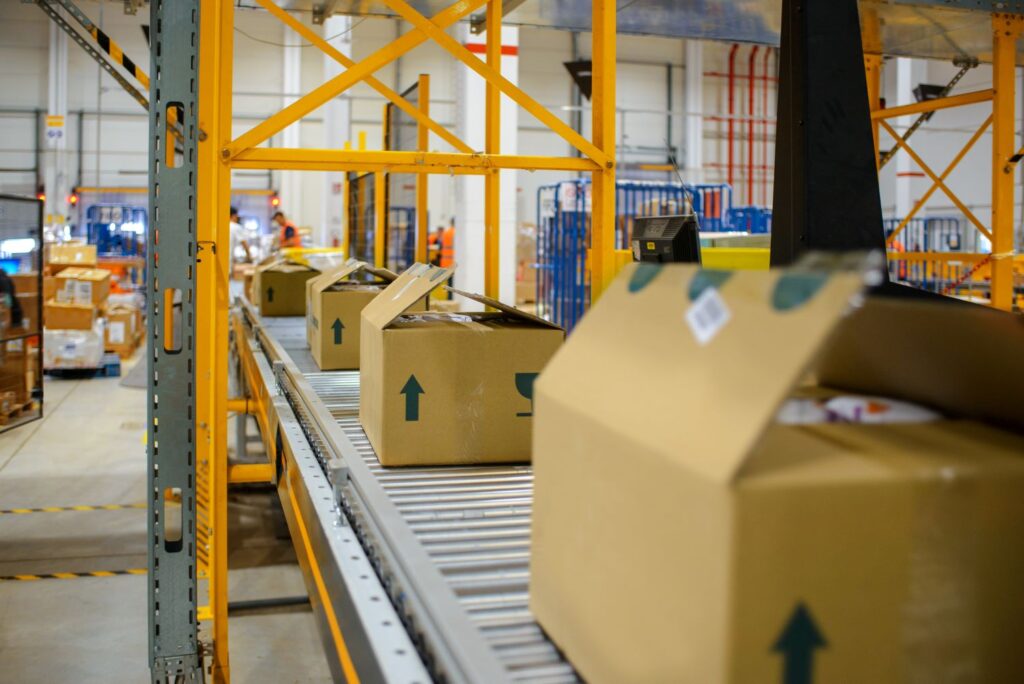
A case erector is a specialized machine that automatically forms cardboard boxes from flat blanks, bringing them to a shape ready for filling. It secures the bottom of the box with adhesive tape or other means, and then transfers it further along the packaging line. The principle of operation of a case erector is to accurately, sequentially, and quickly assemble containers with minimal manual labor.
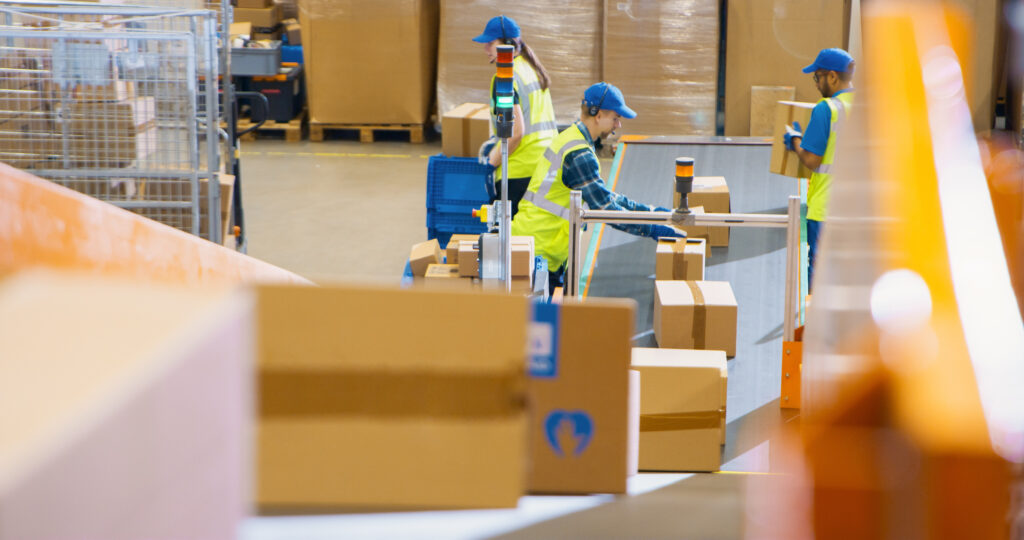
Automating the packaging process with a case erector has a number of advantages: reduced workload on staff, elimination of human error, consistent box formation, and savings on consumables. This is especially relevant for companies with large shipping volumes. Installing a case erector reduces the packaging cycle, increases order processing speed, and ensures a standardized approach to product packaging, which is critical for scalable production.
Types of case erectors
The choice of case erector type largely depends on the scale of production, the type of packaging, and the company’s budget. The market offers several case erector solutions, each with its own advantages, disadvantages, and areas of effective application.
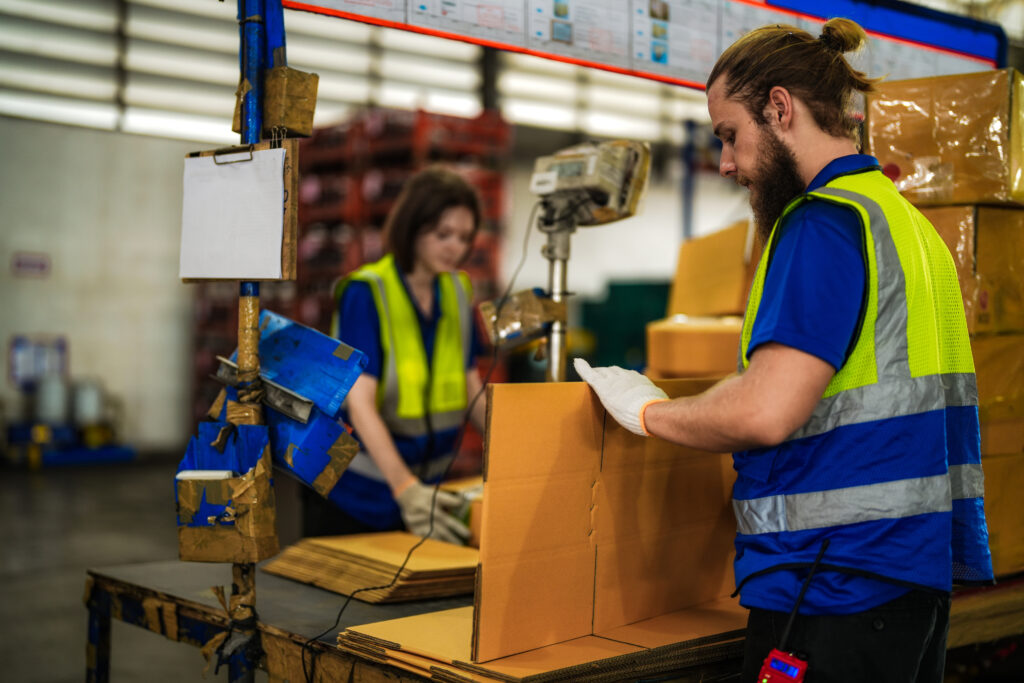
- Semi-automatic case erectors These machines require partial operator involvement, for example, to load cardboard or activate box assembly. They are low cost, easy to set up and maintain. They are well suited for small and medium-sized productions with low packaging speeds. However, due to human involvement, their productivity is limited and the risk of errors is higher.
- Automatic case erectors These are fully automated systems capable of forming boxes without human intervention. They offer high speed, consistent packaging quality, and integrate well into automated lines. The disadvantages are higher cost, the need for precise integration, and more complex maintenance.
- Specialized models These devices are designed for specific needs: non-standard box formats, variable sizes, high flexibility, etc. They can have a modular design, automatic format change, and processing of several types of cardboard. These machines are ideal for manufacturers with a wide range of products or frequent packaging changes.
The selection of a case erector type should be based on accurate calculations of production needs, development plans, and expected production volumes. An incorrectly selected type can limit growth potential or lead to unnecessary costs.
Key factors in choosing a case erector
Before purchasing a case erector, it is necessary to analyze a number of key characteristics. They determine how effectively the equipment will fit into your line, whether it will meet current production needs, and how it will affect long-term profitability.
Operating speed
Measured in the number of boxes per minute. High speed is critical for businesses that operate in three shifts or have a large daily packaging volume — for example, in the food industry, where the conveyor cannot stop. For small warehouses, moderate speed is sufficient.
Types of compatible boxes
If a company packs products in boxes of different sizes—for example, in the case of e-commerce or contract packaging—it is important to have a machine that can easily switch formats. This avoids downtime when changing orders.
Level of automation
When the number of packers is limited or the company wants to reduce personnel costs, an automatic model will ensure stability. For companies with a manual packaging area, a semi-automatic machine is suitable.
Integration into the packaging line
For companies with complex logistics lines (e.g., pharmaceuticals or FMCG), it is important to have complete synchronization with other stages of production. The machine must work flawlessly with a conveyor or palletizer.
Maintenance and reliability
If the company is located in a remote region, the availability of local service and affordable spare parts will be critical — this will minimize downtime.
Budget
For startups or small manufacturing companies, it is important to consider not only the cost of the equipment itself, but also the costs of installation, employee training, and maintenance. For example, craft manufacturers are better off choosing an affordable semi-automatic model.
Energy efficiency
This is especially important for large enterprises where continuous packaging lasts for many hours every day. Reducing energy consumption directly affects costs.
How to choose a case erector for your needs
Selecting a case erector is a strategic process that requires a deep understanding of production needs, packaging characteristics, and available resources. Successful implementation of the equipment reduces packaging time, reduces waste, and increases overall efficiency. To make the right choice, follow a step-by-step approach.
1. Estimate the packaging volume
Start with a clear answer to the question: how many boxes are planned to be formed per hour, shift, day? For small volumes (up to 300 boxes/hour), a semi-automatic model may be sufficient. If the volume exceeds 600–800 units, fully automated solutions should be considered. An accurate assessment of volumes will help avoid overloading the machine or, conversely, inefficient use of capacity.
2. Determine the types and formats of boxes
If one standard packaging format is used in production, this simplifies the choice. But if the packaging varies depending on the product batch, it is important to choose equipment that can be quickly reconfigured. For example, case erectors with automatic box width and height adjustment significantly reduce downtime when changing formats.
3. Analyze the production line
Before purchasing, you need to gather information about the available space, height, and location of other equipment. For example, if you have a narrow acceleration zone or non-standard logistics, choose compact models or those that work with top feeding. It is also important to anticipate future integration with a conveyor or palletizer.
4. Consider the human factor
The availability of personnel ready to service the equipment is a decisive factor. If employees have no experience with similar equipment, pay attention to models with intuitive controls and simple maintenance. For small businesses, where the multifunctionality of a single employee is important, this will be an advantage.
5. Agree on the budget and cost of ownership
The price of the equipment is only one component of the cost. Also consider the cost of installation, staff training, service, and consumables. For example, a cheaper option without proper support in the future can lead to downtime and losses.
Common mistakes when choosing equipment
When choosing a case erector, you may encounter common mistakes that affect productivity, budget, and production stability. Below are the key ones:
- Focusing only on low price. Buying the cheapest option often means compromising on speed, accuracy, or assembly quality. The result is downtime, low productivity, frequent breakdowns, and subsequent modernization costs.
- Underestimating box types and sizes. If the machine does not fit the formats used, there will be difficulties with adaptation. This causes line stoppages, mechanical failures, and increased packaging waste.
- Ignoring integration with the existing line. Incompatibility with conveyors, packaging, or palletizing modules may require additional costs for retrofitting or even a complete line rebuild.
- Choosing a machine with excessive functionality. A machine with “extra capacity” is often not used to its full potential, and the added complexity of operation increases staff training time. In addition, such equipment is more expensive to maintain.
- Ignoring service availability. The lack of local support leads to prolonged downtime in the event of breakdowns. This is critical for continuous production and fulfilling customer commitments.
- Refusal to conduct pilot testing. If the equipment is not tested in real-world conditions, its performance may not meet expectations. This is a risk of losing your investment if it does not meet the specifics of your production.
Conclusion
The right choice of case erector is based on an analysis of current production needs, resources, and growth strategy. By considering key factors and avoiding common mistakes, you will get an efficient automated packaging system that works reliably and economically. Reach out to Lantech’s case handling experts to discuss the optimal solution for your operations.
FAQ
1. What is a case erector?
A case erector is a specialized machine that automatically forms cardboard boxes from flat sheets. It folds the bottom of the box, secures it with tape or glue, and prepares it for further filling. It is a critical element of packaging line automation in manufacturing.
2. How does an automatic case erector differ from a semi-automatic one?
An automatic case erector does not require operator involvement — it performs the entire process independently. A semi-automatic one requires manual loading or activation, which reduces productivity. The choice depends on production volumes and labor availability.
3. How much does a case erector cost?
The price depends on the level of automation, speed, additional features, and manufacturer. The average range is from $5,000 to $50,000. Cheaper models are suitable for small businesses, while more expensive ones are suitable for large-scale automated production.
4. How to integrate a case erector into a production line?
First, you need to consider the space, the location of other equipment, and the direction of flows. It is also important to ensure the compatibility of speeds and synchronization signals. It is recommended to involve an engineer or supplier to design the integration.
5. Is it worth buying equipment with a speed reserve?
Yes, if you plan to scale up production in the future. This will avoid repeat investments as volumes grow. But keep in mind that excess functionality should not be wasteful.