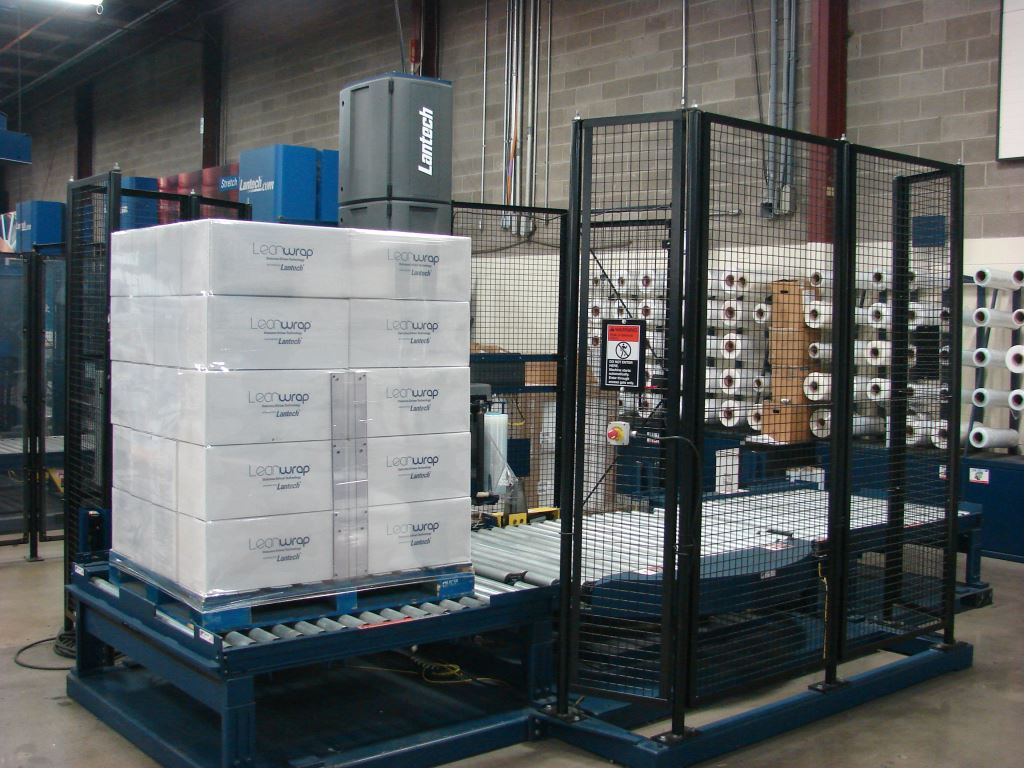
As demand for faster, more consistent, and safe-to-ship packaging grows across industries, end-of-line automation has become a strategic priority. One of the most critical decisions in this process is determining whether to implement a semi-automatic or an automatic stretch wrapping machine. The choice affects not just packaging throughput and stability, but also labor efficiency, film consumption, and the overall return on investment across your supply chain.
Whether you are a warehouse manager, operations supervisor, or production engineer, understanding how each system fits into your logistics strategy will help ensure that your pallet wrapping operation is optimized for both performance and cost efficiency.
This article compares semi-automatic and automatic stretch wrappers using operational metrics and automation insights. It provides practical guidance to help you choose the right solution for your facility’s packaging goals.
Table of Contents
- What Is a Semi-Automatic Stretch Wrapper?
- What Is an Automatic Stretch Wrapper?
- Key Differences Between Semi-Automatic and Automatic Stretch Wrappers
- Advantages and Disadvantages of Each
- Which Stretch Wrapper Should You Choose?
- Conclusion
- Frequently Asked Questions (FAQ)
What Is a Semi-Automatic Stretch Wrapper?
A semi-automatic stretch wrapper is a pallet wrapping system that assists the operator but requires manual interaction to complete each cycle. The operator typically places the pallet load on the turntable or in the wrap zone, attaches the film tail to the pallet, and initiates the wrapping cycle. After the cycle finishes, the operator cuts and secures the film before removing the load.
Semi-automatic machines are available in various models — including turntable, rotary arm, and robotic wrappers — each suited for different load types and production speeds. They also have a variety of options that can further reduce operator interaction. For example, some options can include pre-programming wrapping patterns or mechanisms to secure the film to the pallet at the beginning and cutting the film at the end of the wrap cycle.
Typical Use Cases:
- Small to mid-sized facilities
- Operations with variable load sizes or seasonal production volume
- Businesses seeking to improve consistency and film containment without heavy automation investment
A semi-automatic unit is typically the entry point to stretch wrapping automation. It removes the manual labor and inconsistency of hand wrapping, while maintaining flexibility and control for facilities that don’t need a fully automated solution.
What Is an Automatic Stretch Wrapper?
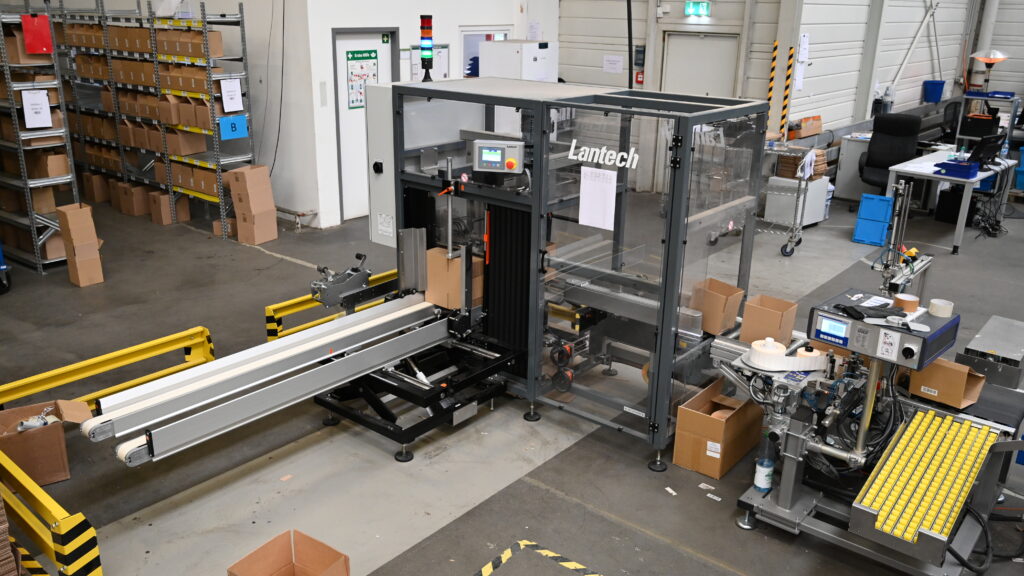
An automatic stretch wrapper extends automation to the full wrapping process — from film attachment through cut and wipe-down — without requiring operator contact. In many facilities, the automatic wrapper is integrated inline with conveyors and palletizers, creating a seamless end-of-line packaging flow.
For example, even at modest speeds, an automatic stretch wrapper can deliver high value when it is synchronized with upstream production equipment. The pallet travels through the wrap zone automatically, is wrapped with controlled tension, and exits ready for shipment — all without human touch.
Typical Use Cases:
- High-volume production lines
- Facilities seeking to fully eliminate manual handling between palletizing and shipping
- Integrated packaging lines requiring consistent throughput
The true value of automatic stretch wrapping goes beyond speed—it lies in process integration and operator-free performance, ensuring each load is wrapped with precision and consistency.
Key Differences Between Semi-Automatic and Automatic Stretch Wrappers
Understanding the technical and operational distinctions between the two machine types is a key to selecting the best fit but the best solution always considers the entire process, not just the technical specifications.
1. Automation Level
Semi-Automatic: Requires operator input to load, start, and unload the pallet. Automation assists during the wrapping process and even some film attachment and cutting, but not in pallet transfer.
Automatic: Performs all steps autonomously, often integrated with conveyors, palletizers, or robotics to achieve fully automated packaging cell operation.
Bottom line: Automatic machines eliminate nearly all manual involvement, maximizing labor efficiency and throughput consistency.
2. Throughput and Speed
In a semi-automatic environment, speed is more dependent on the operators, process, and load type than the capabilities of the machine. While semi automatic stretch wrappers can handle 30-40 loads per hour based on model, load size, shape, film pattern and operator efficiency, most do not. The average semi automatic stretch wrapper handles 10-15 loads per hour.
Automatic stretch wrappers can operate up to 50+ loads per hour, with some high-speed machines reaching up to 120 loads per hour. The practical range of speed widely varies with load type and stability, conveyor speeds and line configuration. However, speed alone doesn’t define automation value — even low-speed lines can gain from automation when it removes human interaction and creates continuous flow.
3. Labor Requirements
In semi-automatic models, an operator must be present for every load: to drive the forklift, position the pallet, attach and cut film, and operate the control interface.
In contrast, automatic wrappers can be fully self-sufficient. Once installed, they remove the need for manual pallet transfer, minimizing forklift movement and operator dependence.
For companies facing labor shortages or striving to redeploy personnel to value-added tasks, this reduction in labor touchpoints offers measurable ROI.
4. Film Usage Efficiency
Automated wrapping systems are optimized for film pre-stretch control, tension consistency, and containment force accuracy and offer the most efficiency of film usage.
Semi-automatics are more efficient than hand wrapping, but vary depending on operator practices and tendencies: too little tension leads to poor load containment, too much increases film usage and damages products. Lantech has semi-automatic stretch wrapper models (QL400XT) that take out some of the variability of operator interference, to ensure a more consistent and accurate wrap of the pallet.
5. Integration and Automation Compatibility
When it comes to integration, automatic stretch wrappers truly stand out. These inline models can seamlessly connect with palletizers, conveyors, and labeling systems to form a unified and efficient packaging flow. While most people associate fully automatic stretch wrappers exclusively with these integrated setups, it’s important to note that they can also operate as standalone machines—delivering high throughput and consistency even without being tied into a larger system.
Semi-automatic stretch wrappers, on the other hand, can be coordinated with upstream processes but still require manual intervention to move pallets between stages.
Ultimately, choosing between an automatic and semi-automatic model depends on your organization’s automation strategy. If your long-term vision includes scaling toward a fully automated packaging line, investing in a fully automatic stretch wrapper can position you well for future growth and system integration.
Advantages and Disadvantages of Each
Comparison Table
| Feature | Semi-Automatic Stretch Wrapper | Automatic Stretch Wrapper |
| Operator Involvement | Manual load placement and film attachment required | Fully operator-free once installed |
| Throughput | Up to 40 loads per hour | Up to 120 loads per hour |
| Reliability | Dependent on operator consistency or simple automation options that can be added to some models | Consistent, programmable wrapping cycle |
| Labor Savings | Moderate | High |
| Film Efficiency | Varies; operator-dependent | Optimized film pre-stretch and containment |
| Integration Capability | Limited to standalone use | Can stand alone or be fully integrated into production line |
| Cost | Lower initial investment | Higher initial cost, faster ROI at volume |
| Maintenance | Simpler | More complex, requires regular service schedule |
| Best For | Low to medium production; flexible operations | Reducing labor, improving efficiencies and automating all or part of the process |
Pros and Cons Summary
Semi-Automatic Stretch Wrapper – Pros:
- Lower upfront investment
- Ideal for facilities with variable throughput
- Operator control allows flexibility for different load types
- Compact footprint for smaller spaces
Semi-Automatic – Cons:
- Still requires some labor (but less than manual wrapping)
- Operator variability can reduce consistency
- Manual steps reduce overall line efficiency
Automatic Stretch Wrapper – Pros:
- Requires no operator involvement once set up
- Seamless integration with end-of-line automation
- Precise film control reduces waste
- Consistent load containment and improved safety
Automatic – Cons:
- Higher capital cost
- More complex maintenance planning
- Requires larger footprint than most semi-automatic options
Which Stretch Wrapper Should You Choose?
Selecting between a semi-automatic and an automatic stretch wrapper depends on multiple factors:
1. Labor Availability and Cost
The availability of labor combined with your process needs are often the most critical variables in deciding on the right equipment for you. In tight labor markets, eliminating manual steps can be transformative. Automatic wrappers remove the need for human touch during wrapping, which reduces fatigue, improves safety, and stabilizes scheduling. On the other hand, a semi-automatic wrapper may provide enough labor savings to justify the transition and be a better fit for the process.
2. Production Volume
It’s difficult to choose an appropriate stretch wrapper by production volume alone. It depends on your process needs and labor availability. Rather than thinking about speed, think about the production cadence and pace.
If you have some labor available and do not need a consistent pace of stretch wrapping to keep up with a production line, a semi-automatic stretch wrapper can provide an excellent solution for many environments. It also allows the operations to be flexible based on the needs of the process.
If you require more than one semi automatic stretch wrapper or need a consistent cadence of stretch wrapping, an automatic stretch wrapper may be more valuable.
3. Line Integration Goals
If you plan to connect to palletizers or other upstream equipment, an automatic system ensures full synchronization and runtime efficiency. Semi-automatics can function well in stand alone operations but add delays when manual transfer is required.
4. Space and Facility Layout
Semi-automatics generally require forklift or pallet jack access to load and unload pallets. Automatics have options and can also be loaded/unloaded with both forklifts and pallet jacks but are larger and require more space.
5. Return on Investment (ROI)
Automatic stretch wrappers often justify their higher cost through labor and film savings. Regardless of the volume you are doing, a strategically-placed automatic stretch wrapper can deliver a compelling payback—while reducing operational risk tied to labor availability, safety incidents and product damage.
For many small to mid-sized businesses, semi-automatics remain an excellent starting point to improve wrapping consistency, reduce film use, and increase load quality without fully automating the end-of-line process. Semi-Automatic Stretch Wrappers can also justify their cost through labor savings and eliminate risk to the operator by automating the strenuous part of wrapping the pallet and allowing the operator to do more valuable tasks with their extra time.
Conclusion
The decision between a semi-automatic vs. automatic stretch wrapper is ultimately about aligning performance capacity with operational goals.
Semi-automatic wrappers provide a flexible, cost-effective solution for moderate workloads and facilities exploring early stages of automation.
Automatic wrappers deliver continuous performance that eliminates manual handling, optimizes film usage, and supports scalable growth.
In both cases, investing in reliable stretch wrapping equipment enhances load stability, sustainability, and line productivity — key advantages in a logistics environment where every second counts.
By aligning your stretch wrapping technology with your facility’s automation strategy, you set the foundation for safer, smarter, and more consistent pallet load performance — ensuring every product leaves your plant wrapped in reliability.
FAQ
1. What is the main difference between semi-automatic and automatic stretch wrappers?
Semi-automatics require an operator to manually place, start, and remove the load. Automatics perform all steps autonomously once installed.
2. Which type of stretch wrapper is more efficient for high-volume operations?
Automatic stretch wrappers are capable of wrapping a wide range of volume requirements. With speed capabilities up to 120+ loads per hour, there are fully automatic stretch wrappers for almost any application.
3. How much labor can automation save in stretch wrapping?
Automatic systems can completely eliminate operator involvement during wrapping, saving several minutes per load, labor savings and a reduction in forklift movement.
4. Can automatic stretch wrappers reduce film waste?
Yes. Thanks to precise pre-stretch control, automatic wrappers consistently reduce film usage by optimizing tension and containment force.
5. What are the maintenance requirements for automatic stretch wrappers?
They require regular preventive maintenance—inspections, lubrication, and software checks—but deliver high uptime when properly serviced.
6. How do I know which stretch wrapper fits my warehouse needs?
Evaluate production volume, labor capacity, available floor space, and long-term automation goals. A packaging expert can perform a site audit to determine the optimal configuration for your operation.