E-commerce fulfillment operations are under constant pressure. Order volumes continue to rise, customer expectations for speed and accuracy are increasing, and labor remains both costly and difficult to scale reliably. As a result, more organizations are turning to e-Commerce packaging automation to improve efficiency, reduce manual handling, and create a more consistent customer experience.
Packaging automation does not require a fully automated warehouse. Many successful operations begin by automating the most labor-intensive or error-prone steps in the packaging process. Over time, these targeted investments build a scalable foundation that supports growth without adding proportional labor costs.
This article highlights five of the most effective packaging automation solutions for e-Commerce, explaining how each technology delivers practical value for fulfillment centers of varying sizes and maturity levels.
Table of Contents
- Automated Case Erecting (Box Forming)
- Automated Case Sealing (Tape or Adhesive)
- Right-Sizing and Box-On-Demand Packaging Systems
- Automated Void Fill and Protective Packaging
- Automated Stretch Wrapping and Load Containment
- Conclusion
- FAQs
Solution #1: Automated Case Erecting (Box Forming)
Automated case erectors form corrugated boxes from flat blanks, square them accurately, and present them ready for packing. In many e-Commerce environments, manual box forming consumes significant labor while introducing variability and ergonomic risk.
By automating case erecting, fulfillment centers can stabilize the front end of the packing process and create a reliable foundation for downstream automation.
Key benefits
- Reduced manual labor and repetitive motion
- Consistent case geometry for sealing and conveying
- Predictable throughput during peak demand
Automated case erecting is often one of the first packaging automation solutions adopted because it delivers immediate labor and efficiency gains without requiring major layout changes. Learn more about how to decide between manual case erecting an automated case erecting in this article.
Download Lantech’s free labor savings calculator to estimate how much your operation could save with an automatic case erector.
Solution #2: Automated Case Sealing (Tape or Adhesive)
Once cases are packed, secure and consistent sealing is essential—particularly in parcel-heavy e-Commerce networks where boxes experience frequent handling.
Automated case sealers apply tape or adhesive uniformly, reducing material waste and eliminating variability between operators. They can be deployed inline with case erectors or added to existing manual packing stations.
Operational advantages
- Consistent seal quality across all shifts
- Reduced rework and damaged cartons
- Lower consumable waste through controlled application
For organizations focused on automated packaging for e-Commerce, case sealing automation often delivers fast ROI when paired with automated or semi-automated box forming.
Solution #3: Right-Sizing and Box-On-Demand Systems
E-commerce orders vary widely in size and composition. Shipping oversized cartons increases corrugated use, void fill consumption, and dimensional-weight shipping costs.
Right-sizing and box-on-demand systems address this challenge by producing cartons that match order dimensions more closely. While not necessary for every operation, these systems can be highly effective in high-SKU or direct-to-consumer environments.
Primary benefits
- Reduced packaging material usage
- Lower freight costs tied to dimensional weight
- Improved customer unboxing experience
Right-sizing often becomes part of a longer-term strategy for organizations seeking the best packaging automation approach as order complexity increases.
Automatic Case Erector vs. Box-On-Demand Systems
| Category | Automatic Case Erector | Box-On-Demand System |
| Primary function | Forms standardized corrugated cases from flat blanks and prepares them for packing | Creates custom-sized boxes based on individual order dimensions |
| Best suited for | E-commerce operations with repeatable box sizes and steady throughput | E-commerce operations with high SKU counts and highly variable order sizes |
| Impact on labor | Reduces or eliminates manual box forming | Reduces manual box selection and void-fill decisions |
| Impact on packing speed | Increases pack station efficiency by ensuring boxes are always ready | Can improve efficiency but may introduce additional process steps depending on configuration |
| Packaging material usage | Uses predefined case sizes; material efficiency depends on box selection strategy | Reduces corrugated and void fill by matching box size to order |
| Shipping cost implications | Indirect impact through consistent packaging and reduced rework | Direct impact by reducing dimensional-weight charges |
| System complexity | Typically simpler to integrate and operate | More complex due to sizing logic, cutting, and system integration |
| Floor space considerations | Compact options available; footprint varies by throughput | Often requires additional space for box creation and material handling |
| Integration with automation | Easily integrates with case sealers, conveyors, and downstream automation | Often integrated upstream with order data and downstream with packing and sealing |
| Scalability approach | Scales well by adding standardized automation modules | Scales with order complexity and data integration capabilities |
| Typical role in automation journey | Common first step in packaging automation | Often added later as order variability and shipping costs increase |
Solution #4: Automated Void Fill and Protective Packaging
Not every operation is ready for full case customization. For many e-Commerce fulfillment centers, automating void fill is a practical step toward improving consistency and reducing pack time.
Automated void fill systems dispense paper, air, or cushioning materials quickly and repeatably, helping protect products while minimizing operator variability.
Why it works in e-Commerce
- Faster packing cycles at manual or hybrid stations
- Consistent protection levels for fragile or mixed orders
- Reduced damage and returns
These systems are particularly effective when paired with standardized case sizes and semi-automated packing workflows.
Solution #5: Automated Stretch Wrapping and Load Containment
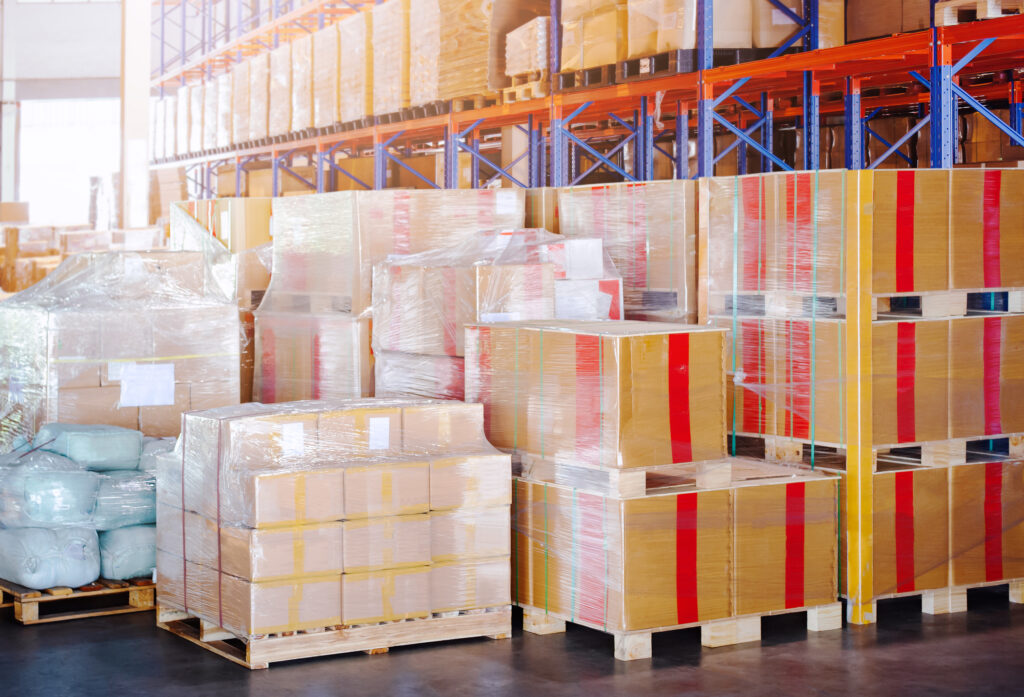
Although e-Commerce is often associated with individual parcels, many fulfillment operations ship palletized loads to parcel hubs, regional distribution centers, or retail locations. Load stability during transport is critical in these scenarios.
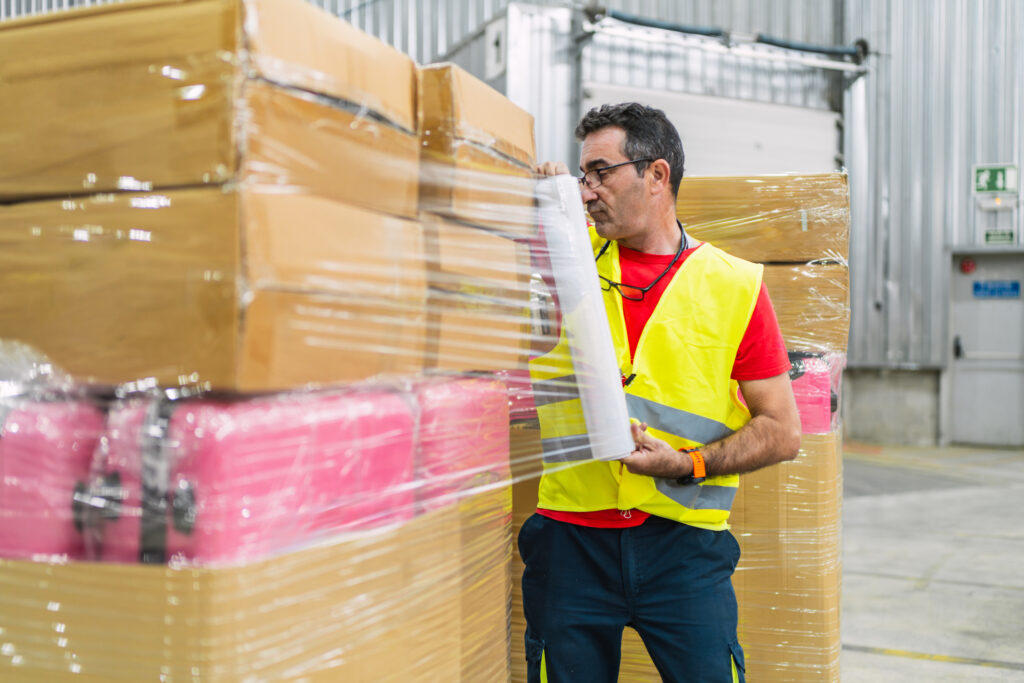
Semi-automatic and automatic stretch wrapping systems apply consistent containment force, stabilizing mixed-SKU pallets while reducing film waste and operator strain.
Benefits for e-Commerce fulfillment automation
- Improved load integrity during transportation
- Reduced film usage compared to manual wrapping
- Safer and more repeatable wrapping process
Automated containment supports both operational efficiency and sustainability goals, particularly for high-volume outbound operations.
Conclusion: A Practical Path to Scalable Packaging Automation
Packaging automation does not have to be implemented all at once. Many e-Commerce organizations achieve the best results by starting with the most labor-intensive or inconsistent processes and expanding automation as volumes grow.
Together, these five solutions help fulfillment operations:
- Increase order throughput
- Reduce dependence on manual labor
- Improve packaging consistency and quality
- Control material and freight costs
- Build scalable, future-ready workflows
To support evaluation and planning, Lantech offers resources that provide additional context and real-world examples, including:
- Automation cost-reduction charts
- Case erector savings calculators
- E-commerce and logistics-focused case studies
These tools allow teams to model their own operations, identify opportunities, and build automation strategies grounded in data and operational reality—rather than assumptions.
Ready to explore how packaging automation could work in your operation?
Talk to our pro team for a packaging evaluation tailored to your order profiles, throughput goals, and labor challenges. Our specialists can help you identify the right automation steps—and build a solution that scales with your business.
FAQ
1. What are the best packaging automation solutions for e-Commerce?
The best packaging automation solutions for e-Commerce are those that reduce manual handling, improve consistency, and scale with order volume. The most effective solutions include:
- Automated case erectors to eliminate manual box forming
- Automated case sealers for consistent, secure package closure
- Right-sizing or box-on-demand systems to reduce excess packaging and shipping costs
- Automated void fill systems to protect products and speed up packing
- Automated stretch wrapping to stabilize palletized outbound shipments
Together, these technologies help e-Commerce operations improve throughput, reduce labor dependency, and maintain packaging quality as volumes grow.
2. How can e-Commerce companies automate packaging?
E-commerce companies can automate packaging by starting with the most labor-intensive or repetitive tasks and adding automation incrementally. Common first steps include automating box forming and sealing, followed by protective packaging and load containment.
Rather than fully automating all processes at once, many fulfillment centers adopt a phased approach, integrating automation where it delivers immediate operational value while maintaining flexibility for future expansion.
3. Which packaging machines help speed up order fulfillment?
Several types of packaging machines directly improve order fulfillment speed, including:
- Case erectors, which prepare boxes faster than manual folding
- Case sealers, which eliminate delays caused by inconsistent sealing
- Void fill systems, which reduce packing time per order
- Stretch wrappers, which streamline pallet preparation for outbound shipping
By reducing manual steps and standardizing workflows, these machines allow fulfillment teams to process orders more quickly and consistently.
4. How does packaging automation reduce labor needs?
Packaging automation reduces labor needs by replacing repetitive, manual tasks with consistent machine-driven processes. Automated systems reduce the number of operators required per shift, minimize training time for new staff, and lessen dependence on skilled manual labor during peak periods.
In addition, automation improves ergonomics and reduces fatigue, allowing existing teams to focus on higher-value activities such as quality control and exception handling.
5. What tools can improve packaging efficiency in e-Commerce?
Tools that improve packaging efficiency in e-Commerce include:
- Automated case erecting and sealing equipment to stabilize the packing process
- Packaging optimization tools, such as right-sizing systems and void fill automation
- Load containment solutions, including automated stretch wrapping
- Packaging cost and savings calculators that help teams model automation impact
When combined with operational data and continuous improvement practices, these tools help e-Commerce businesses increase efficiency while controlling packaging and labor costs.