Stretch wrapping plays a critical role in protecting products as they move through warehouses, distribution centers, and transportation networks. When loads are unstable, the result is often shipping damage, rework, safety risks, and increased cost. Achieving stretch wrapping success requires more than simply applying film to a pallet. It requires disciplined preparation, engineered containment, and consistent measurement. This guide explains the keys to effective stretch wrapping and outlines how to improve stretch wrapping performance through practical, process-driven steps.
Why Stretch Wrapping Is Essential for Load Stability
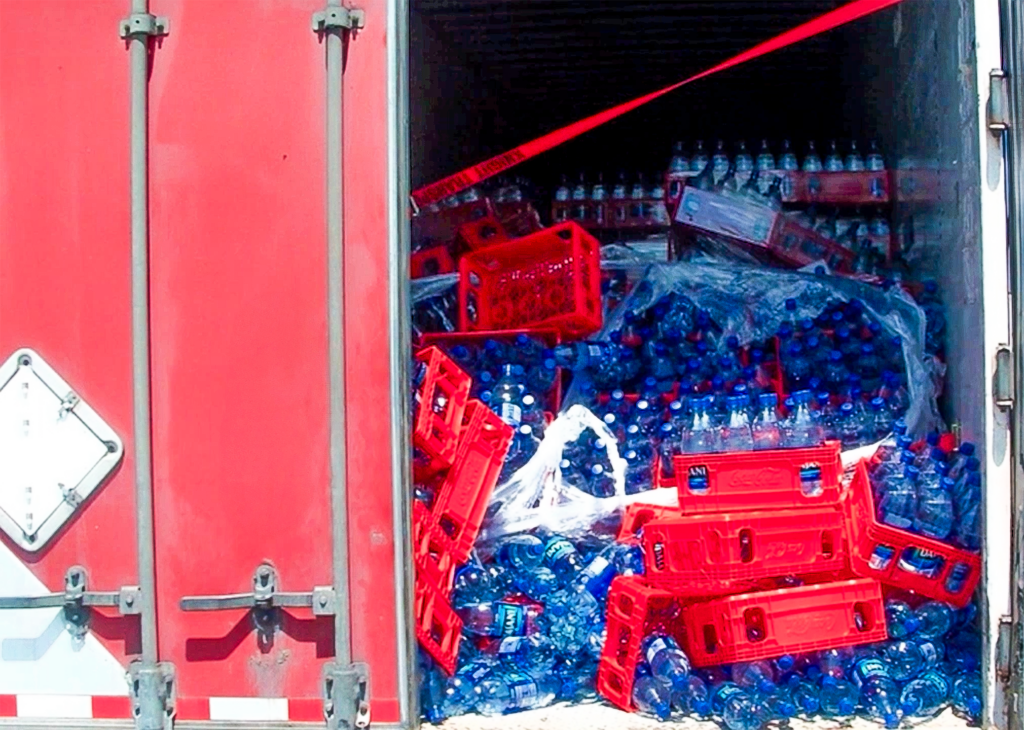
Every palletized load is exposed to dynamic forces once it leaves the production floor. Acceleration, braking, vibration, and handling stress the integrity of the load. Without proper containment, cases shift, corners collapse, and entire loads can lean or fail.
Many companies attempting to reduce shipping damage focus narrowly on film cost. But stretch wrapping success is not defined by how little film is used — it is defined by how reliably the load performs in transit. True stretch wrapping success ensures that the load moves as a single unit, remains stable throughout the supply chain, and arrives in its as-made condition.
The keys to effective stretch wrapping can be organized into three core pillars:
- Preparation
- Containment
- Measurement
When these elements work together, wrapping performance becomes predictable and repeatable across shifts, facilities, and product types.
Preparation: The Foundation for Stretch Wrapping Success
Preparation establishes the baseline for reliable wrapping. No containment strategy can fully compensate for a poorly prepared load.
Assessing the Load
Before wrapping begins, the load itself must be evaluated. Weight distribution should be balanced, cartons should be square and properly stacked, and overhang should be minimized. Uneven stacking or significant overhang introduces instability that film tension alone cannot correct.
A stable load starts with consistent pallet patterns. If cartons are misaligned or unsupported, the film will amplify weaknesses rather than correct them. Operations seeking to improve stretch wrapping performance should begin by auditing load build quality at the source.
Pallet Condition and Load-to-Pallet Engagement
The pallet is not separate from the containment system — it is a critical part of it. Broken boards, warped runners, or inconsistent pallet dimensions weaken the entire unit load.
Just as important is load-to-pallet engagement. If the load is not securely connected to the pallet, the two can move independently during transit. Technologies such as Pallet Grip® are specifically designed to lock the load to the pallet, increasing stability and reducing shifting forces.
Preparation, therefore, includes not only stacking quality but also ensuring that the pallet and load function as a unified system.
Staging, Sequencing, and Film Selection
Operational consistency also depends on proper staging. Loads should be centered on the turntable or conveyor, sensors must accurately detect load height, and wrap programs should correspond to the specific SKU being processed.
Film selection further influences wrapping success. Gauge, pre-stretch capability, and puncture resistance must align with load weight and distribution environment. Applying the wrong film — or applying it with incorrect machine settings — compromises containment force and repeatability.
Preparation is often overlooked, yet it determines whether containment can be applied effectively.
Containment: Achieving Load Stability and Protection
Containment refers to the controlled application of stretch film to secure the load and hold it together as a single unit. At the center of containment strategy is containment force — the force exerted by the film on the load.
For a deeper explanation of containment principles, see our detailed guide on load containment.
Engineering the Right Containment Force
Containment force must be engineered, not estimated. Too little force allows loads to shift during handling and transport. Too much force can crush cartons, distort product, or cause film breakage.
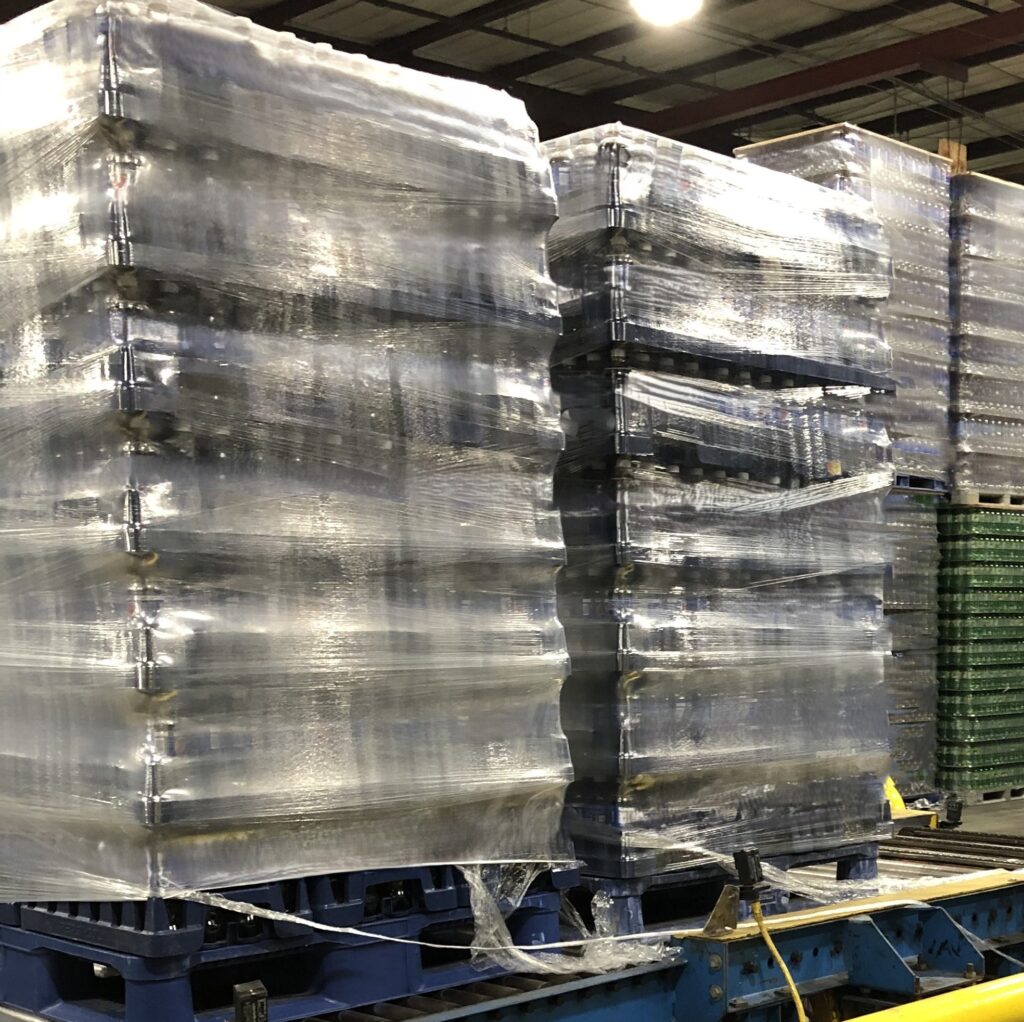
Achieving stretch wrapping success requires determining the appropriate containment level for each load type. Heavy beverage pallets, lightweight paper goods, and mixed retail loads all require different containment strategies.
This is why containment force should be treated as a measurable metric rather than a visual guess.
Film Placement and Wrap Patterns
Film placement is just as important as force. The base of the load is critical because it determines how effectively the pallet and load move together. Adequate bottom wraps combined with load-to-pallet engagement significantly reduce the risk of shifting.
Mid-section wraps provide structural support, while top wraps improve load cohesion. Overlap patterns should be intentional and consistent. Applying a generic wrap pattern to every SKU introduces variability and increases risk.
Effective stretch wrapping best practices require aligning wrap patterns to load characteristics rather than defaulting to one universal program.
Managing Tall, Light, or Irregular Loads
Certain loads present additional challenges. Tall loads amplify vibration forces. Lightweight loads may deform under excessive containment. Irregular shapes require reinforcement in weak areas.
In these cases, slower rotation speeds, targeted reinforcement, and adjusted containment levels improve stability. Edge protectors, corner boards, or top sheets can further enhance vertical rigidity and load integrity.
Containment strategy must adapt to load variability rather than remain static.
Measurement: The Key to Repeatable Stretch Wrapping Performance
Without measurement, stretch wrapping remains subjective. Visual inspection cannot accurately determine whether containment force is adequate or excessive.
Measurement transforms stretch wrapping from an art into a controlled process.
Measuring Containment Force
Containment force can be quantified using tools such as the Containment Force Tool. Measuring actual force applied to the load allows teams to validate wrap programs and ensure repeatability.
Rather than relying on assumptions, measurement provides data-driven insight into how wrapping performance changes across shifts, film lots, or facilities.
To determine recommended containment levels for various load types, download our Containment Force Recommendation Chart.
Standardization Across Facilities
Measurement also supports standardization. Once appropriate containment levels are identified, wrap programs can be locked by SKU, documented, and audited regularly.
For multi-site operations, this creates consistency across facilities. For high-volume environments, it reduces variability between operators. For packaging engineers, it enables continuous improvement.
Measurement is the bridge between containment strategy and operational control.
Common Mistakes That Undermine Stretch Wrapping Success
Even well-equipped facilities can struggle with wrapping performance when key principles are ignored.
One common mistake is assuming that increasing film tension alone will solve instability. Another is focusing exclusively on reducing film cost without considering damage risk. Failing to measure containment force, neglecting load-to-pallet engagement, or applying a single wrap pattern across all SKUs also compromise performance.
Avoiding these mistakes requires a process-oriented mindset. Stretch wrapping best practices depend on aligning preparation, containment, and measurement rather than treating wrapping as a final step.
Technology and Automation in Stretch Wrapping
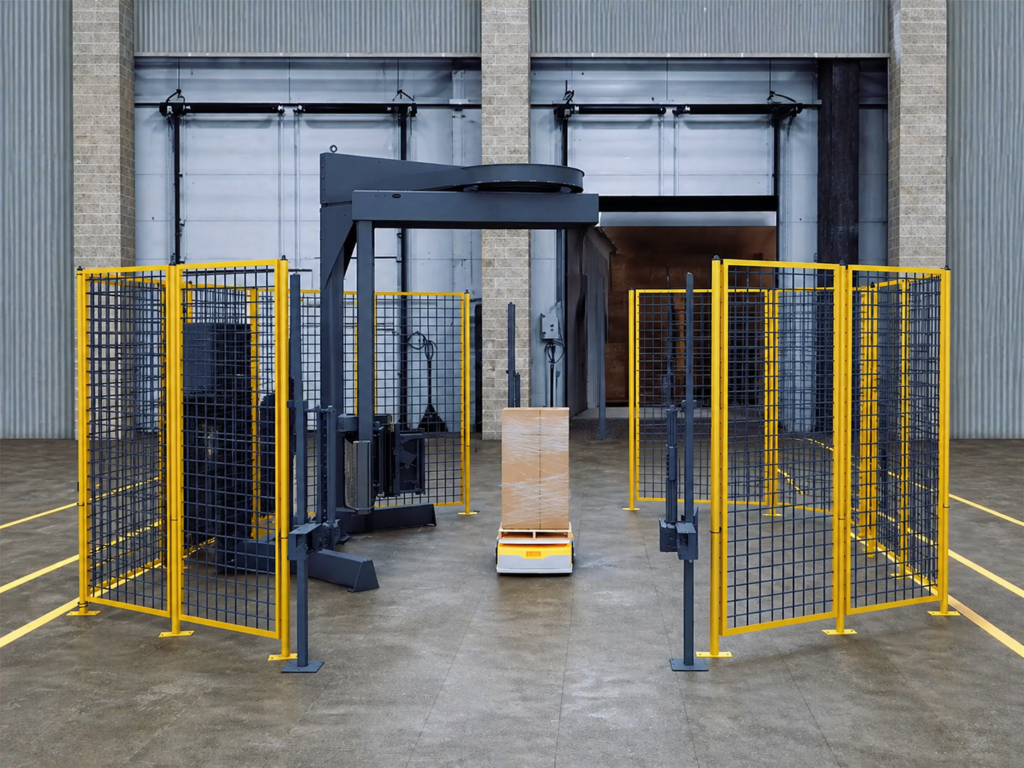
Modern stretch wrapping systems reduce human variability and increase repeatability. Automation improves control over pre-stretch levels, wrap force, load detection, and program consistency.
Under the LeanWrap® umbrella, technologies such as Pallet Grip® and Load Guardian® enhance containment performance and operational consistency. Pallet Grip® locks the load to the pallet and improves stability, while Load Guardian® helps the operator choose the appropriate wrap profile for the load and apply proper film settings throughout the wrap cycle.
When preparation, engineered containment, and automation work together, stretch wrapping performance improves dramatically.
Real-World Impact
In high-volume environments, integrating engineered containment strategies with LeanWrap technologies has delivered measurable improvements in load stability and shipping performance. In one documented case, combining load-to-pallet engagement with optimized wrap programs significantly reduced variability and improved overall load performance across shifts.
Technology alone does not guarantee stretch wrapping success — but when paired with preparation and measurement, it reinforces consistency and reduces risk.
Benefits and Business Outcomes
Applying preparation, containment, and measurement together produces tangible results.
Operations experience fewer shipping damage incidents, reduced rework, and improved customer satisfaction. Film use becomes optimized rather than excessive. Labor efficiency improves as wrap programs become standardized and repeatable.
Most importantly, loads perform consistently in transit.
Companies focused on improving stretch wrapping performance often discover that measurement and engineered containment reduce total cost of ownership — not just film spend.
Stretch wrapping success, therefore, is both an operational and financial advantage.
Conclusion: Engineering Stretch Wrapping Success
Stretch wrapping remains one of the most influential processes in end-of-line packaging. Yet it is often undervalued or treated as routine.
Preparation ensures that loads begin stable.
Containment secures and protects them.
Measurement ensures consistency and continuous improvement.
Together, these keys to effective stretch wrapping enable companies to reduce shipping damage with wrapping, standardize performance, and improve load stability across operations.
Stretch wrapping success is not accidental. It is engineered through disciplined preparation, controlled containment, and measurable results.
FAQ
1. What are the key factors for successful stretch wrapping?
The key factors for successful stretch wrapping are proper load preparation, engineered containment, and consistent measurement. Preparation ensures the load is stable before wrapping begins. Containment secures the load to itself and to the pallet using the correct containment force and film placement. Measurement verifies that wrapping performance is repeatable and meets stability requirements. When these three elements work together, companies achieve true stretch wrapping success and reduce shipping damage.
2. How do I prepare a load before stretch wrapping?
Preparing a load for stretch wrapping begins with evaluating weight distribution, carton alignment, and pallet condition. Loads should be square, evenly stacked, and free of excessive overhang. Damaged or inconsistent pallets should be replaced, and the load should be centered on the wrapper. Film selection and wrap program settings should also match the load type. Proper preparation creates the foundation for reliable containment and improves overall stretch wrapping performance.
3. What does containment mean in stretch wrapping?
Containment in stretch wrapping refers to the controlled application of stretch film to hold the load together and secure it to the pallet. The primary measure of containment effectiveness is containment force — the force applied by the film to stabilize the load. Proper containment ensures the pallet and load move as a single unit during handling and transportation, reducing the risk of shifting, leaning, or collapse.
4. What metrics should I use to measure stretch wrapping quality?
The most important metric for measuring stretch wrapping quality is containment force. Visual inspection alone is not sufficient to determine whether a load is properly secured. Measuring containment force with appropriate tools allows operations to validate wrap programs and standardize performance. Additional metrics may include load stability during transit testing, film usage per load, and damage rate trends. Using measurable data helps improve stretch wrapping success and maintain consistency across shifts or facilities.
5. How can automation improve stretch wrapping success?
Automation improves stretch wrapping success by reducing human variability and increasing repeatability. Automated systems provide precise control over pre-stretch levels, wrap force, and film placement. Technologies such as Pallet Grip® enhance load-to-pallet engagement, while monitoring systems like Load Guardian® help apply appropriate wrap settings. When combined with preparation and measurement, automation strengthens pallet containment strategies and improves overall packaging performance.
6. What common mistakes reduce wrap performance?
Common mistakes that reduce wrap performance include ignoring load preparation, applying the same wrap pattern to every SKU, focusing only on reducing film cost, failing to measure containment force, and neglecting load-to-pallet engagement. These errors can lead to instability, material waste, and increased shipping damage. Avoiding these pitfalls and following structured stretch wrapping best practices helps ensure reliable, repeatable results.