Case erectors play an increasingly important role in modern packaging operations. As companies face labor shortages, rising costs, and higher order volumes, automated case erecting offers a practical way to improve efficiency, consistency, and workplace safety. This article explains the key case erectors benefits — from higher throughput and reduced labor dependency to improved quality and long-term scalability — and provides actionable insight for operations leaders evaluating packaging automation.
Table of Contents
- Why Packaging Automation and Case Erectors are on the Rise
- Improve Throughput and Operational Efficiency
- Reduce Labor Dependency and Human Error
- Ensure Consistent Case Quality and Product Protection
- Lower Packaging and Operational Costs
- Enhance Workplace Safety and Ergonomics
- Considerations Before Investing in a Case Erector
- Conclusion: A Strategic Long-Term Investment
- Frequently Asked Questions
Why Packaging Automation and Case Erectors are on the Rise
Across manufacturing and fulfillment operations, packaging automation is no longer a luxury — it is a competitive requirement.
Companies are facing:
- Labor shortages and rising wages
- Increased order volumes
- More SKU variation
- Pressure to reduce costs
- Higher expectations for reliability
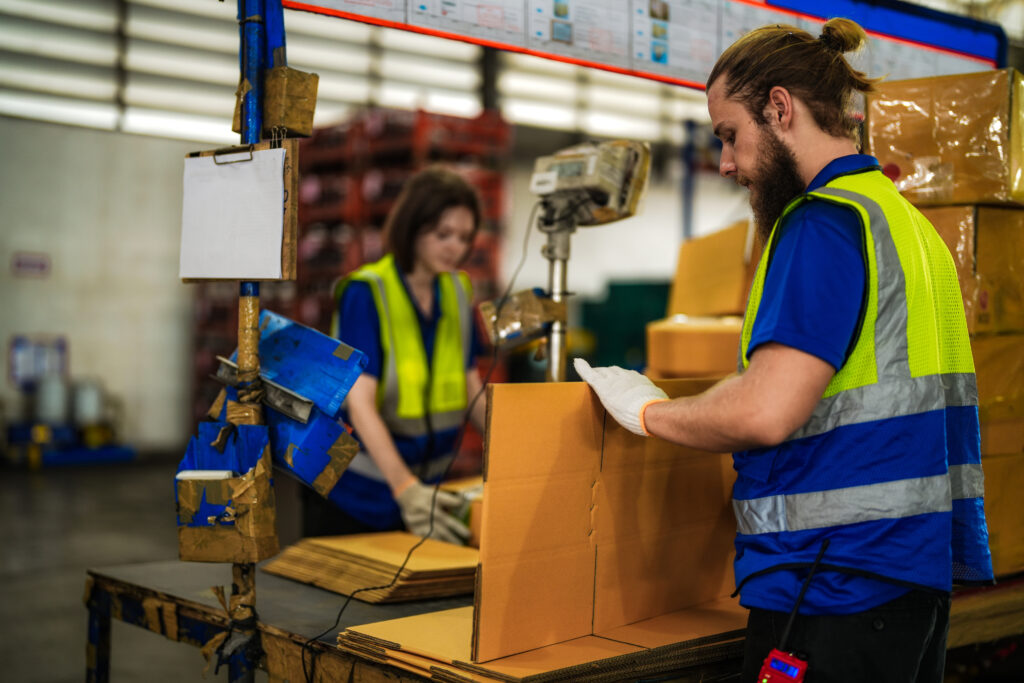
Manual case forming, once standard practice, has become a bottleneck in many facilities. The average person can erect approximately 2.8 boxes per minute under typical working conditions. Scaling that output requires additional labor — often several operators dedicated solely to forming cases.
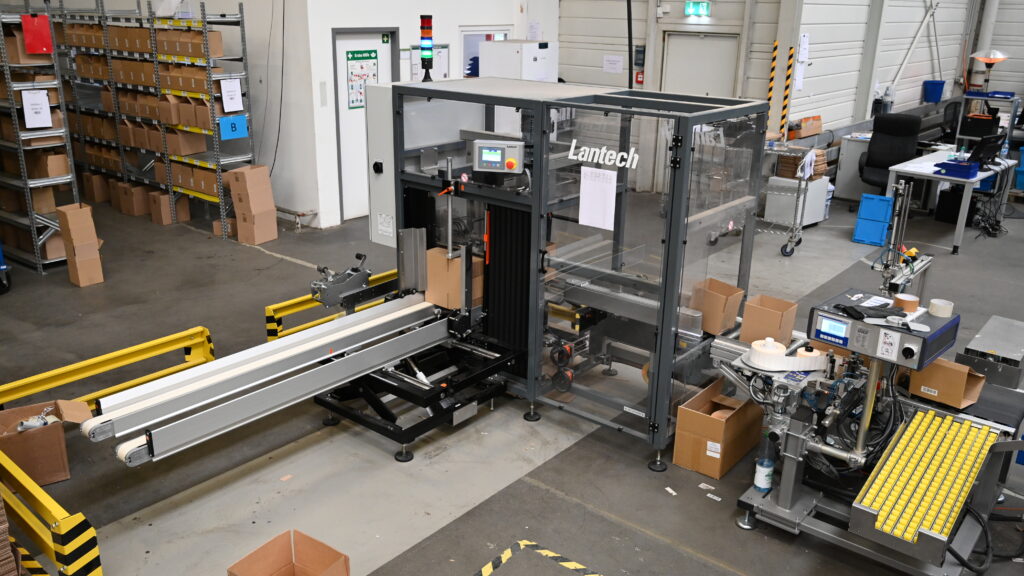
By contrast, a single case erector can support significantly higher output with consistent performance and minimal fatigue. In high-volume environments, it can take seven people to manually form 30 cases per minute, while one automated case erector can achieve the same throughput with far greater consistency.
Understanding the advantages of automated case erecting starts with understanding the operational impact.
1. Improve Throughput and Operational Efficiency
One of the primary case erectors benefits is the immediate impact on productivity.
Faster and More Consistent Case Forming
Manual forming rates vary throughout a shift. Fatigue, distractions, and repetitive strain all reduce output consistency.
An automated case erector delivers:
- Steady, predictable case output
- Consistent forming quality
- Reduced variability between shifts
For operations managers, that predictability simplifies production planning and reduces unexpected slowdowns.
Reduced Bottlenecks on Packing Lines
In many facilities, case forming becomes the first constraint as production scales. When packers must wait for formed cases, the entire line slows down.
Automating case forming helps:
- Maintain consistent case availability
- Balance upstream and downstream operations
- Eliminate the need to overstaff during peak periods
This directly supports packaging automation benefits across the broader line.
Support Higher Order Volumes With Existing Staff
One of the most compelling reasons why companies use a case erector is labor leverage.
Instead of assigning multiple operators to repetitive case forming tasks, facilities can:
- Redeploy labor to higher-value activities
- Reduce overtime
- Improve overall labor efficiency
This becomes especially valuable in tight labor markets.
2. Reduce Labor Dependency and Human Error
Manual case forming is repetitive, physically demanding work. It is also subject to human variability.
Automated case erecting reduces:
- Operator fatigue
- Repetitive strain exposure
- Inconsistent forming
- Missed folds or poorly squared cases
When evaluating why to use a case erector, decision-makers often cite labor stability as a top factor. Automation reduces dependency on manual staffing while improving consistency.
Dutch flower grower Kreling Chrysanten replaced manual carton building by two employees with an automated case erector capable of up to 30 cases per minute, improving production continuity while reducing labor costs and downtime.
In addition, modern case erectors are designed for operator simplicity. Changeovers often take less than two minutes, allowing teams to switch case sizes quickly without complex adjustments or extended downtime.
3. Ensure Consistent Case Quality and Product Protection
Uniform case forming plays a critical role in downstream packaging performance.
Poorly formed cases can lead to:
- Improper sealing
- Increased tape usage
- Misaligned loads
- Product shifting
- Damage during transit
Automated case erecting ensures:
- Squared cases
- Proper bottom flap folding
- Consistent structural integrity
This reduces rework and supports overall packaging quality.
For operations leaders, improved consistency reduces hidden costs that often go unmeasured — including rejected cases, product damage, and line disruptions.
4. Lower Packaging and Operational Costs
Case erector ROI is driven by multiple cost factors, not just labor reduction.
Labor Cost Reduction
Using the example above:
If seven employees are required to manually form 30 cases per minute, labor costs quickly compound — especially across multiple shifts.
Replacing or reducing that labor with one automated case erector allows facilities to:
- Reallocate personnel
- Reduce overtime
- Improve staffing flexibility
Even conservative labor redeployment can significantly impact annual operating expenses.
For example, when the German mail-order pharmacy Eurapon automated its case erecting and sealing processes, line speeds increased from 12 to 20 cycles per minute, two fewer employees were needed to operate the lines, and the investment paid for itself in just six months.
Less Material Waste and Fewer Rejected Cases
Inconsistent manual forming often leads to:
- Damaged blanks
- Improper tape application
- Rejected cases
- Excess tape usage
Consistent automation reduces variability, improving material efficiency and lowering indirect packaging costs.
Reduced Downtime and Operational Disruptions
Reliability is often overlooked in ROI discussions.
Lantech case erectors engineered for durability can achieve 98% uptime, supporting predictable production schedules and minimizing unexpected stoppages.
Reliable equipment reduces:
- Emergency maintenance
- Downtime and production delays
- Labor idle time
When evaluating case erector productivity, uptime is as important as speed.
5. Enhance Workplace Safety and Ergonomics
Manual case forming is repetitive and physically demanding. It often involves:
- Bending
- Twisting
- Repetitive folding motions
- Lifting and stacking
These activities increase the risk of strain injuries and long-term ergonomic issues.
Automating case forming:
- Reduces repetitive motion
- Minimizes physical strain
- Improves workstation ergonomics
- Enhances overall workplace safety
Improved safety not only protects employees — it supports morale, retention, and long-term operational stability.
At ice cream producer Ysco, standardizing on automated case erectors improved reliability during peak seasonal production while allowing one operator to manage multiple machines, reinforcing the importance of speed, ergonomics, and consistent performance.
Considerations Before Investing in a Case Erector
While the benefits are substantial, successful implementation requires planning. Key considerations include:
Machine Specifications
Ensure throughput matches current and projected production volume.
Footprint
Compact design is especially important in facilities with limited floor space.
Changeover Requirements
Evaluate case size variability and required adjustment frequency.
Integration Planning
Even stand-alone machines should be evaluated in the context of upstream and downstream processes.
Training and Operator Simplicity
Choose equipment designed for ease-of-use to minimize onboarding time.
Taking these factors into account helps ensure a smooth transition and maximizes case erector ROI.
Conclusion: A Strategic Long-Term Investment
The benefits of case erectors extend beyond simple automation. They improve throughput, reduce labor dependency, enhance safety, and strengthen packaging consistency — all while supporting long-term scalability.
For operations managers, plant leaders, and business owners evaluating packaging automation benefits, automated case erecting offers a practical, measurable path to improved efficiency and cost control.
Understanding why use a case erector ultimately comes down to operational leverage: doing more with fewer resources while maintaining quality and reliability.
As order volumes grow and labor markets remain competitive, the advantages of automated case erecting become increasingly clear.
FAQ
1. What are the main benefits of using a case erector?
The main case erectors benefits include improved throughput, reduced labor dependency, consistent case quality, lower operational costs, and improved workplace safety. Automated case erecting replaces repetitive manual forming with predictable, reliable output, allowing companies to increase efficiency while maintaining packaging quality.
2. How do case erectors improve packaging throughput?
Case erectors improve packaging throughput by forming cases at a steady, consistent rate without fatigue or variability. While the average person can erect approximately 2.8 boxes per minute, an automated case erector can support significantly higher output levels, helping eliminate bottlenecks and balance production lines.
3. Can a case erector reduce labor costs?
Yes. One of the primary advantages of automated case erecting is labor optimization. In higher-volume environments, it may take multiple operators to manually form cases at the rate a single case erector can achieve. Automation allows facilities to redeploy labor to higher-value tasks and reduce overtime, improving overall cost efficiency.
4. Do case erectors help improve consistency and quality?
Automated case erecting ensures cases are squared, properly folded, and consistently formed. This reduces defects, improves sealing performance, and helps prevent downstream packaging issues. Consistent case quality supports better product protection and fewer rejected or damaged cases.
5. What safety benefits do case erectors provide?
Manual case forming involves repetitive motions, bending, and lifting that can increase ergonomic strain. Case erectors reduce repetitive tasks, lower physical demands on workers, and help create safer packaging environments. This can improve employee morale and reduce injury risk.
6. How can a company calculate ROI for a case erector investment?
To estimate case erector ROI, companies should evaluate current labor costs, manual throughput rates, overtime expenses, rejected case rates, and downtime impact. Comparing manual output (e.g., 2.8 boxes per minute per operator) to automated output helps quantify labor savings and productivity gains. Factoring in uptime provides a clearer picture of long-term operational value.