Automation has become a defining part of modern manufacturing and distribution. For many operations leaders, however, the topic can feel overwhelming. “Automation” can mean everything from robotics and CNC machining to warehouse software, inspection systems, and fully integrated production lines — far more than any single article can responsibly cover.
This article focuses on one specific and critical part of the automation landscape: end-of-line packaging automation.
In practice, companies do not all start their automation journey in the same place. Manufacturers often automate upstream production processes first because that is where direct product value is created. Distribution centers, especially those that are order-picked, frequently begin with warehouse management systems or picking automation. As those upstream systems become more efficient, pressure builds downstream — and packaging is often where bottlenecks, labor strain, and inconsistency surface.
That is where end-of-line packaging automation comes into play.
Rather than attempting to explain all forms of manufacturing or warehouse automation, this article clarifies:
- Where end-of-line packaging automation fits within the broader automation picture
- What it actually includes
- Why it becomes critical as operations scale
- What benefits operations teams can realistically expect
Table of Contents
- What Is End-of-Line Packaging Automation?
- How Packaging Automation Supports Upstream Systems
- Levels of End-of-Line Packaging Automation
- Standalone Automation
- Connected Packaging Cells
- Integrated End-of-Line Systems
- Key Benefits of Packaging Automation
- How End-of-Line Automation Supports Different Industries
- Conclusion
- Frequently Asked Questions
What Is End-of-Line Packaging Automation?
End-of-line packaging automation refers to equipment and systems that prepare finished products for storage and distribution. These processes typically occur after products are made or picked, and focus on consistency, protection, and efficiency.
Common examples include:
- Case erecting and forming
- Case sealing
- Product collation and packing
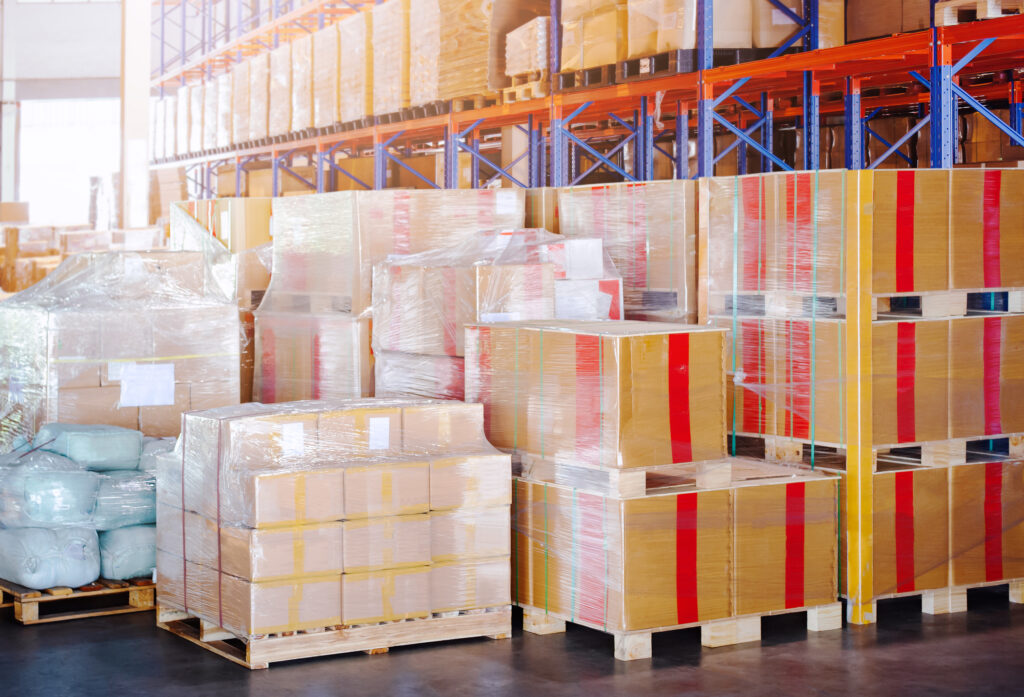
- Stretch wrapping and load containment
- Pallet unitization for outbound shipping
Unlike automation that affects how a product is manufactured or picked, end-of-line automation affects how reliably and efficiently that product leaves the facility.
This distinction matters. Packaging is often where variability shows up most clearly — between operators, shifts, or order profiles — and where manual processes struggle to keep up as upstream automation increases output.
How End-of-Line Automation Fits Into the Bigger Automation Picture
End-of-line packaging automation is not always the first system implemented — but it often becomes unavoidable as operations mature.
- In manufacturing, upstream automation increases throughput, which puts pressure on packaging to keep pace
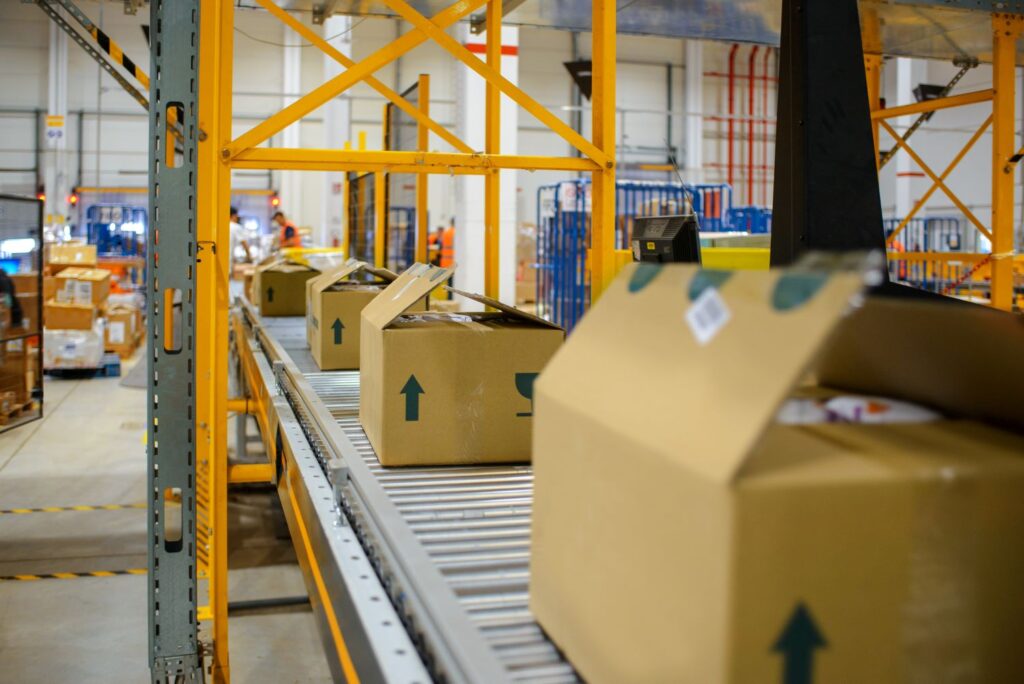
- In distribution, faster picking and fulfillment systems create downstream congestion if packaging remains manual
- In both cases, packaging becomes the limiting factor if it cannot operate consistently and predictably
End-of-line automation helps stabilize this handoff between production or picking and outbound logistics. It does not replace upstream systems — it supports them.
Levels of End-of-Line Packaging Automation
Automation at the end of the line does not require a single, all-encompassing system. Most facilities progress in stages based on need, labor availability, and operational complexity.
Standalone Automation
This level introduces a single machine that automates one task.
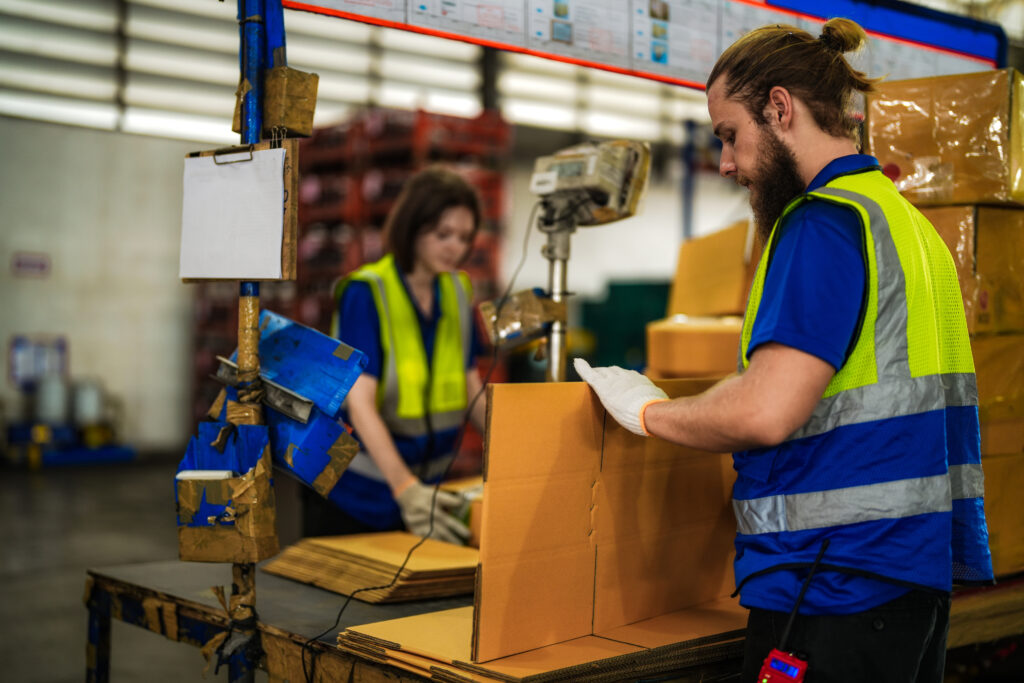
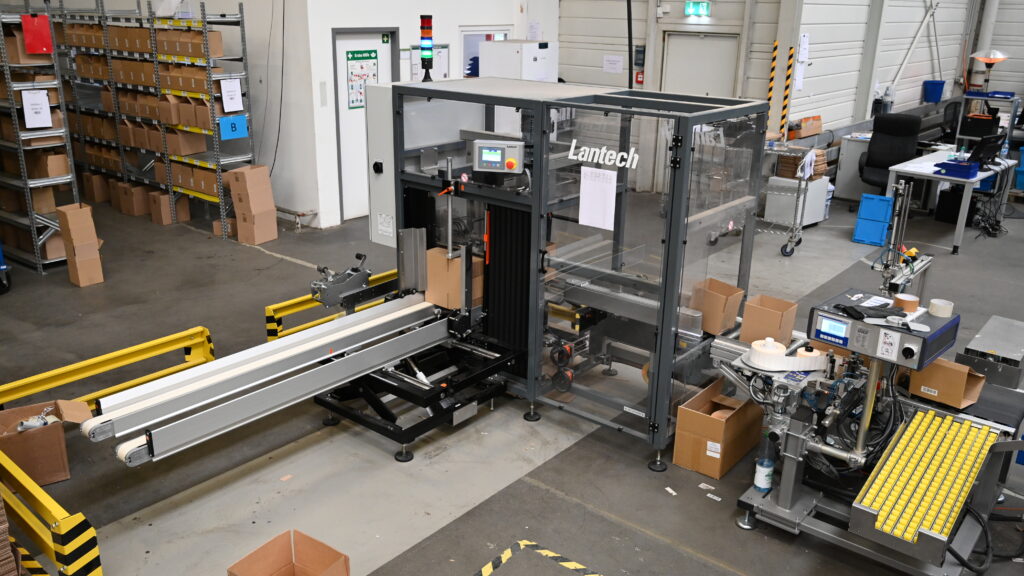
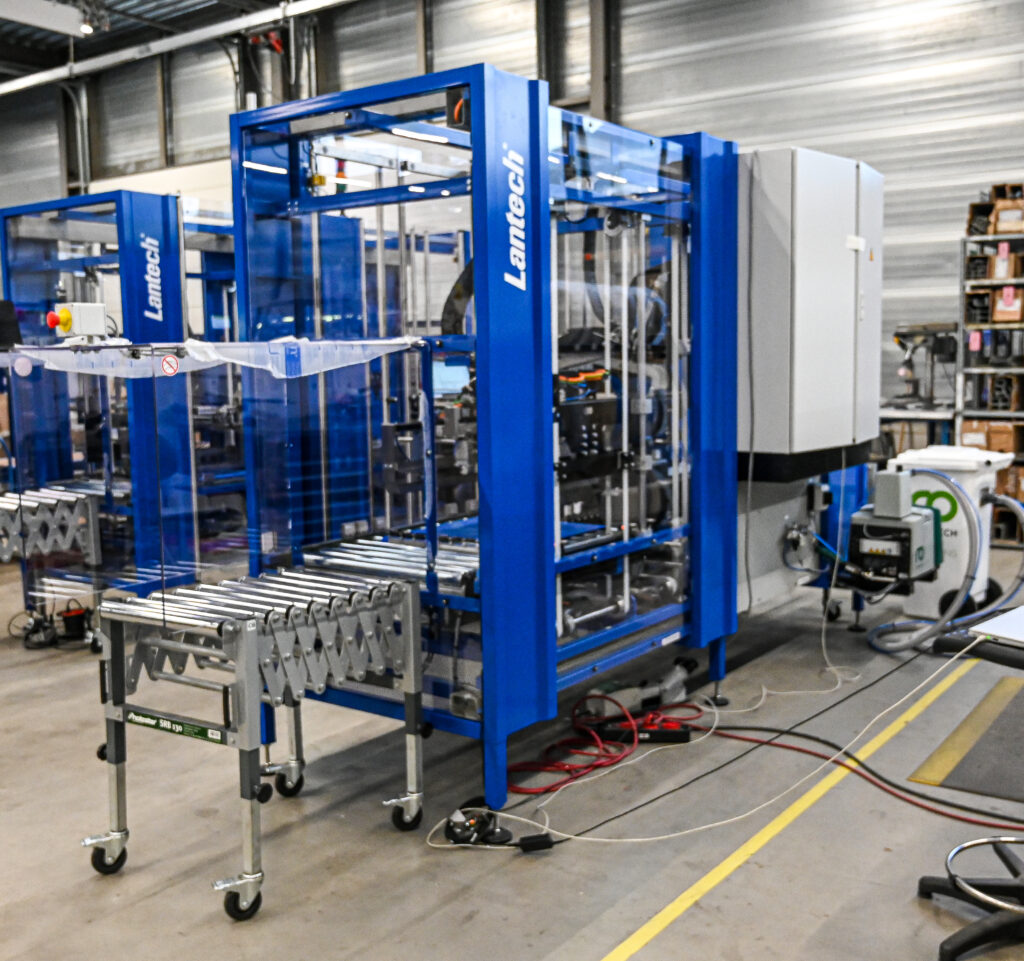
For example, automatic case erectors form cases with little to no operator interaction, delivering consistent case quality while reducing manual handling and repetitive motion.
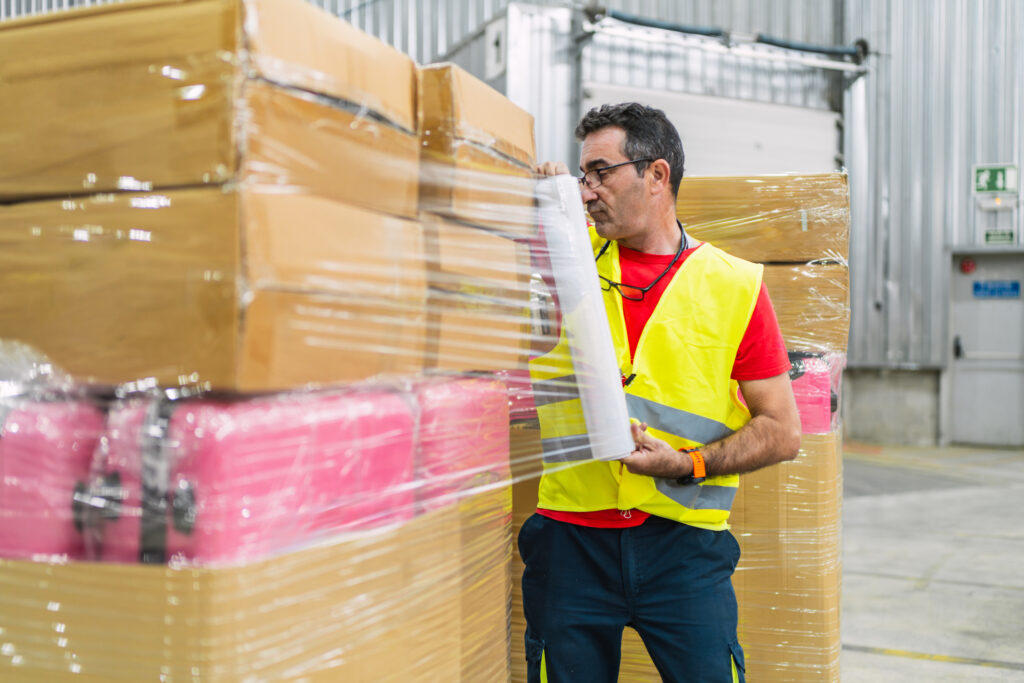
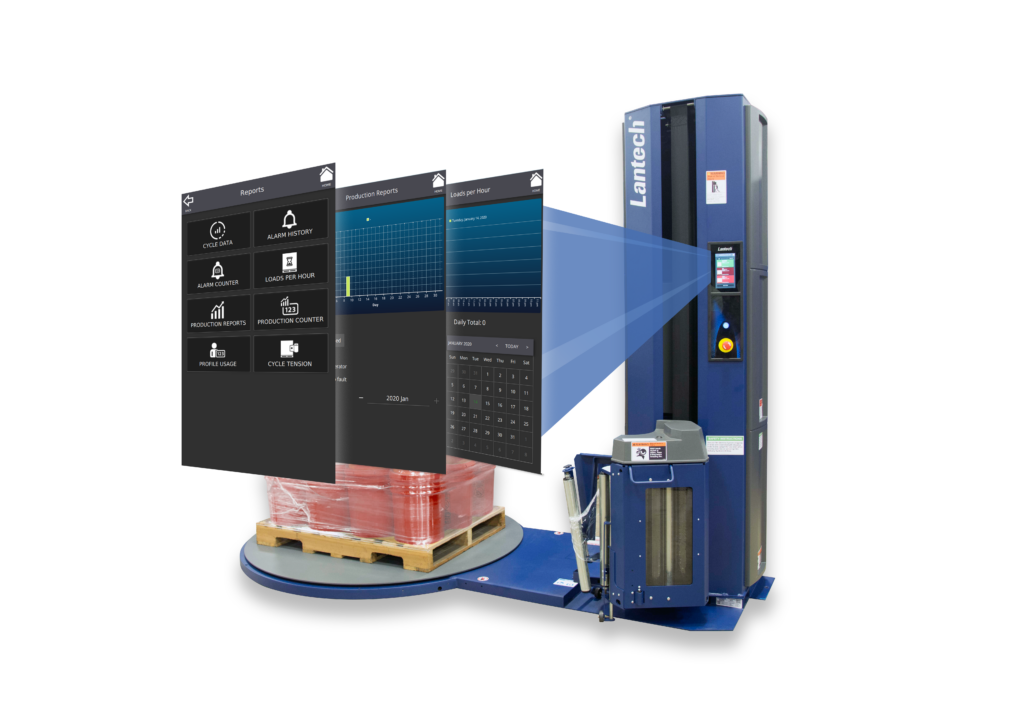
Semi-automatic stretch wrappers, while still requiring an operator, can dramatically improve labor efficiency and consistency by automating critical elements such as film delivery, containment force, and wrap patterns. One operator can often manage multiple loads more efficiently than manual wrapping, while achieving more repeatable results.
In both cases, standalone automation reduces physical strain, improves consistency, and helps stabilize throughput without requiring major system changes.
Connected Packaging Cells
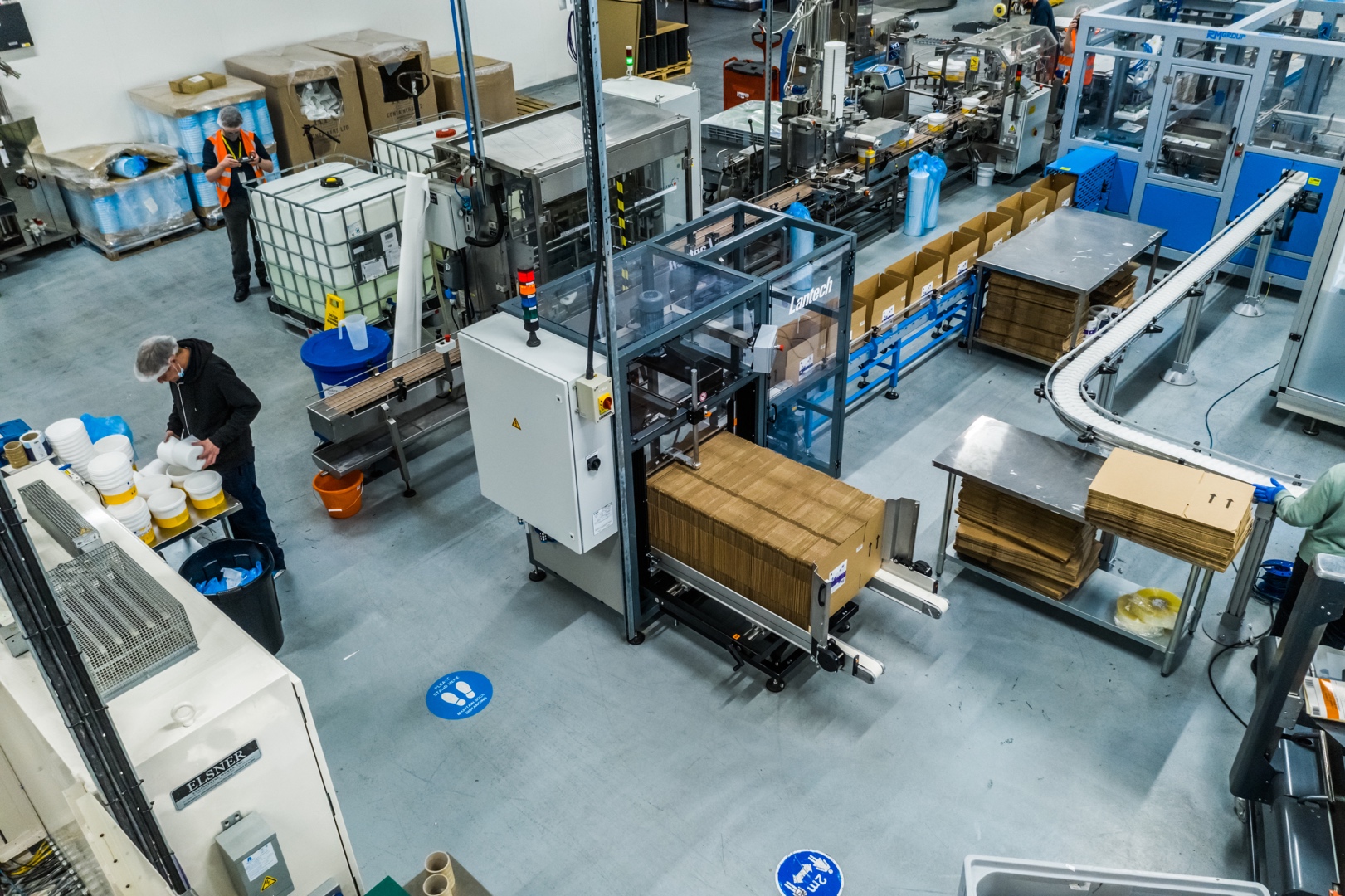
At this level, multiple machines work together — such as case erecting, sealing, labeling, and stretch wrapping — to reduce handoffs and improve flow. This approach increases efficiency while maintaining flexibility.
Integrated End-of-Line Systems
More advanced systems coordinate packaging equipment through shared controls and data, supporting higher volumes, better visibility, and long-term scalability. While not every operation needs this level, it can be valuable for complex or high-throughput environments.
Key Benefits of Packaging Automation
Improved Consistency
Automated systems apply the same process every cycle, reducing variability caused by operator differences, training gaps, or shift changes.
Higher Throughput
Packaging automation helps maintain steady output as upstream processes speed up, reducing the risk of backups at the end of the line.
Reduced Risk of Damage
Proper case forming and controlled stretch wrapping improve load integrity, helping products arrive intact and reducing rework or claims.
Better Use of Labor
Automation allows operators to oversee processes rather than perform repetitive manual tasks, easing labor pressure while maintaining output.
Safer Work Environments
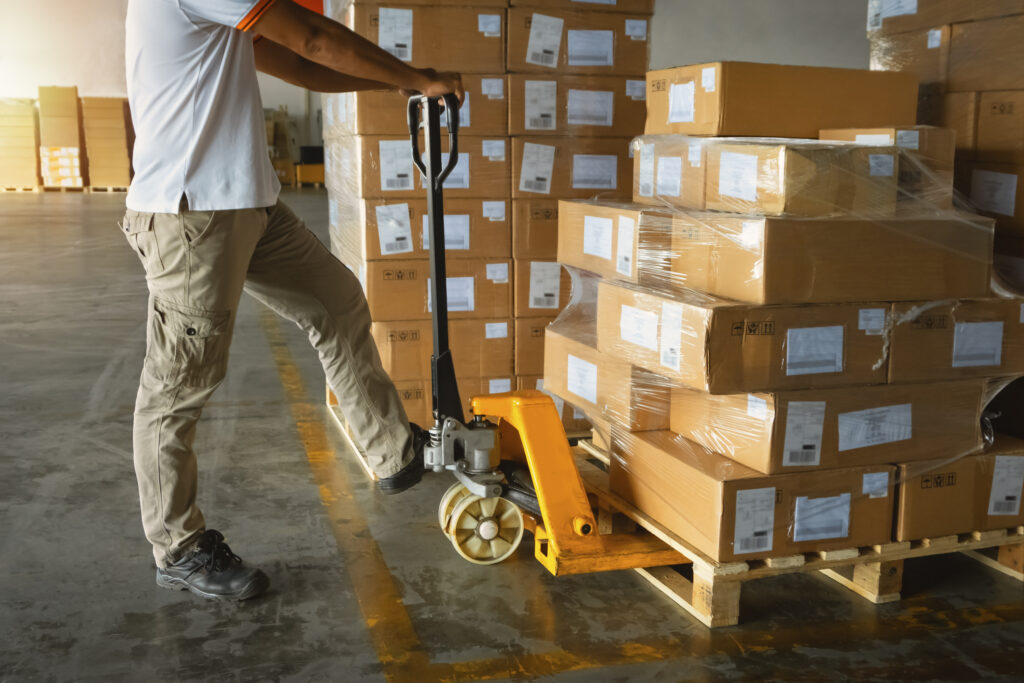
Reducing manual lifting and repetitive motion lowers injury risk and supports safer, more sustainable operations.
How End-of-Line Packaging Automation Supports Different Industries
While manufacturing and fulfillment processes vary widely, the need to ship products safely and efficiently is universal. End-of-line packaging automation supports this across many sectors without changing how products are made or picked.
- Food and beverage: Consistent case forming and secure pallet loads support throughput and transport stability
- Pharmaceutical and medical products: Reliable packaging helps support downstream traceability and damage prevention
- e-Commerce and distribution: Automation improves packaging consistency and reduces labor dependency as order volumes fluctuate
- Industrial manufacturing: Proper unitization protects heavy or irregular loads during transit
The packaging requirements differ, but the role of automation at the end of the line remains the same: prepare products for safe, efficient movement through the supply chain.
Conclusion
Automation does not follow a single, linear path. Companies automate where it makes the most sense for their business — and as upstream systems become faster and more efficient, packaging must keep up.
End-of-line packaging automation plays a critical role in maintaining flow, consistency, and safety as operations scale. By focusing on the point where products leave the facility, operations teams can address real constraints without overextending scope or complexity.
Ready to evaluate your end-of-line packaging process?
Whether packaging has become a bottleneck due to upstream automation or you’re looking to improve consistency and labor efficiency, Lantech’s packaging specialists can help assess where automation makes the most sense for your operation.
Talk with our Pro Team to explore practical next steps or explore our stretch wrapping and case, tray and lid handling solutions.
FAQ
1. What is end-of-line packaging automation?
It refers to automating the processes that prepare finished products for shipment, such as case forming, sealing, and pallet wrapping, rather than how the product itself is manufactured or picked.
2. Is packaging automation suitable for small or mid-sized operations?
Yes. Many facilities start with standalone or semi-automatic equipment and expand over time as volumes and requirements change.
3. Does automation eliminate the need for operators?
No. Automation reduces repetitive and physically demanding tasks while allowing operators to focus on oversight, quality, and exception handling.
4. Can packaging automation be implemented gradually?
Yes. End-of-line systems are commonly added in phases, allowing operations to adapt without major disruption.
5. How does packaging automation support upstream systems?
By preventing downstream bottlenecks, packaging automation helps ensure that gains made in production or picking are not lost at the end of the line.