A system integrator’s reputation is not just built on the projects that go smoothly. It’s also built on what happens when something doesn’t — and how fast the problem disappears.
Multi-site, multi-geographic projects are the standard operating environment for Tier 1 integrators. When the system you designed and commissioned goes live across facilities in Texas, the Netherlands, and Chile, the vendors you specified come with you. If one of them can’t support a facility in Santiago the same way they can support one in Houston, that gap becomes your problem — not theirs.
Contents
- The Multi-Site Reality That Changes Vendor Selection
- What Global Service Coverage Actually Requires
- Why Packaging Equipment Is Where This Gap Shows Up
- The Proposal-Level Argument for a Vendor with Global Reach
- One Call. Any Country.
The Multi-Site Reality That Changes Vendor Selection
Global projects fail at the seams. The core material handling architecture — AS/RS, conveyors, WES — typically comes from vendors with established international support infrastructure. The packaging equipment at the end of the line often does not.
When a Tier 1 integrator specifies third-party packaging equipment for a 10-facility rollout across three continents, the selection criteria can’t stop at unit price or domestic performance. A vendor’s ability to deliver parts, technical support, and regulatory-compliant equipment in every country where the client operates is a project risk factor — and it belongs in the specification.
Supply chain resilience, localized technical support, and regulatory compliance are not soft preferences. They are concrete project requirements. A vendor without global infrastructure transfers that risk directly onto the integrator.
What Global Service Coverage Actually Requires
“Global” is not a marketing claim. It’s a set of operational capabilities that either exist or don’t when a system goes down at 2 a.m. in Frankfurt.
Meaningful global service coverage includes:
- Parts logistics that work internationally. Fast delivery of replacement components to any facility — not just facilities within driving distance of a US warehouse — is the standard that matters in a 24/7 automated environment.
- Localized technical support. Native-language engineering assistance, engineers who know the regional infrastructure, and service level agreements that hold across time zones reduce resolution time from days to hours.
- Regulatory compliance by region. Equipment certified to CE, UL, and RoHS standards — not just US standards — simplifies deployment across international markets and removes a compliance burden the integrator would otherwise carry.
- Financial stability. A globally established vendor with distributed manufacturing and warehousing is less exposed to localized disruptions, tariffs, and shipping delays — the kinds of events that produce the calls no project manager wants to make to their client.
In a 24/7 automated environment, the uptime requirements don’t stop at the conveyor. See what that actually demands from end-of-line equipment →
Why Packaging Equipment Is Where This Gap Shows Up
End-of-line packaging equipment is a late-stage specification decision on most projects. The core material handling architecture is locked first; the stretch wrappers and case erectors get added to the drawing after the major systems are confirmed. That sequencing creates a blind spot.
A solution design engineer specifying a stretch wrapper for a facility in Georgia is making the same specification for facilities in Germany and Chile — whether or not they’ve verified the vendor can support all three. If the vendor’s service footprint ends at the US border, the integrator finds out when the machine goes down in Munich, not before.
In a highly automated facility with low staffing levels, machine failures that can’t be resolved remotely — and where replacement parts take a week to arrive from overseas — produces exactly the kind of client escalation that shapes an integrator’s vendor list for the next five years.
The packaging vendor’s global infrastructure is not a feature. It’s a project risk variable.
End-of-line equipment is often the last thing specified and the first thing that causes problems. Here’s why it keeps getting left off the integration checklist →
The Proposal-Level Argument for a Vendor with Global Reach
A systems integrator’s sales engineer owns the commercial relationship with the end client. When the proposal goes to a Fortune 100 procurement team, the vendor selection has to hold up to scrutiny — from the CFO who wants to know why they chose an unfamiliar name, and from the operations team that has to live with the decision after go-live.
A packaging vendor with verifiable global presence gives sales engineers a confident story to tell. It also gives the client something they care about: the assurance that their vendor can support a facility in Atlanta the same way it supports one in Amsterdam.
The global footprint argument is most powerful when it’s specific. Scalability and consistency matter because standardizing on a vendor with global reach means an integrator can replicate a successful deployment from one region into any other — maintaining identical hardware, firmware, and performance. That’s not a branding claim. It’s a procurement argument that ends conversations about why you chose this vendor over a cheaper alternative.
One Call. Any Country.
In a multi-site global project, a stretch wrapper vendor with service coverage in multiple countries means the integrator can make one call to resolve a problem in Georgia, Germany, or Chile. Most packaging vendors cannot make that claim.
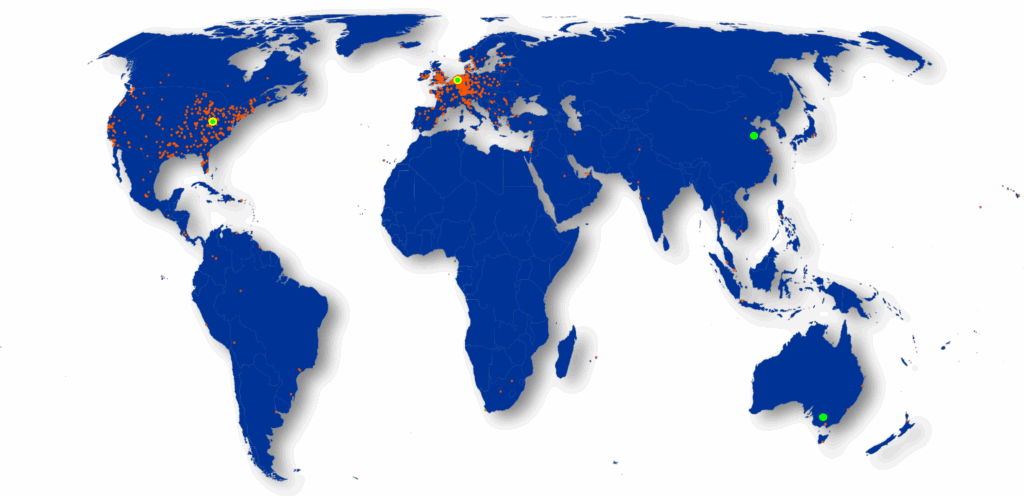
Lantech has that footprint — with manufacturing in the United States and the Netherlands, a global service and logistics network, and over 100,000 machines placed worldwide. When something goes wrong in a facility the client built because the integrator told them it would work, Lantech’s answer is not “we’ll try to find someone local.”
The organizations that win repeat business from Tier 1 clients are not the ones who specified the cheapest machine. They’re the ones whose vendors showed up — everywhere, every time.
Conclusion
A vendor’s global footprint is not a soft differentiator. In multi-geographic projects, it’s the operational infrastructure that determines whether a system performs as designed six months after go-live — in every country, not just the ones close to a domestic service depot.
- Packaging equipment is a late-stage spec decision, but its vendor’s service footprint is a project-level risk variable
- Supply chain resilience, localized support, and regulatory compliance require real global infrastructure — not a claim
- A vendor with service coverage across multiple countries means one call resolves a problem in Georgia, Germany, or Chile
FAQ
1. Why does a packaging vendor's global footprint matter to a systems integrator?
When a Tier 1 integrator specifies packaging equipment for a multi-site project, that vendor’s service capabilities follow the project into every country where the client operates. A vendor without international parts logistics, localized technical support, and regionally compliant equipment transfers deployment risk directly to the integrator. A vendor with coverage in multiple countries means one call resolves a problem in Atlanta, Amsterdam, or Santiago — rather than a week-long search for a local service provider.
2. What does global service coverage actually include for packaging equipment?
Meaningful global service coverage requires next-day international parts logistics, native-language engineering support, service level agreements that hold across time zones, and equipment certified to regional standards such as CE, UL, and RoHS. Financial stability and globally distributed manufacturing also matter — they protect against supply chain disruptions, tariffs, and shipping delays that would otherwise delay a go-live or create client escalations post-installation.
3. How does stretch wrapper downtime affect a Tier 1 integrator's project reputation?
In a highly automated distribution center with low staffing levels, a machine failure can stop an AMR workflow, create a product backlog, and generate an escalation to the client. ABB research estimates the average cost of industrial downtime at approximately $125,000 per hour. When a vendor can’t resolve a downtime event quickly — because parts are unavailable internationally or remote support doesn’t exist — the integrator wears that cost in their client relationship.
4. What should sales engineers say to a client who asks why they specified a particular packaging vendor?
The strongest answer combines three specific claims: the vendor invented stretch wrapping and has placed over 100,000 machines globally; the vendor’s service network covers projects in multiple countries. These are not brand claims. They are project-risk arguments that hold up in a procurement review with a Fortune 100 operations team.
5. Can the same packaging vendor specification be used across multiple countries in a global rollout?
Yes — when the vendor has global infrastructure. Standardizing on a vendor with internationally distributed manufacturing, regionally compliant equipment, and consistent technical support means an integrator can replicate a deployment from one region into any other and maintain identical hardware, firmware, and performance. This scalability and consistency is one of the primary reasons global integrators prioritize vendor footprint in multi-site specifications. A vendor whose capabilities stop at a national border forces the integrator to re-specify for each region.