For small and mid-sized warehouse operations, efficiency and cost control are paramount. Every step saved, every film roll optimized, and every worker hour allocated can directly impact profitability. Yet, one of the most overlooked areas for improvement often sits right at the end of the production line — the pallet wrapping process.
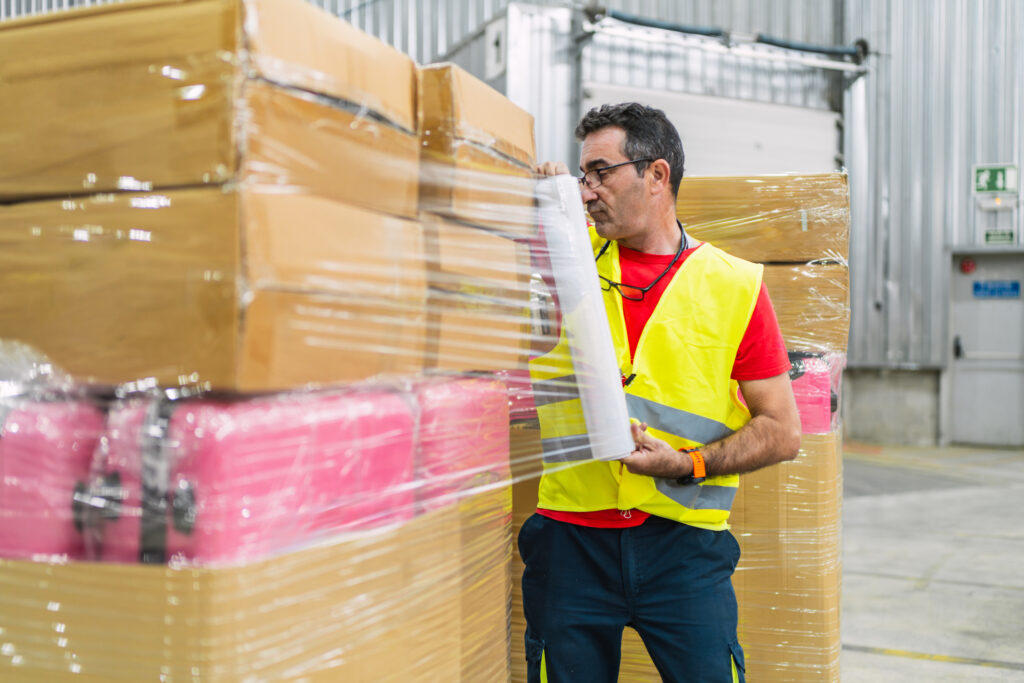
Many smaller operations still rely on manual processes to wrap loads before shipping. While it may seem cost-effective at first glance, manual pallet wrapping consumes valuable labor, uses more film than necessary, and introduces inconsistency that can lead to damaged loads in transit.
This article is designed for warehouse managers, operations engineers, and business owners who want to automate pallet wrapping in compact or space-limited environments. We’ll explore automation options, discuss how they can be implemented even in smaller footprints, and show how to estimate the ROI of switching from manual to semi-automatic or automatic stretch wrapping.
Table of Contents
- The Problem with Manual Pallet Wrapping
- What Is Automated Pallet Wrapping
- Why Automation Matters in Small Warehouses
- Automation Options for Small Operations
- How to Plan Your Automation Upgrade
- ROI of Automated Pallet Wrapping
- Conclusion
- FAQ
The Problem with Manual Pallet Wrapping
Manual wrapping may seem simple, but it introduces significant challenges in three key areas — containment, efficiency, and consistency.
- Containment and load security: When operators hand-wrap pallets, they use hand stretch film that typically has limited pre-stretch. This limited stretch capability reduces containment force — the tension that keeps a load secure — increasing the likelihood of product shifting or damage during transport. This is especially critical when pallets are shipped LTL or moved multiple times within a facility.
- Labor time and ergonomic strain: Hand wrapping requires workers to walk in circles around pallets, often bending and twisting repeatedly. It’s a physically demanding, time-consuming process that can lead to fatigue or strain injuries. Each manually wrapped pallet incurs unnecessary labor cost — and every minute spent wrapping is time not spent on other higher value tasks.
- Film waste and inconsistency: Manual techniques vary widely between operators. That inconsistency leads to film waste (too many wraps) or under-wrapping (too little coverage). Both outcomes raise costs — one in material waste, the other in risk.
| Manual Wrapping | Semi-Automatic or Automatic Wrapping |
| Wrap tension varies by operator | Consistent containment force every cycle |
| High labor input | Push-button operation or fully automated |
| Film often overstretched or underused | Optimized pre-stretch and metering |
| Increased injury risk | No physical strain |
| Higher shipping damage risk | Secure, repeatable loads |
What Is Automated Pallet Wrapping?
Automated pallet wrapping can be achieved through semi-automatic or fully automatic equipment, depending on needs.
An automatic stretch wrapper replaces manual labor with a machine-driven system that wraps and secures loads automatically. In a typical automated process, a pallet is delivered to the machine via a conveyor, and no human touch is required.
A semi-automatic stretch wrapper reduces the amount of manual labor required for the wrapping process, but does not fully eliminate it. It differs from an automatic stretch wrapper by requiring an operator to place the load on the turntable (or in the wrap zone for rotary arm equipment), initiate the wrap cycle, then remove the pallet.
With both types of equipment, once activated, the system manages wrapping tension, film delivery, and cut-off precisely for each load. The result is consistent, high-quality containment with minimal material use.
Why Automation Matters in Small Warehouses
While large distribution centers often adopt automation first, small warehouses stand to benefit just as much — if not more — because they typically operate with tighter labor budgets, smaller spaces, and leaner throughput requirements.
1. Limited space challenges
Automation doesn’t have to require a massive footprint. Modern compact stretch wrappers are engineered for tight layouts, enabling end-of-line automation even in constrained environments.
2. Labor efficiency and safety gains
By automating pallet wrapping, operators are freed from repetitive tasks and potential injury. They can be assigned higher-value tasks instead of manual wrapping. That not only improves workflow but also reduces ergonomic strain — a common source of hidden costs in warehouse operations.
3. Material savings and load consistency
Machines have a greater ability to apply film with calibrated pre-stretch and wrap patterns, minimizing waste and using less film per pallet compared to manual wrapping. With both semi-automatic and automatic wrappers, the end result is consistent, safe-to-ship loads at the lowest cost, with the lowest carbon footprint.
Automation Options for Small Operations
Not every small operation needs a fully automated conveyor system. Automation scales — and selecting the right level depends on your process, throughput, budget, and available space.
1. Semi-Automatic Stretch Wrappers
Semi-automatic systems offer a major efficiency step above manual wrapping while requiring limited capital investment. Operators place a pallet on the turntable, start the wrap cycle, and cut the film once complete. These systems still cut wrapping time dramatically and improve load quality.
Some semi-automatic stretch wrappers have options that can further reduce operator interaction by pre-programming wrapping patterns, securing the film to the pallet at the beginning and cutting the film at the end of the wrap cycle.
Semi-automatics are ideal for operations that are lower volume, run small-batch production schedules and/or need flexibility in load type and location.
2. Turntable vs. Rotary Arm Systems
Choosing between a turntable and a rotary arm wrapper depends on the load and environment:
| System | How It Works | Best For |
| Turntable | Pallet sits on a table that spins while the film carriage moves vertically | Most standard, stable loads |
| Rotary Arm | Film carriage rotates around a stationary pallet | Unstable, light or extra-heavy loads |
Rotary-arm systems are common in environments handling lightweight or top-heavy loads that could tip or shift during rotation and can be semi-automatic or automatic. Turntables are compact, cost-efficient, and easily integrated into smaller layouts.
3. Compact and Mobile Models
For small or temporary setups, portable semi-automatics allow flexibility. Some turntable style models are light enough to be moved by a forklift, allowing flexibility for floor space.
How to Plan Your Automation Upgrade
Automating pallet wrapping isn’t just about purchasing equipment. It’s about aligning the system with your production goals, floor plan, and process needs.
1. Assess volume and budget
Start by tracking your daily and weekly pallet counts, identifying labor hours spent wrapping, and estimating film use. Combine this data with labor rates and film costs to identify your breakeven volume for automation.
Example: For an operation wrapping 25 pallets per day at an average of 5 minutes per pallet, the labor time spent annually could exceed 500 hours — a cost easily offset by automation with a semi-automatic solution.
2. Space optimization tips
When space is tight:
- Choose a turntable wrapper that fits within standard pallet footprints.
- Map traffic flow, ensuring forklifts can load/unload without congestion.
- Consider a more flexible option like equipment that can be moved with a forklift or mobile wrappers.
3. Integration with existing workflow
For smoother transition, plan automation near current staging or shipping areas. Automatic wrappers can connect directly to your palletizers or conveyor lines. Semi-automatic equipment can be placed in areas where operators are already building the pallets, so that there is less distance between the order picking and wrapping areas.
4. Replacing existing equipment
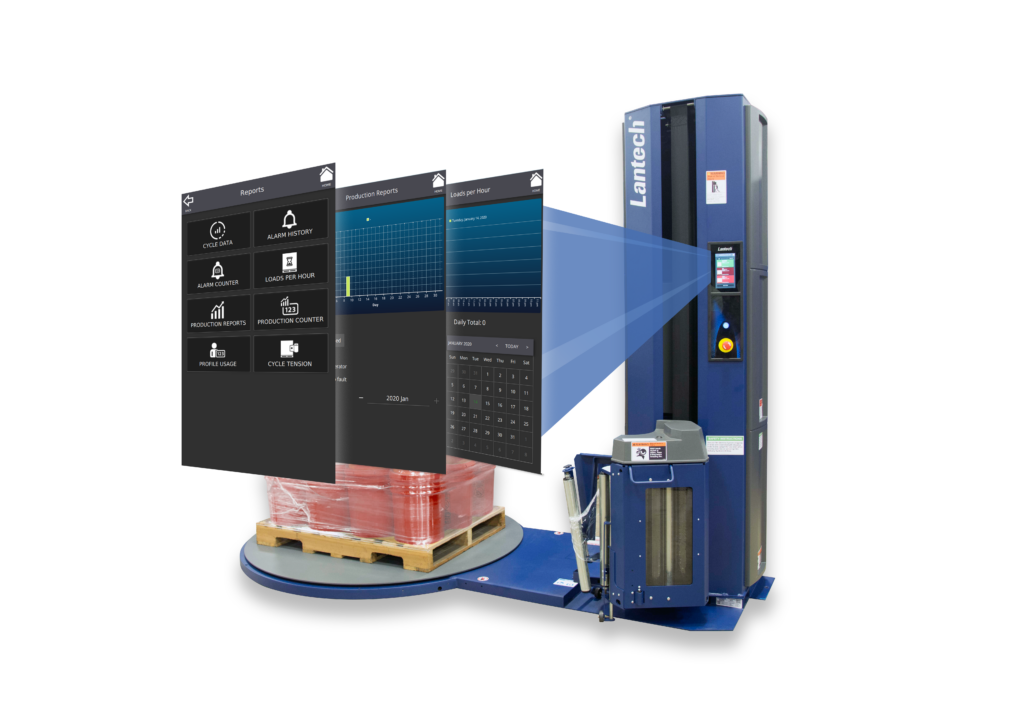
When existing semi-automatic or automatic wrappers become inefficient, upgrading to new models with advanced technologies like Metered Film Delivery® and Load Guardian®, can deliver measurable film savings and a user-friendly operator interface. These features provide tremendous value in reduced rewraps and decreased film waste.
ROI of Automated Pallet Wrapping
Automation ROI can be seen within months — not years. While each business case is unique, savings arise from three primary areas: labor, film, and load integrity.
1. Labor savings
Manual wrapping is labor-intensive and time-consuming. Semi-automatic stretch wrappers can free many hours weekly and allow operators to be reallocated to higher-value tasks. Additionally, automation can reduce the number of injury claims and risk from repetitive strain.
2. Film savings
Advanced technologies on fully automatic equipment that program pre-stretch systems to meter the exact film needed per load, can dramatically reduce the amount of film used and increase the stability of the load. Over thousands of pallets annually, the reduced film amount translates into substantial cost and environmental impact reductions.
3. Load quality and reduced damage
Consistent containment minimizes load shift and product loss. Fewer claims and returns mean lower transportation costs and higher customer satisfaction.
Conclusion
For small warehouses, automating pallet wrapping may seem like a big leap — but it’s often a simple and impactful automation step to take. It improves pallet wrapping efficiency, reduces labor burden, optimizes film use, and boosts shipping reliability.
Whether you start with a semi-automatic stretch wrapper or progress toward a fully automated pallet wrapping machine, the benefits scale with your volume and operational goals.
Small warehouses today are finding success not just in reducing wrapping time, but in transforming the end of their production line into a lean, predictable, and safe workflow.
Explore how Lantech’s stretch wrappers can fit into your facility — or request a consultation to assess your automation readiness.
FAQ
1. How can small warehouses benefit from pallet wrapping automation?
They can save time, reduce film and labor costs, and improve load consistency — all in a compact footprint. Automation creates repeatable results that protect shipments and free operators for more productive tasks.
2. What’s the difference between semi-automatic and automatic stretch wrappers?
Semi-automatics require an operator to place and remove the pallet, while automatics complete the entire wrap cycle — including film application, cutting, and labeling — with no human intervention.
3. How much space does an automated pallet wrapper require?
Compact turntable wrappers can fit in areas under 8′ x 8′, while rotary-arm and conveyor-integrated systems may need more clearance depending on load dimensions and traffic flow.
4. How quickly can automation pay off for a small operation?
Typical ROI occurs depends on labor rates, film use, and daily pallet volume.
5. Can pallet wrapping automation reduce film waste?
Yes. Advanced technology on equipment can ensure optimal film use on every pallet, often cutting film consumption by a significant amount.