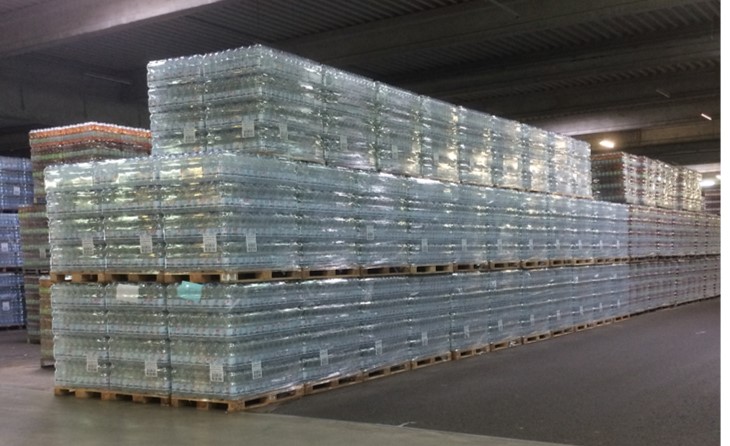
In the beverage industry—whether water, soda, juice, or alcoholic drinks—safe, cost-effective palletization is a constant challenge. Beverage loads tend to be heavy, tall, and often slippery due to condensation or shrink-wrapped multipacks. Without the right wrapping strategy, these loads are vulnerable to tipping, sliding, or deformation during handling, storage, and transport. For manufacturers, distributors, and 3PL providers, such instability translates directly into product damage, returns, and higher packaging costs.
That is why containment force and measurable containment ROI are critical. By applying consistent, measurable stretch-wrapping with documented containment force, beverage companies can reduce film consumption, minimize load damage, and achieve substantial cost savings — all while ensuring loads arrive intact at their destination. In this article, we examine how containment measurement, enabled by advanced wrapping technologies from Lantech, delivers rapid and measurable return on investment for beverage operations.
Table of Contents
- Why Beverage Loads Are High-Risk
- The Cost of Poor Containment
- Measured Containment: The Path to Predictable Stability
- Patented Technologies That Improve Containment ROI
- Industry Case Examples
- How to Implement Measured Containment in Beverage Facilities
- Conclusion
- FAQs
Why Beverage Loads Are High-Risk
Beverage loads present a unique set of stability challenges compared with many other palletized products:
- High center of gravity: Beverage cases are often stacked high to optimize cube utilization. As stack height increases, the center of gravity rises, making the load more prone to tipping during acceleration, braking, or cornering in transit.
- Slippery surfaces: Shrink-wrapped multipacks, PET bottles, and corrugated cases with polyethylene coatings reduce friction between layers, increasing the risk of internal load shift.
- Condensation and moisture: Cold-filled beverages often sweat during storage and transport. Moisture alters friction characteristics and can reduce the effectiveness of stretch film.
- High-speed distribution environments: Beverage operations run at high throughput with frequent pallet handling, conveyor transfers, and forklift movements — all of which introduce dynamic forces to the load.
- Liquid movement within containers: Unlike solid goods, liquid-filled containers experience internal motion during handling and transport. This “sloshing” effect can amplify momentum shifts within the load, especially during starts, stops, and turns.
- Heavy but dynamically unstable loads: Beverage pallets are dense and heavy. The combination of weight and fluid movement magnifies inertia and the consequences of any imbalance or weak containment.
- Reduced secondary packaging: To lower costs and improve sustainability, beverage manufacturers continue to minimize corrugate trays, shrink bundles, and returnable shells. While this reduces material use, it shifts more responsibility for load integrity to the stretch wrap and containment system.
These conditions place significantly higher stress on pallet containment systems. Without sufficient and consistent containment force, even minor disturbances can propagate into full load failure.
The Cost of Poor Containment
When containment force is inconsistent or insufficient, the economic impact extends well beyond visible damage:
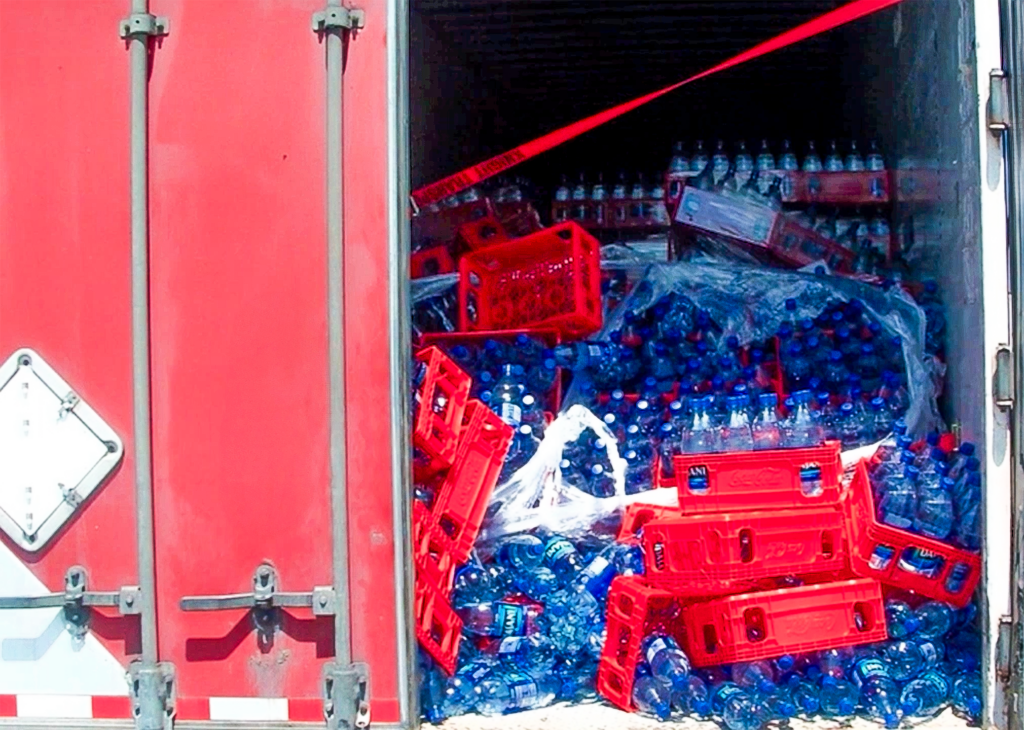
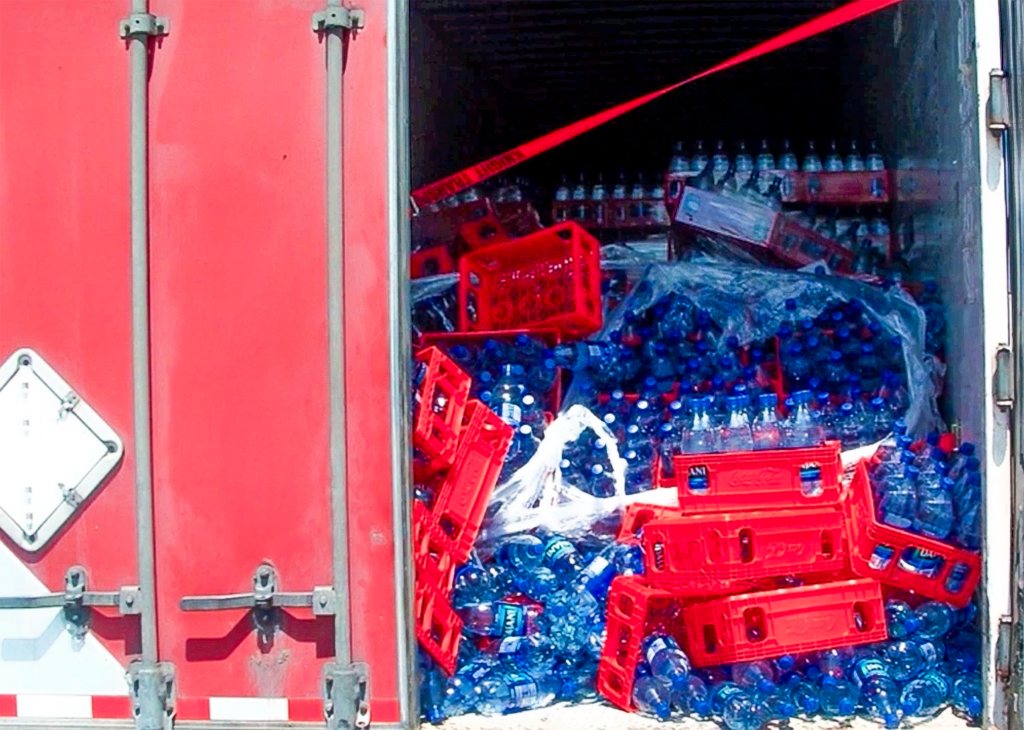
- Crushed multipacks and deformed cartons: Inadequate lateral support allows cases to compress during transport. Shrink-wrapped packs lose structural integrity, leading to retail rejections.
- Broken bottles and dented cans: Load movement creates impact points between product layers, resulting in leaks, loss of carbonation, and food safety concerns.
- Retailer chargebacks and returns: Damaged shipments often trigger compliance penalties, rejected loads, and time-consuming claims processing.
- Return freight and rehandling costs: Reverse logistics, product rework, and disposal all add hidden operational expenses.
- Excessive film usage as a safety buffer: To compensate for instability, operators often over-wrap loads “just in case,” driving up film cost-per-pallet without guaranteeing stability.
- Reputation and customer relationship risk: Repeated load failures or rejected deliveries can strain partnerships with key retail and distribution customers. A single damaged shipment has the potential to cause truckload returns, delivery delays, and environmental waste—all of which undermine brand reputation and long-term business opportunities.
Under-wrapping commonly leads to tipping, label scuffing, and multipack deformation, while over-wrapping increases material consumption without addressing the root cause of instability. The result is higher cost, wasted materials, and the potential loss of customer confidence.
Measured Containment: The Path to Predictable Stability
Effective beverage pallet stabilization is not achieved by simply applying more film. It requires measuring and controlling containment force so that each load receives the precise amount of stabilizing force required to ship safely.
A measured containment approach includes:
- Quantifying containment force instead of relying on subjective wrap tightness.
- Applying controlled, repeatable wrap profiles tuned to specific beverage load types.
- Verifying results through load performance testing, not visual inspection alone.
This eliminates the variability inherent in manual or low-end automated wrapping systems. For beverage manufacturers handling thousands of loads per week, this consistency is critical to protecting product quality and controlling packaging cost.
Patented Technologies That Improve Containment ROI
Lantech’s LeanWrap® stretch-wrapping technologies are specifically designed to deliver predictable containment with minimal film waste.
Metered Film Delivery®
Metered Film Delivery is a patented system that measures the perimeter of each load and delivers only the precise length of film required to achieve a programmed containment force per wrap revolution. Rather than paying out excessive film to compensate for uncertainty, the system mathematically controls film usage.
Direct impacts on beverage operations include:
- Lower film consumption per pallet
- Consistent containment force across irregular load shapes
- Balanced containment between long and short pallet faces
- Reduced risk of crushing fragile beverage packaging
In high-throughput bottled water operations, this approach has demonstrated film reductions of approximately 26% per load while maintaining safe-to-ship stability. Read the customer story here.
Load Guardian®
Load Guardian removes trial-and-error from wrapper settings setup. Operators input basic information about the load—such as dimensions, film gauge, and packaging type—and Load Guardian automatically calculates the optimal wrap profile to achieve the target containment force.
This ensures:
- Repeatable results across shifts and operators
- Faster changeover between different beverage SKUs
- Reduced dependency on highly experienced personnel
Consistency at the machine level is a major contributor to sustained containment ROI in beverage distribution environments.
Load Seeking Clamp®
Film breaks at the start of a wrap cycle can bring production to a halt, most often due to film clamp failure or misfeed. The Load Seeking Clamp (LSC) eliminates these issues by using a pneumatic bladder that applies three times the holding force of traditional clamps.
The clamp also travels to the side of the load, carrying the leading film tail in tow. This ensures the film is fully captured within the initial wraps, preventing tearing, film tenting, and corner exposure—all common causes of lost containment at the base of the load.
For beverage operations and other heavy-load applications, the increased containment force at the base is especially valuable. Dense, high-center-of-gravity pallets—like those common in bottled or canned drinks—require stronger anchoring to resist momentum and vibration during handling and transit.
LSC delivers measurable performance gains:
- Virtually eliminates film breaks at the start of the wrap cycle
- Increases containment force and wrap coverage at the load’s base
- Adds critical stability needed for heavy beverage loads
- Reduces downtime and operator intervention
- Enhances overall system reliability and throughput
Pallet Grip®
Pallet Grip enhances bottom-layer stability by rolling the lowest portion of the stretch film web into a tight cable positioned just above the pallet deck. This “grips” the pallet and anchors the load, preventing lateral movement during transport and forklift handling.
By mechanically locking the load to the pallet, Pallet Grip significantly reduces the most common source of beverage load shift.
Industry Case Examples
Bottled Water: High-Speed Stretch Wrapping
In a high-volume bottled water operation running up to 110 loads per hour, a Lantech SL Automatic Stretch Wrapper equipped with LeanWrap technologies replaced a conventional wrapping system.
Results included:
- Approximately 26% reduction in film consumption per pallet
- Improved pallet integrity during long-haul distribution
- Reduced use of secondary packaging materials
- Lower operator intervention and machine downtime
This illustrates how large-scale beverage producers can simultaneously improve load quality and reduce packaging cost at production speeds typical of water bottling operations.
Carbonated Beverages and Canned Drinks
Shrink-wrapped soda and canned beverage loads are especially susceptible to:
- Label scuffing
- Tray deformation
- Internal pack collapse
- Layer-to-layer sliding
When containment force is uneven or insufficient, these issues multiply as loads move through consolidation, cross-docking, and retail distribution. Applying controlled containment with bottom pallet anchoring stabilizes each layer individually while preventing cumulative movement across the entire load.
How to Implement Measured Containment in Beverage Facilities
A practical implementation roadmap:
- Measure current containment force on representative loads using a containment force test tool, like CFT-6.
- Document baseline performance, including film usage, damage incidents, and returned product.
- Install an automatic stretch wrapping system equipped with LeanWrap technologies for the most optimized stretch wrapping results.
- Configure wrap parameters based on actual load characteristics rather than operator preference.
- Validate load performance through handling and transport simulations.
- Monitor film and damage metrics over a 30–90-day period.
- Standardize successful profiles across all beverage SKUs and facilities.
This method ensures that improvements are data-driven, verifiable, and repeatable.
Conclusion
For beverage manufacturers, bottlers, distributors, and 3PL providers, measurable containment is essential for balancing product protection with packaging cost control. With advanced stretch wrapping technologies, beverage operations can:
- Reduce film usage per pallet
- Improve load stability across high-speed distribution networks
- Minimize product damage, retailer claims, and returns
- Lower labor and downtime through automation and consistency
Measured containment transforms stretch wrapping from a variable, operator-dependent process into a controlled, engineering-driven system with predictable ROI. For beverage operations seeking scalable cost reduction and improved load performance, this approach provides a proven, data-supported path forward.
FAQ
1. Why do beverage loads require higher containment force?
Because they are tall, heavy, and susceptible to sliding due to low-friction packaging materials and condensation.
2. How does measured containment reduce product damage?
By applying consistent, verified force that prevents both under-wrapping and over-wrapping, stabilizing the load without crushing it.
3. What ROI can beverage companies expect from optimized stretch wrapping?
The return on investment varies by application, product type, and existing packaging practices. Beverage loads are among the most demanding to contain, so the potential savings can be substantial. Lantech has a proven history of helping beverage producers reduce film use while improving load stability through patented technologies and deep industry expertise.
For example, one PET bottled water operation achieved a 26% reduction in film consumption after optimizing stretch wrapping parameters—lowering material costs and minimizing product damage without sacrificing throughput.
4. Which technologies improve beverage load stability?
Lantech’s patented LeanWrap technologies like Metered Film Delivery, Load Guardian, Load Seeking Clamp and Pallet Grip dramatically improve load stability for beverage products.
5. What are the top causes of beverage pallet failures?
High center of gravity, slippery shrink film, condensation, uneven containment force, and lack of pallet-to-load anchoring.