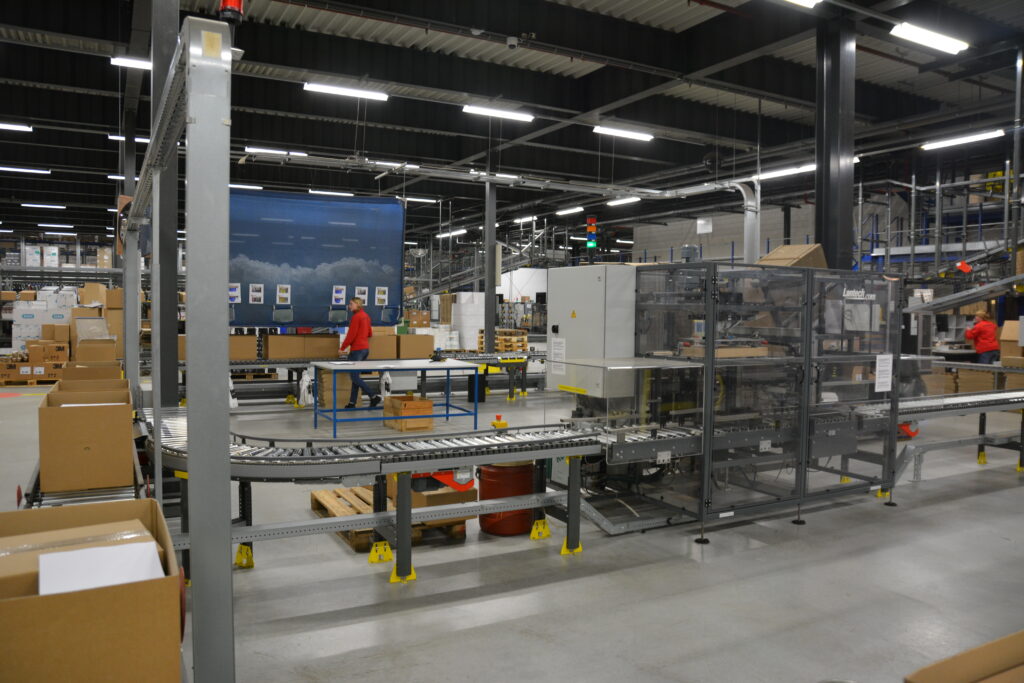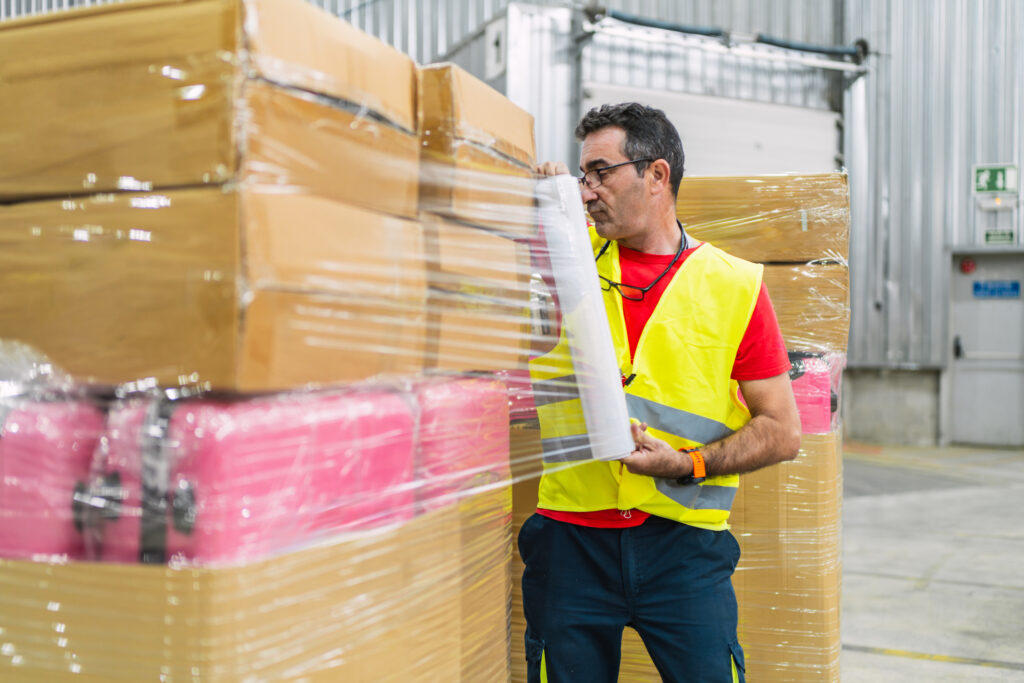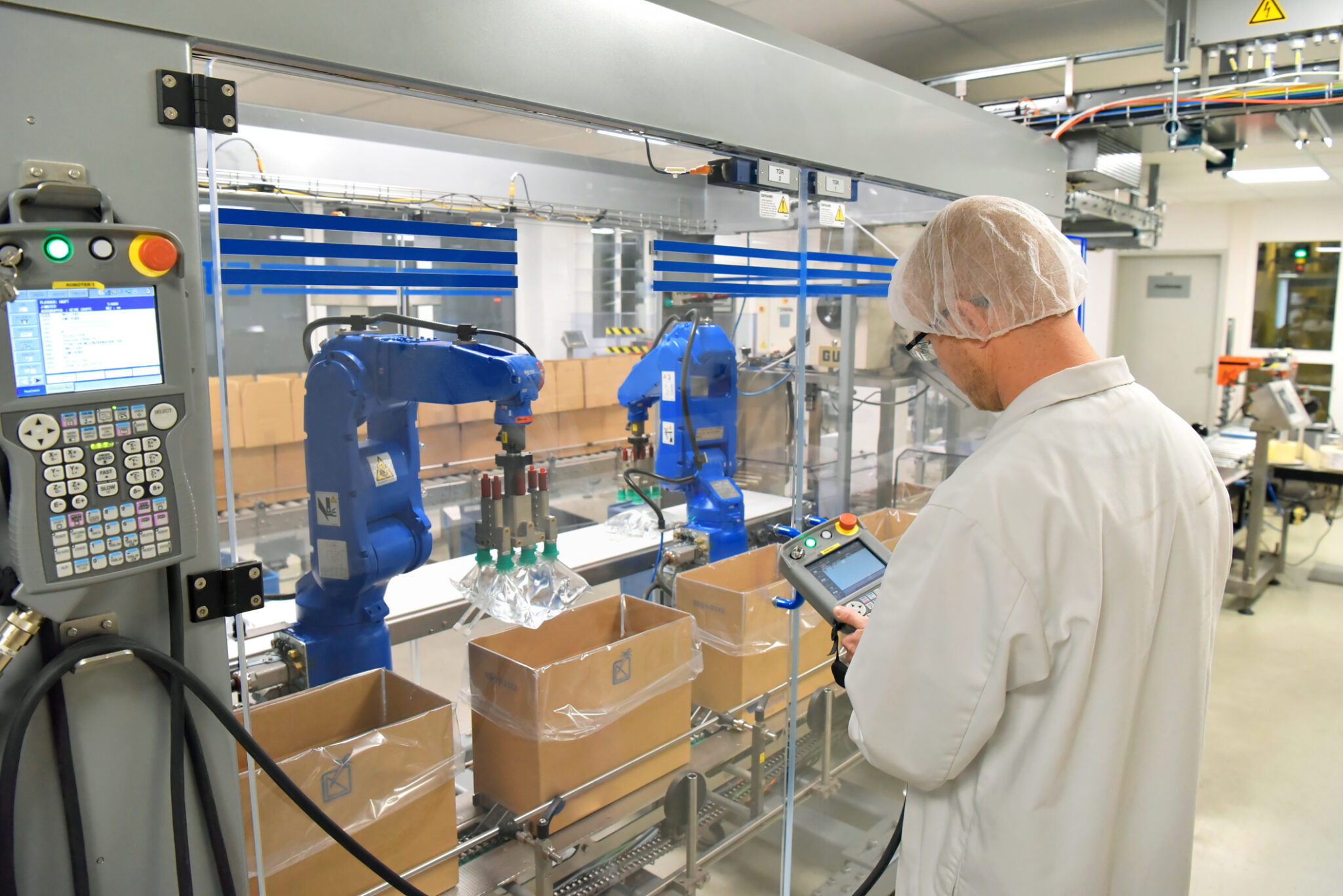
In the healthcare and pharmaceutical sector, pallet stability is not simply a logistics concern — it is a matter of product integrity, patient safety, and regulatory compliance. Pharmaceutical manufacturers, medical device producers, and healthcare distributors handle products that are often sterile, fragile, temperature-sensitive, or subject to strict handling requirements. Any loss of control during palletization or transport can lead to damage, contamination risk, or regulatory non-conformance.
At the same time, these operations face increasing pressure to reduce costs, improve throughput, and maintain consistency across shifts and facilities. Manual or inconsistent stretch wrapping introduces variability that regulated environments cannot afford.
This is where optimized containment force becomes essential. By measuring, controlling, and repeating the amount of force applied during stretch wrapping, healthcare and pharma operations can stabilize sensitive loads, reduce film usage, and achieve measurable ROI — while supporting regulatory expectations and quality system requirements.
Table of Contents
- Why Healthcare & Pharma Loads Are Difficult to Stabilize
- Operational and Compliance Risks from Poor Containment
- Why Certified Containment Force Is Critical in Regulated Industries
- Lantech Technologies That Improve Healthcare ROI
- Typical Healthcare & Pharma Load Scenarios and Solutions
- How to Implement Certified Containment in Healthcare Facilities
- Conclusion
- FAQs
Why Healthcare & Pharma Loads Are Difficult to Stabilize
Healthcare and pharmaceutical pallet loads present unique stabilization challenges:
- Fragile primary and secondary packaging: Blister packs, vials, syringes, IV bags, and diagnostic kits can be damaged by uneven compression or load movement.
- Liquid products: Bottles and flexible fluid containers are susceptible to leaks, deformation, and seal failures if loads shift.
- Temperature-controlled materials: Cold-chain products may introduce condensation, reducing friction between layers and increasing slip risk.
- High-value goods: Even minor damage can result in significant financial loss or scrapped product.
- Mixed cartons: Distribution pallets often combine products with different weights, rigidity, and packaging formats.
These characteristics make medical product pallet stability highly sensitive to both under-wrapping and over-wrapping.
Operational and Compliance Risks from Poor Containment
In regulated environments, the consequences of poor containment extend beyond visible damage:
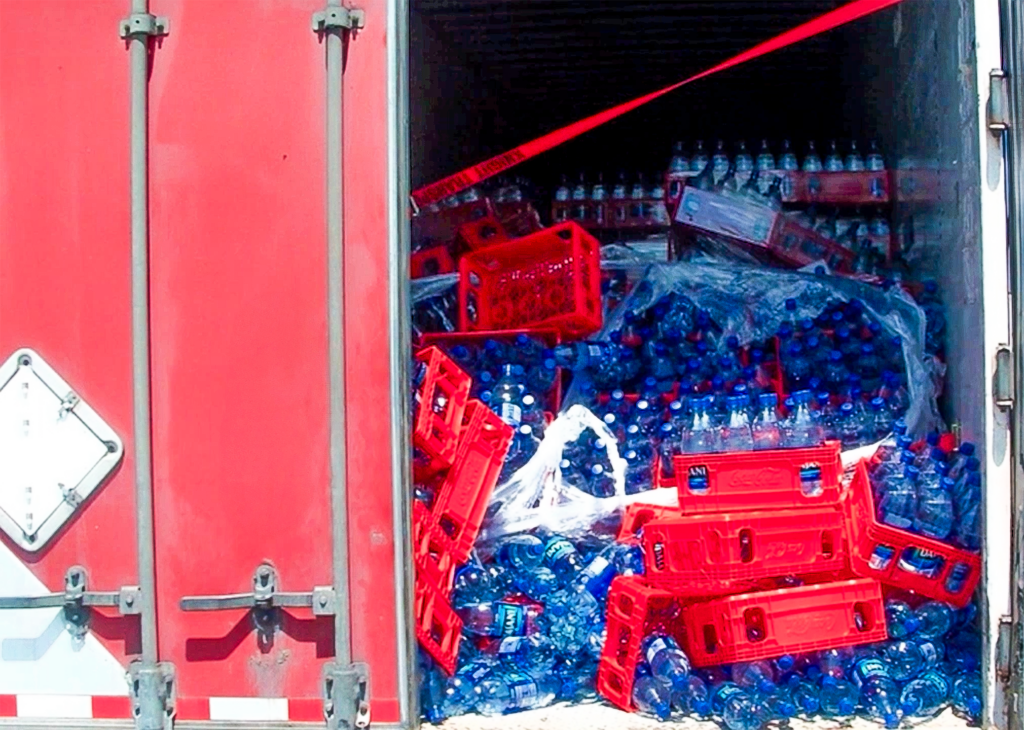
- Product damage and loss, including cracked vials, compromised seals, or crushed cartons
- Increased contamination risk caused by packaging failure or pallet collapse
- Label damage or scuffing, affecting traceability and regulatory labeling requirements
- Rejected shipments by distributors, healthcare providers, or regulators
- Deviation investigations and documentation, increasing QA workload
- Customer returns and service disruptions, especially in healthcare supply chains
In response, some facilities over-wrap pallets to “play it safe.” However, excessive film and tension can deform packaging, restrict airflow for temperature-controlled goods, and increase cost without ensuring stability.
Why Optimized Containment Force Is Critical in Regulated Industries
Optimized containment force provides a controlled, documented approach to pallet stabilization that aligns with regulated-industry expectations:
- Measured force application ensures loads receive sufficient stabilization without damaging packaging.
- Repeatability supports consistency across operators, shifts, and sites.
- Process control enables documentation within quality systems and SOPs.
- Reduced variability minimizes the risk of transport-related deviations.
Rather than relying on visual checks or operator intuition, containment force is quantified and applied consistently — a critical requirement for healthcare and pharmaceutical operations focused on compliance and risk mitigation.
Lantech Technologies That Improve Healthcare ROI
Metered Film Delivery®
Metered Film Delivery precisely controls the length of stretch film applied per wrap revolution based on pallet perimeter. This allows containment force to remain consistent even when pallet dimensions vary.
For healthcare and pharma operations, this delivers:
- Reduced film consumption without compromising stability
- Balanced force on all pallet sides
- Protection against over-compression of sensitive packaging
- Predictable, documented wrapping performance
Load Guardian®
Load Guardian standardizes wrap profiles by guiding operators through a structured setup process based on load characteristics. Once configured, the system applies repeatable settings automatically.
Benefits for regulated environments include:
- Reduced dependence on operator experience
- Consistent wrapping across shifts
- Faster validation of new or changed load configurations
- Improved process control for audits and inspections
Pallet Grip®
Pallet Grip creates a reinforced film cable at the base of the load, anchoring it to the pallet deck. This reduces lateral movement during forklift handling and transport.
This is especially valuable for:
- Tall, narrow medical device loads
- Mixed cartons with uneven weight distribution
- Loads moving through multiple handling points
Learn more about Lantech’s exclusive LeanWrap® technologies like these here.
Typical Healthcare & Pharma Load Scenarios and Solutions
Liquid IV Bags and Bottled Solutions
Uneven compression can cause leaks or seal stress. Controlled containment force stabilizes the load without crushing flexible packaging.
Blister-Pack Cartons
Lightweight cartons are prone to deformation. Metered Film Delivery ensures consistent force while preventing over-wrapping.
Vials, Syringes, and Injectables
Sensitive packaging requires repeatable stabilization. Load Guardian and Metered Film Delivery ensures consistent, optimal wrap settings across validated configurations.
Medical Devices and Equipment
Tall, narrow pallets benefit from Pallet Grip® to prevent bottom-layer shifting during handling.
Mixed Carton Distribution Loads
Automated containment adapts to changing pallet geometry without manual trial-and-error.
How to Implement Certified Containment in Healthcare Facilities
- Define load specifications (dimensions, weight, packaging sensitivity)
- Measure required containment force for safe transport
- Validate wrap patterns through handling and transport simulations
- Integrate advanced stretch wrapping technologies
- Document procedures and settings within SOPs
- Train operators and QA teams on containment principles
- Monitor performance and document improvements
This approach supports both operational efficiency and regulatory expectations.
Conclusion
For healthcare and pharmaceutical operations, pallet stability is inseparable from product quality and compliance. Optimized containment force, combined with automated stretch wrapping, provides a proven method for protecting sensitive products while reducing packaging costs.
By implementing technologies such as Metered Film Delivery, Load Guardian, and Pallet Grip, facilities can:
- Reduce film usage
- Minimize damage and rejected shipments
- Improve consistency and repeatability
- Support GMP-aligned processes
- Achieve measurable ROI without compromising safety
Verified containment transforms stretch wrapping into a controlled, auditable process — delivering value across operations, quality, and compliance.
FAQ
1. Why is containment force important for pharmaceutical packaging?
Because pharmaceutical products are highly sensitive to damage and contamination, optimized containment force ensures pallets are stabilized using measured, repeatable force rather than subjective judgment.
2. How does automated stretch wrapping improve compliance in healthcare supply chains?
Automation reduces variability, improves consistency across shifts, and supports documentation within quality systems — all critical for GMP-regulated environments.
3. What ROI can healthcare facilities expect from Lantech technologies?
ROI is achieved through reduced film usage, fewer damaged or rejected shipments, improved labor efficiency, and greater process reliability.
4. Which product types in pharma are most sensitive to load instability?
Liquids, blister packs, vials, syringes, diagnostic kits, and lightweight medical devices are especially vulnerable to shifting or over-compression.
5. How do LeanWrap technologies like Metered Film Delivery and Load Guardian improve packaging repeatability?
They control film payout and wrap profiles automatically, ensuring consistent containment force regardless of operator or shift.
6. Can automation reduce rejected or contaminated shipments in healthcare logistics?
Yes. Consistent, controlled pallet stabilization reduces load movement, packaging damage, and handling failures that can lead to rejection or contamination risk.