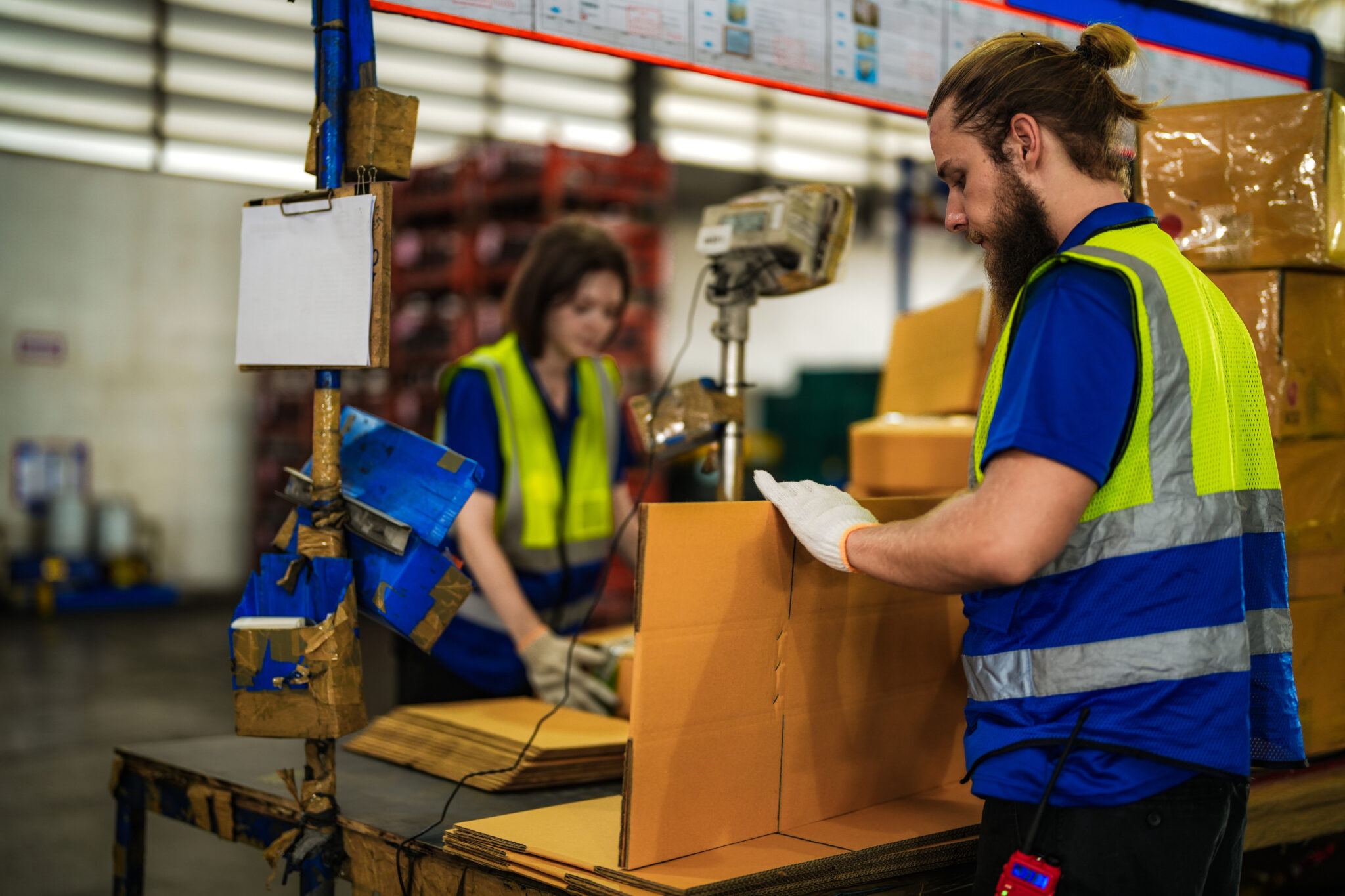
Automation of packaging processes is the key to scaling production without losing quality and control. This article will be useful for production managers, logistics managers, engineers, and entrepreneurs who want to improve efficiency with modern solutions. You will learn when to implement a Case Erector and Case Sealer, what benefits each brings, and how to calculate the return on investment.
Table of Contents
- What is a Case Erector and Case Sealer — a brief explanation
- Signs that your production needs a Case Erector and Sealer
- Is it worth investing: ROI and long-term benefits
- Conclusion
What is a Case Erector and Case Sealer — a brief explanation
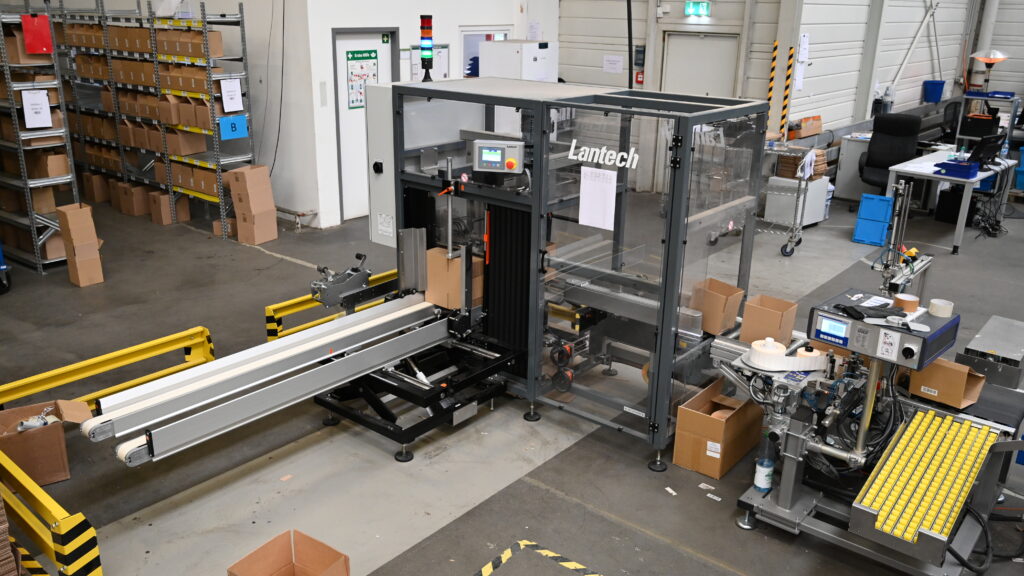
A Case Erector is automated packaging equipment used to form cardboard boxes from folded, flat blanks. The machine performs several key functions. It:
- opens a flat box,
- forms it into a three-dimensional shape,
- folds the bottom,
- and secures it, usually with tape or glue.
The result is a container ready for filling. A case erector significantly reduces the time required to assemble boxes and eliminates the risk of human error that often occurs in manual packaging. This ensures consistent quality, stability, and controlled packaging speed, even at high volumes.
A Case Sealer is a machine that seals already filled boxes. It closes the flaps of the case and seals it with tape or hot glue. There are both semi-automatic and fully automated models, depending on production needs and labor availability. These machines allow you to close a large number of boxes more efficiently than performing the task by hand, which can reduce labor costs.
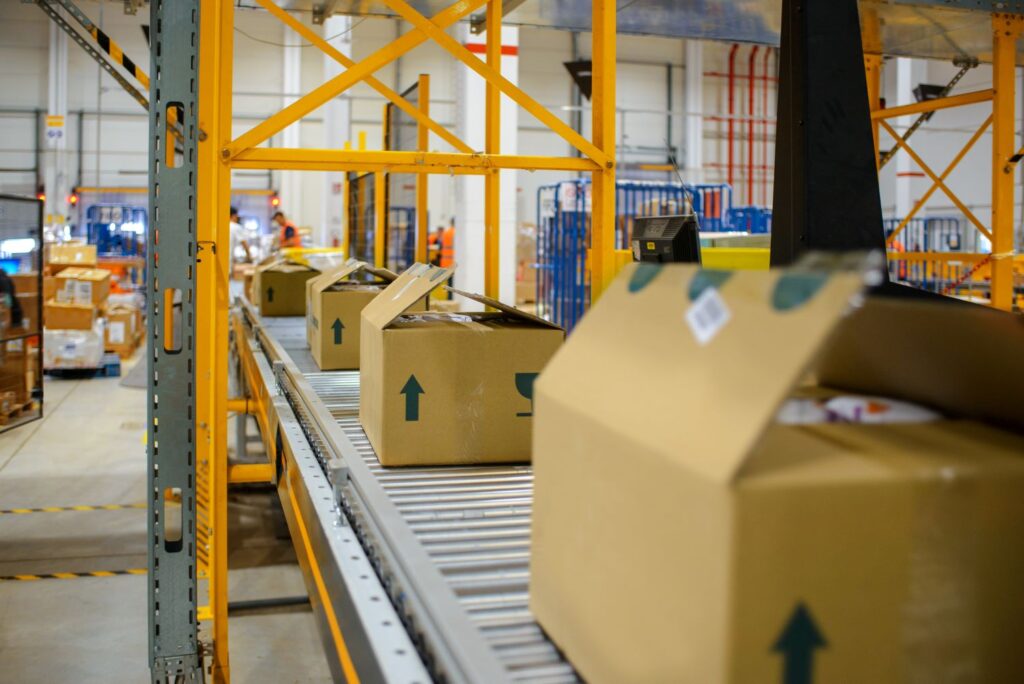
The main difference between these two types of equipment is the stage at which they operate. The Case Erector typically starts the end-of-line packaging process by forming an empty box, and the Case Sealer comes shortly after, securely sealing the already filled container. Both machines can operate separately, but in many production facilities, they are integrated into a single automated process. This approach allows you to create a continuous packaging line — the box is formed, filled with product, sealed, and fed further without stopping and with minimal human involvement.
The combined use of Case Erector and Case Sealer allows companies to scale up without the risk of losing quality or overloading staff. Thanks to automation, the company is able to control every stage of the process, avoid human error, and reduce production costs. In addition, the use of machines makes it possible to standardize the appearance of packaging, which is important for both logistics and brand perception.
Signs that your production needs a Case Erector and Sealer
How can you tell that manual packaging is no longer able to cope with increasing workloads? Here are the key signs that indicate the need to automate the packaging process:
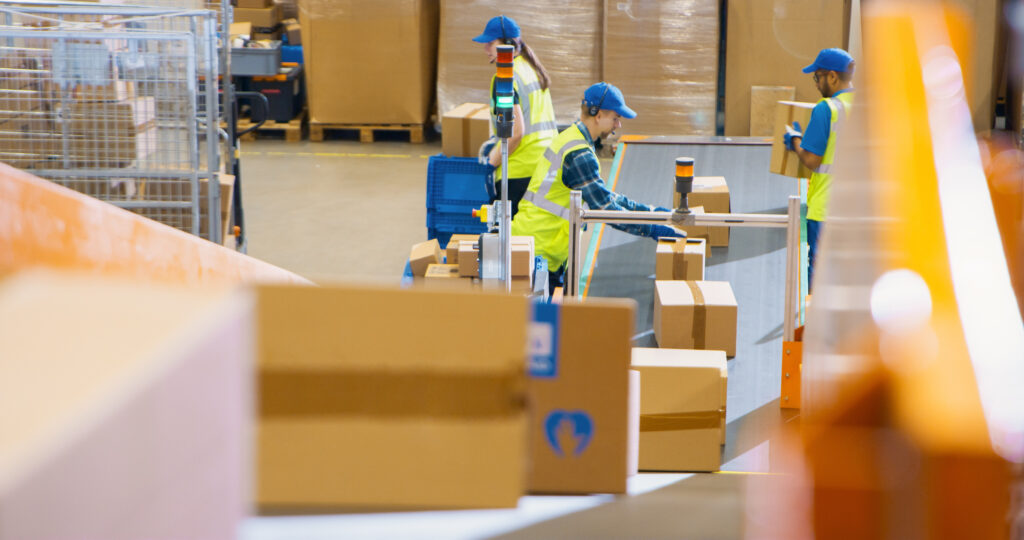
- Frequent delays due to manual packaging – If your production line regularly stands idle because employees cannot keep up with packaging goods, this is a clear indicator that manual labor is no longer sufficient for the volume. Such delays lead to reduced efficiency, wasted time, and missed delivery deadlines. Automation can stabilize the pace of production without the risk of bottlenecks.
- Growth in order volumes – Companies that are actively scaling up will sooner or later face the problem of manual packaging not keeping up with sales. If the number of orders is growing every month and the speed of packaging remains constant, this is a critical moment for investing in automated solutions. Otherwise, growth can turn into chaos in logistics.
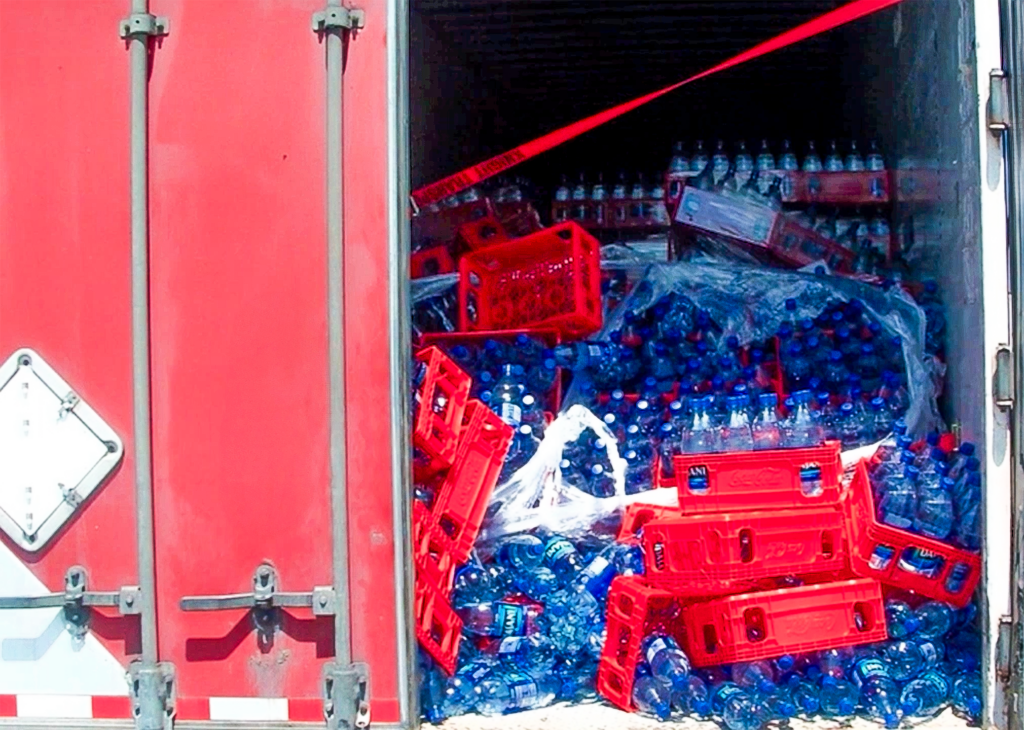
- Increase in errors and defects – Incorrectly assembled boxes, warped flaps, poorly sealed containers — all of these are the result of human error. If your support service begins to receive customer complaints due to poor-quality packaging, or if returns are increasing, it is critical to implement machines that ensure consistency and accuracy.
- Staff shortages or high turnover – In manufacturing, where there is a constant shortage of workers or a need to constantly train new ones, automation is a real solution. It reduces dependence on human resources and avoids problems with shifts or vacations. Plus, machines don’t get sick or quit.
- Desire to raise quality standards – Automatic case erectors and sealers operate with the same precision regardless of the shift, ensuring consistent packaging quality. This is especially important for products that go to large chains or require high presentation standards.
- The need to control costs – Depending on the scale, automation can reduce labor, waste, storage, and repackaging costs. The payback period for such investments is typically 36 months or less, after which the company receives a net benefit on every unit packaged.
Is it worth investing: ROI and long-term benefits
Investing in automated solutions such as a Case Erector and Case Sealer may seem expensive at first glance. But in the long run, it is a profitable solution that significantly increases production efficiency. With the right equipment, a company can not only reduce labor costs, but also reach a new level of productivity, standardization, and scalability.
The main benefits of packaging automation:
Reduced personnel costs
Automated systems allow you to reduce the number of employees on the packaging line. This means lower costs for salaries, staff training, social benefits, and administrative expenses. In some cases, one machine can replace up to three operators.
Faster packaging
The speed of the packaging process can increase by 300-1000%. This is critical for businesses that handle a large flow of orders or operate during peak periods. More orders are processed in the same amount of time, which means increased profits.
Minimization of defects
Machines perform each operation with precision — without the errors that are inherent in manual work. This improves packaging quality, enhances brand reputation, and reduces returns and complaints.
Less downtime
Automated systems operate consistently, without fatigue or malfunctions. Thanks to high repeatability and less dependence on personnel changes, the number of breaks in production is reduced.
Scalability
The company can expand its volumes without the need to hire new employees. The machines are easily integrated into existing lines and can withstand high loads, making them ideal for business growth.
Return on investment
With the right choice of equipment, accurate volume calculations, and integration into the production line, the return on investment (ROI) can be less than 36 months*. This is especially true for companies operating in a dynamic environment or planning to scale up in the near future.
Conclusion
Packaging automation is not only about savings, but also about development. Case Erectors and Case Sealers are key elements that will help stabilize production, avoid human error, and take your business to a new level of efficiency. If you recognize the signs from this article, it’s time to act.
Contact Lantech’s case handling experts to discuss upgrading your operation with the appropriate packaging equipment.
*ROI varies by machine and process. For the most accurate estimate of payback period, it is suggested that you connect with a sales representative to discuss the operation and machine set up.
FAQ
1. How does a Case Erector differ from a Case Sealer?
A Case Erector forms the box, while a Case Sealer seals it after filling. Both components work at different stages of the packaging line, but ideally in tandem.
2. Can the machines be integrated into an existing line?
Yes. This requires a technical audit to ensure compatibility in terms of speed, box format, and dimensions, but many advanced machines are designed to be integrated into an automated line.
3. How quickly does the investment pay off?
On average, less than 36 months, depending on production volumes and the degree of automation.
4. Is additional personnel required for maintenance?
In most cases, no. One trained operator is sufficient to monitor operation and restarts.