Stretch wrapping equipment plays a critical role in warehouse and manufacturing operations. It stabilizes loads, protects products in transit, and helps facilities move goods efficiently. But as production speeds increase and labor becomes harder to find, safety has become just as important as throughput and performance.
Modern stretch wrappers are no longer simple mechanical machines. They combine motion, tension, automation, and operator interaction—often in tight spaces. Without the right safety features, these systems can introduce unnecessary risk to operators, maintenance teams, and the overall operation.
This article explains the essential safety features to look for in stretch wrapping equipment, why they matter, and how they help protect people while supporting productivity and compliance.
Table of Contents
- Why Stretch Wrapping Safety Matters More Than Ever
- Emergency Stop Systems
- Physical Guarding and Safety Interlocks
- Presence Detection and Hazard Zone Monitoring
- Controlled Motion and Intelligent Stopping
- Maintenance and Compliance-Focused Safety Features
- Putting It All Together: Safety as a System
- Conclusion
- FAQs
Why Stretch Wrapping Safety Matters More Than Ever
Warehouses today face a challenging mix of higher order volumes, tighter delivery windows, and ongoing labor shortages. Operators are often expected to manage more tasks with less time and training. In that environment, equipment safety can’t rely on perfect behavior or constant supervision.
Well-designed safety features:
- Reduce the risk of injury from rotating, moving, or tensioned components
- Prevent unexpected machine motion
- Protect maintenance personnel during service
- Support compliance with OSHA, ANSI, ISO, and CE standards
- Reduce downtime caused by accidents or unsafe resets
At Lantech, safety is treated as a system-level design priority, not a bolt-on feature—an approach reflected across our stretch wrapping and case, tray and lid handling solutions.
Safety Feature #1: Emergency Stop Systems
An emergency stop (E-stop) is one of the most basic—but most critical—safety features on any stretch wrapper.
What to look for
- Large, clearly marked E-stop buttons
- Multiple E-stops positioned around the machine
- Immediate response that removes power or motion safely
Why it matters
If an operator, bystander, or maintenance technician identifies a dangerous situation, the machine must stop instantly. E-stops provide a last line of defense when something unexpected happens.
On automated or conveyorized stretch wrappers, E-stops should be accessible from multiple sides so operators don’t have to move closer to the hazard to stop the machine.
Safety Feature #2: Physical Guarding and Safety Interlocks
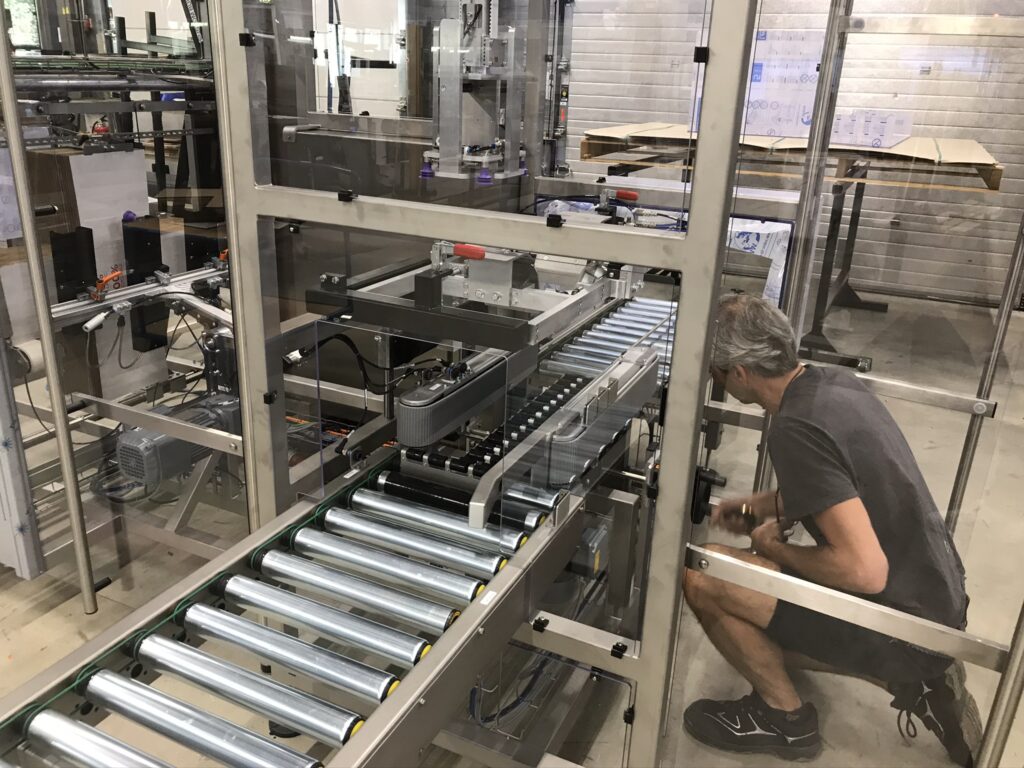
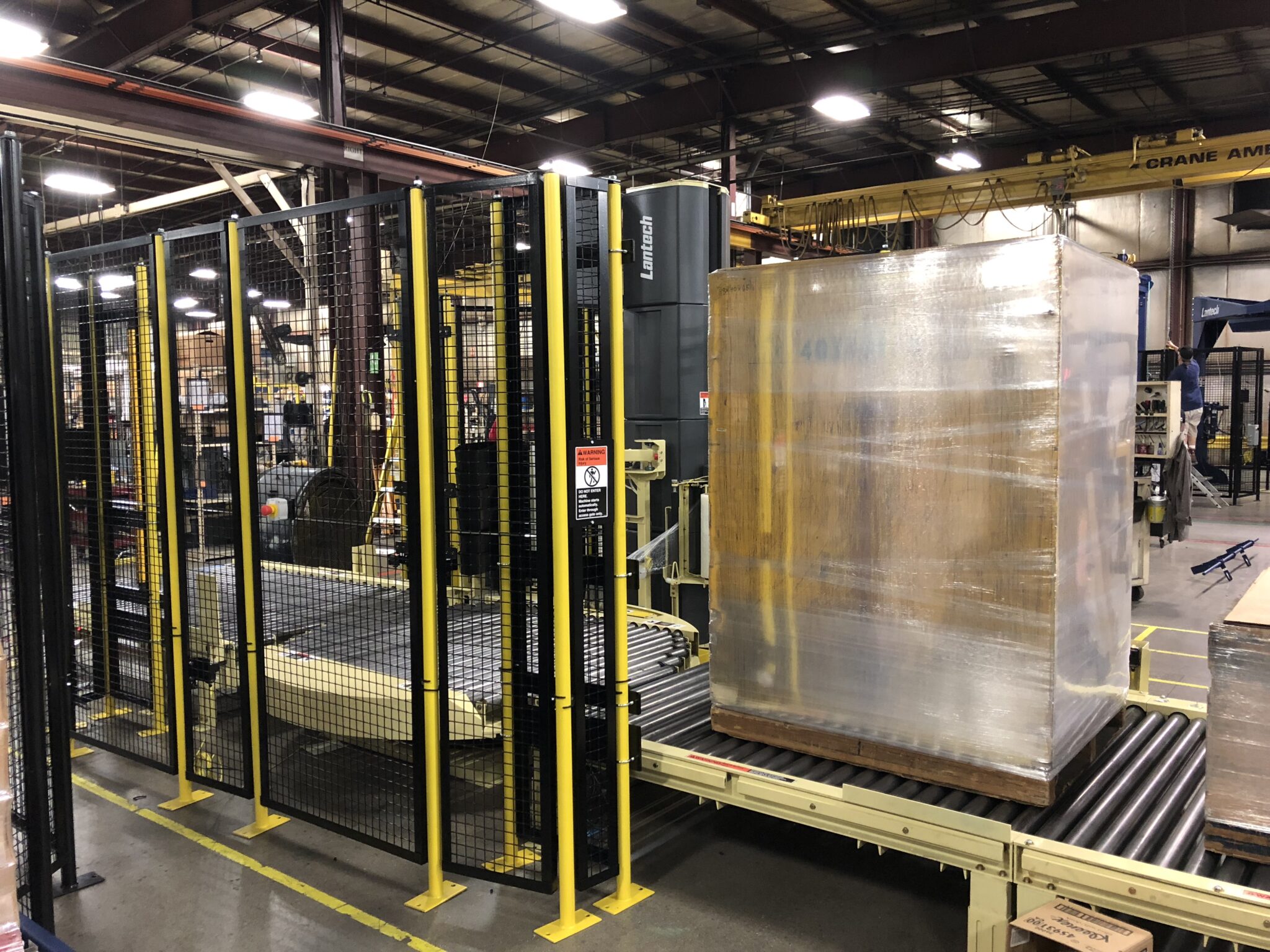
Stretch wrappers include several potential hazard zones: rotating turntables, film carriages under tension, conveyors, and moving arms. Physical guarding is designed to prevent accidental access to those areas.
What to look for
- Fixed guards around moving or rotating components
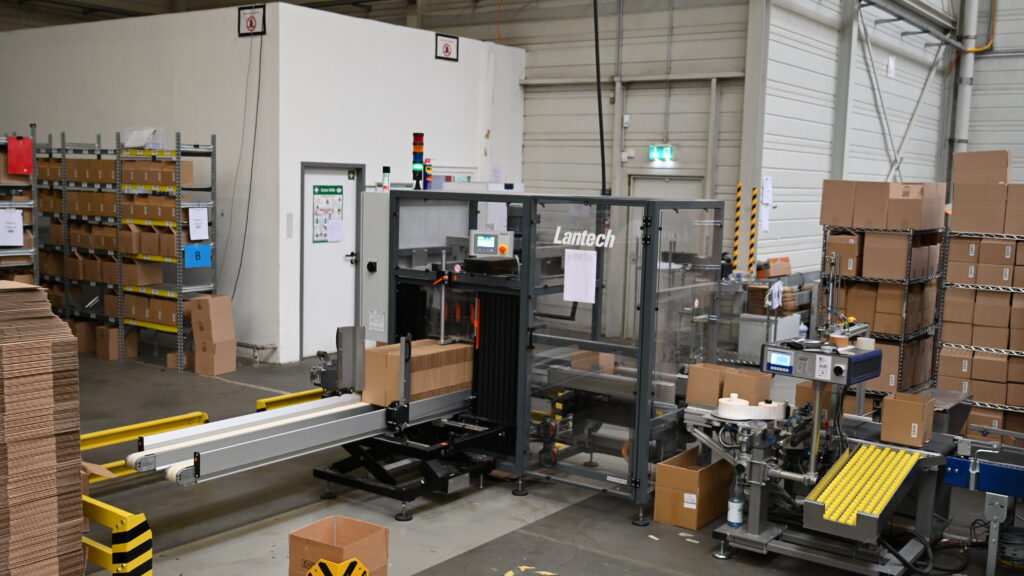
- Fenced enclosures for automatic systems
- Access doors with safety interlocks
Why it matters
Safety interlocks ensure that opening a guard or door immediately stops machine motion. This prevents operators from entering hazardous areas while the machine is still active.
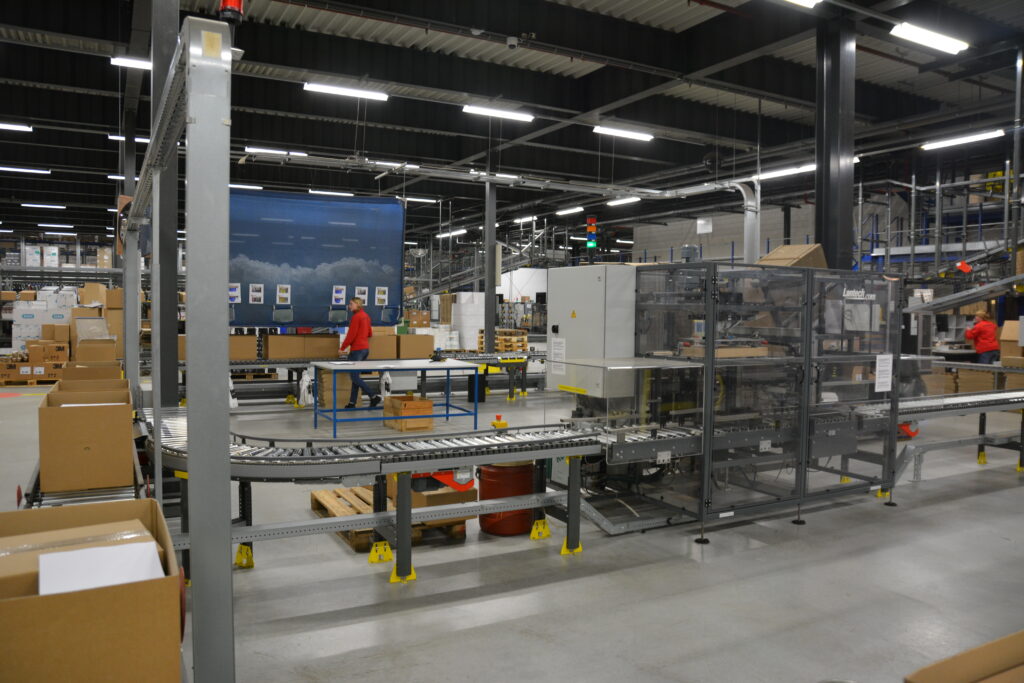
For automatic stretch wrappers integrated into end-of-line systems, guarding and interlocks are essential to separate people from high-speed motion—especially during jams or film changes.
Safety Feature #3: Presence Detection and Hazard Zone Monitoring
As stretch wrapping systems become more automated, it’s not always possible to physically guard every area. That’s where presence detection comes in.
What to look for
- Light curtains
- Laser scanners
- Safety mats in defined hazard zones
Why it matters
Presence detection systems stop the machine automatically if someone enters a dangerous area. This is especially important in facilities where forklifts, pallet jacks, or foot traffic pass near the wrapper.
For high-throughput operations, presence detection provides a balance between safety and efficiency—allowing open access when safe, and immediate stopping when it’s not.
Safety Feature #4: Controlled Motion and Intelligent Stopping
Not all safety risks come from high speed. Sudden starts, abrupt stops, or unexpected motion can be just as dangerous.
What to look for
- Soft start and soft stop functionality
- Variable speed controls
- Torque monitoring and jam detection
- Automatic shutdown during abnormal conditions
Why it matters
Controlled motion reduces surprise and gives operators time to react. Jam detection helps prevent film breaks, mechanical damage, and unsafe manual intervention.
Intelligent stopping systems protect both people and equipment, reducing the temptation for operators to bypass safeguards to keep things moving.
Safety Feature #5: Maintenance and Compliance-Focused Safeguards
Safety doesn’t stop when production stops. Maintenance and troubleshooting introduce their own risks—often when guards are open and systems are partially energized.
What to look for
- Clearly defined lockout/tagout (LOTO) points
- Safety-rated PLCs monitoring critical circuits
- Diagnostic alerts for safety faults
- Visual and audible warning indicators
Why it matters
Maintenance teams need to de-energize equipment confidently and verify that it cannot restart unexpectedly. Safety diagnostics also help identify the cause of shutdowns without encouraging unsafe resets.
Compliance with OSHA, ANSI, ISO, and CE standards isn’t just about passing audits—it’s about building consistent, repeatable safety into daily operations.
Putting It All Together: Safety as a System
The most effective stretch wrapping safety strategies don’t rely on a single feature. They combine:
- Immediate stopping capability
- Physical separation from hazards
- Intelligent detection of people and problems
- Predictable, controlled motion
- Safe maintenance access
When evaluating stretch wrapping equipment, it’s important to look beyond checklists and ask how these features work together in real operating conditions.
Conclusion
Choosing stretch wrapping equipment with the right safety features protects more than just operators—it protects uptime, productivity, and your organization’s reputation.
As warehouses continue to automate and scale, safety must remain a foundational requirement, not an afterthought. By prioritizing well-designed emergency stops, guarding, detection systems, controlled motion, and maintenance safeguards, companies can reduce risk while supporting efficient, repeatable operations.
If you’re evaluating stretch wrapping equipment, safety should be one of the first conversations—not the last.
Talk with the Lantech Pro team to review your layout, risk areas, and equipment options—so you can improve safety without sacrificing productivity.
FAQ
1. What safety features should a stretch wrapper have?
A stretch wrapper should include emergency stop buttons, physical guarding with safety interlocks, presence detection systems such as light curtains or laser scanners, controlled start/stop motion, and lockout/tagout provisions for maintenance. Together, these features help prevent injuries, reduce accidents, and ensure safe operation in warehouse environments
2. How do stretch wrapping machines prevent operator injuries?
Stretch wrapping machines prevent injuries by limiting access to moving parts, detecting when people enter hazardous zones, and stopping motion immediately when unsafe conditions occur. Features like interlocked guards, emergency stops, and controlled motion reduce risks from rotating turntables, film tension, and unexpected machine movement.
3. Are safety features different for automatic vs. semi-automatic stretch wrappers?
Yes. Semi-automatic stretch wrappers typically rely more on physical guarding, emergency stops, and controlled motion, while automatic stretch wrappers often require additional safety measures such as fencing, presence detection systems, and safety-rated controls to protect operators working near higher-speed, unattended equipment.
4. What safety standards apply to stretch wrapping equipment?
Stretch wrapping equipment commonly follows OSHA requirements in the U.S., along with ANSI, ISO, and CE safety standards depending on region. These standards address machine guarding, emergency stopping, electrical safety, and maintenance procedures to help ensure safe operation and regulatory compliance.
5. How can safer stretch wrappers improve warehouse productivity?
Safer stretch wrappers reduce downtime caused by accidents, minimize unplanned stoppages, and lower the risk of injuries that disrupt operations. When operators feel protected and machines behave predictably, workflows become more consistent, training time decreases, and overall productivity improves.
6. Why is lockout/tagout important on stretch wrapping equipment?
Lockout/tagout ensures that stretch wrapping equipment cannot start unexpectedly during maintenance or troubleshooting. Proper LOTO provisions protect maintenance personnel by allowing machines to be fully de-energized, reducing the risk of electrical shock, sudden movement, or accidental restart.
7. Do safety features affect stretch wrapper performance or speed?
Properly designed safety features do not reduce performance. In fact, modern safety systems support consistent operation by preventing jams, unsafe resets, and operator errors. Machines designed with integrated safety often run more reliably because issues are identified and addressed before they escalate.