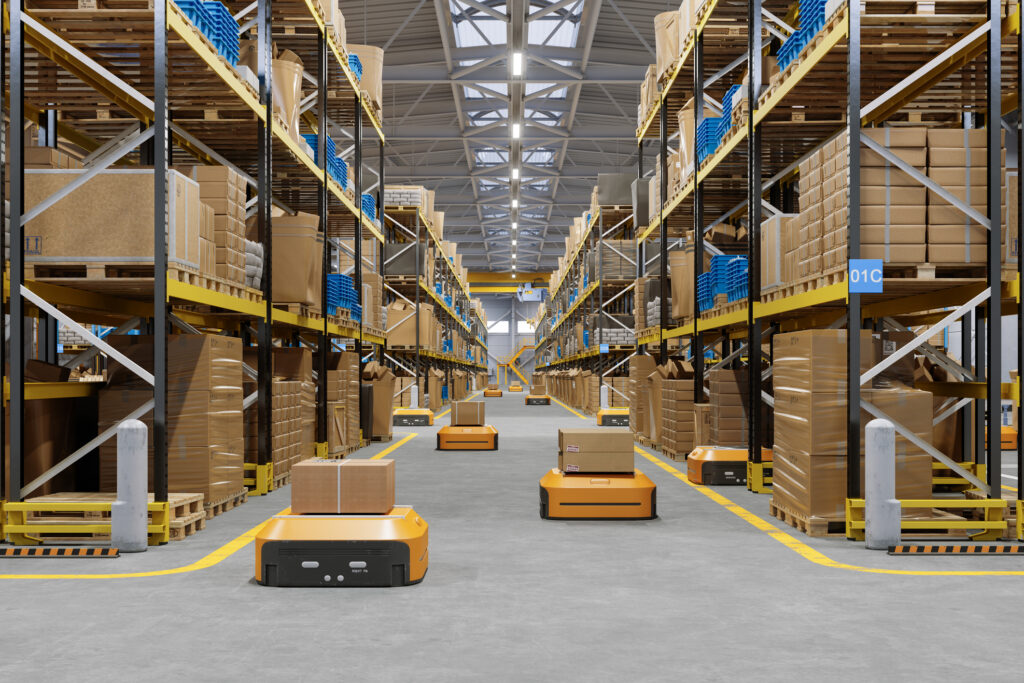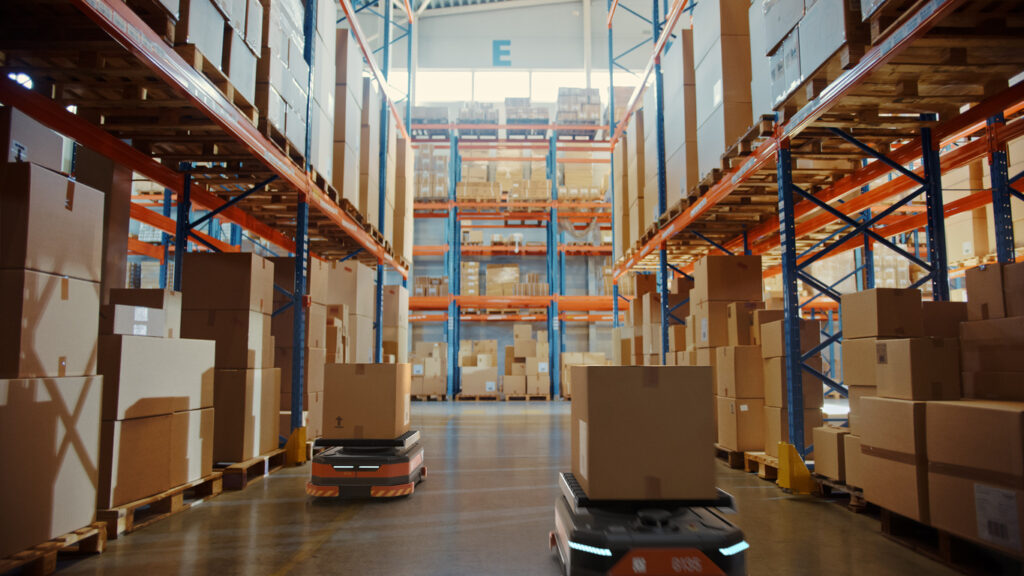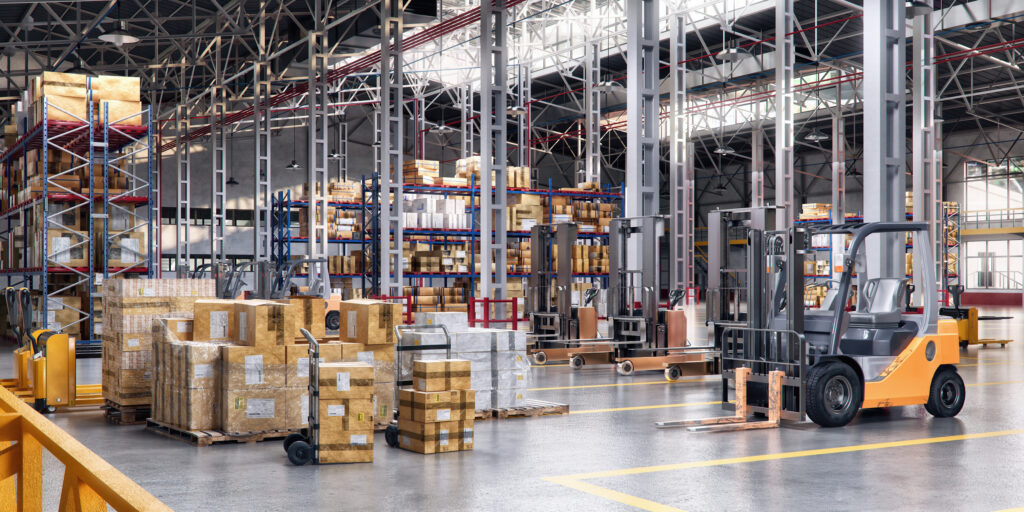
Most discussions about warehouse automation focus on what happens when systems connect well. AMRs route efficiently. AS/RS picks accurately. Product flows through a $100M facility without a human hand touching it.
Nobody plans for the pallet that tips over in the middle of it.
Pallet instability is one of the most underestimated risk factors in automated warehouse design — and load containment is the reason. When stretch wrapping is treated as a commodity step at the end of the line, the downstream consequences inside an automated facility can be severe. This post explains how proper load containment protects not just product in transit, but the AMR system moving it.
Contents
- Not All Pallet Loads Are Created Equal
- What “Load Containment” Actually Means — and Why It’s More Than a Shipping Concern
- When a Loose Load Meets an AMR
- The Containment Problem Is Solvable — With the Right Equipment
- What This Means for System Integrators
Not All Pallet Loads Are Created Equal
Automated warehouses are built to handle volume and variety. That variety can be an underestimated challenge.
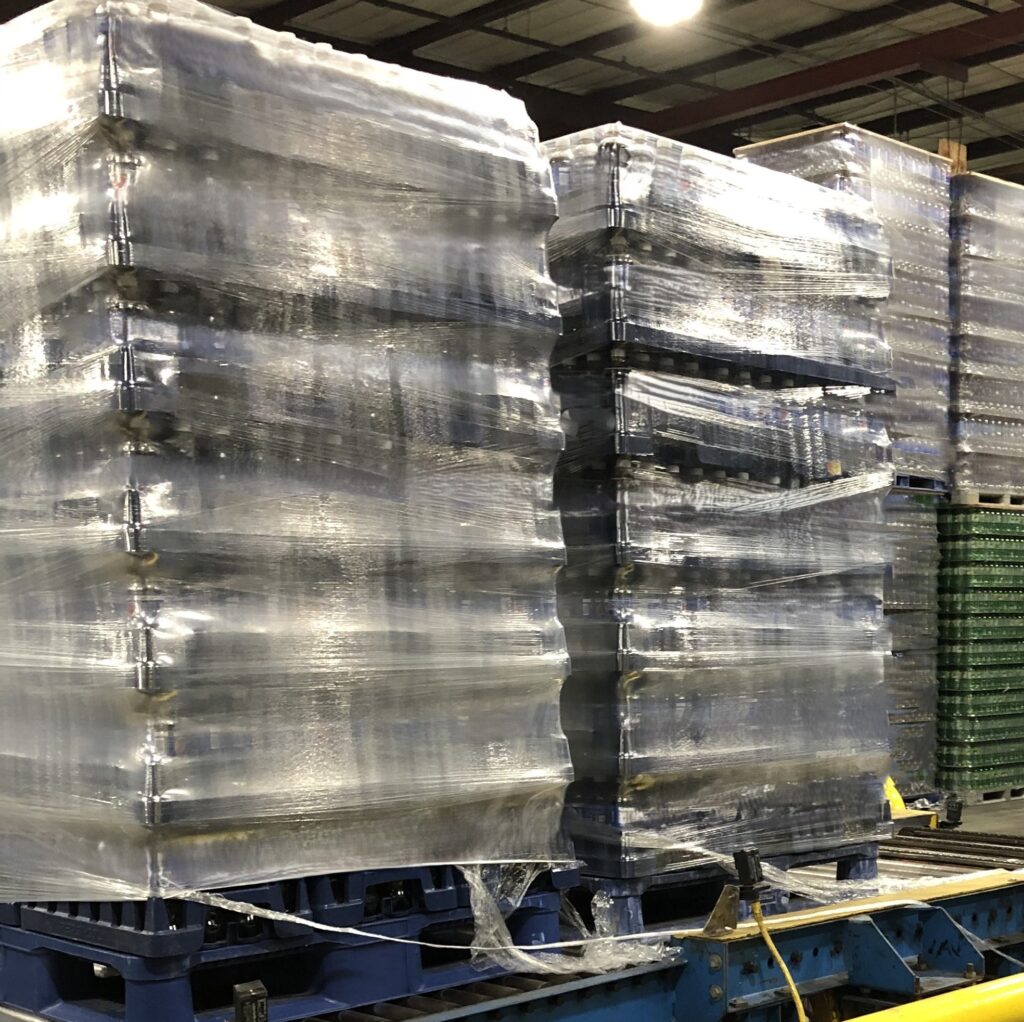
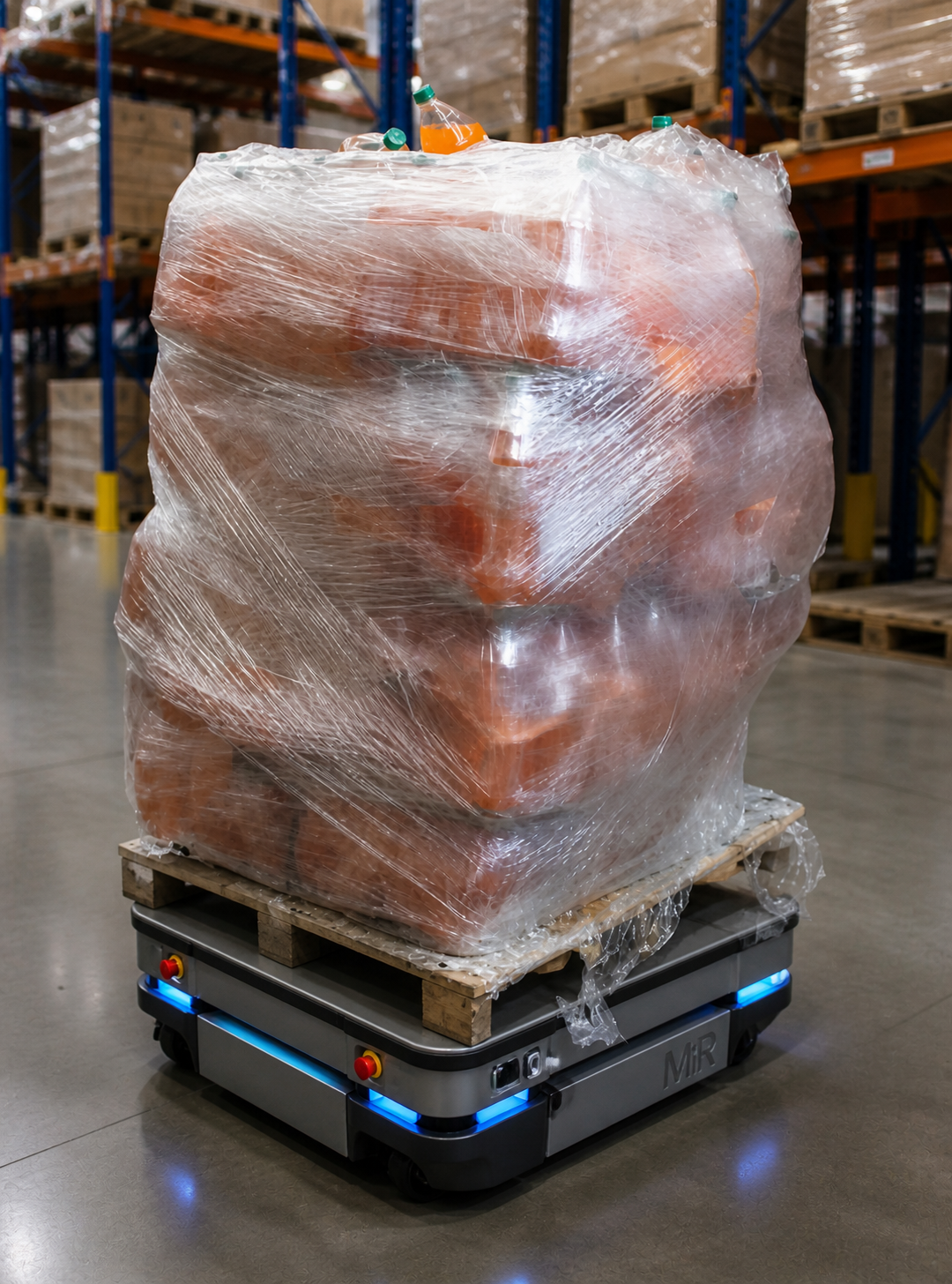
A pallet of uniform cartons is a stable, predictable unit. A pallet of shrink-bundled 2-liter bottles — unstable geometry, no shells, high containment force requirements — is something else entirely. The same automated system that moves the first load with zero issues can be severely disrupted by the second load if it hasn’t been wrapped with efficient containment force.
Lantech’s containment force guidelines reflect this directly. Very light loads — paper towel bundles, empty containers — require 2–5 lbs of containment force. Very unstable loads, like PET water pallets, require 12–20 lbs. The difference isn’t minor. Neither is the consequence of getting it wrong.
An automated warehouse typically handles dozens of SKUs. Each load type has its own containment force requirement. When a single wrap profile is applied to all of them — or when operator-dependent wrapping creates inconsistency across shifts — some loads get too little film. Others get too much. The loads that are under-wrapped are the ones that fail inside the facility, not just in transit.
What “Load Containment” Actually Means — and Why It’s More Than a Shipping Concern
Load containment is the holding force that stretch film applies to a pallet load. It’s what keeps the layers from shifting, the product from toppling, and the pallet from becoming a hazard. Containment force needs to be even, consistently — top, middle, and bottom of the load — not just adequate on average.
For decades, containment force has been discussed primarily as a transit concern: will this load survive the truck ride? That framing is accurate but incomplete.
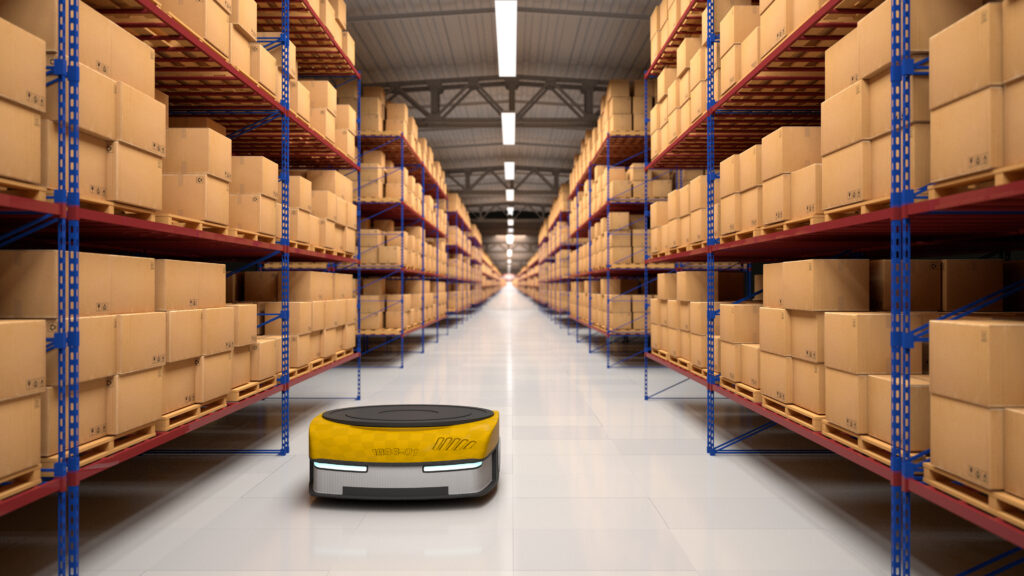
In an automated warehouse, loads are in constant motion. AMRs accelerate, decelerate, turn, and navigate around other equipment in a facility with tight tolerances. A load that carries insufficient containment force — one that might have survived a relatively smooth truck ride — can tip during an AMR’s cornering maneuver or shift enough to create a dangerous overhang. At that point, the system doesn’t just slow down. It stops. Someone has to come and clear it by hand.
Approximately 50% of in-transit product damage is caused by ineffective stretch wrapping, according to industry research across FMCG sectors. Inside an automated facility, the same root cause — inconsistent or insufficient containment force — creates disruptions that never make it into a shipping damage report, but show up clearly in unplanned downtime.
Download Resource: Lantech Guide to Effective Stretch Wrapping eBook
When a Loose Load Meets an AMR
The failure mode is specific enough to be worth describing in detail, because it’s the kind of scenario that changes how a BD engineer frames end-of-line packaging in a proposal.
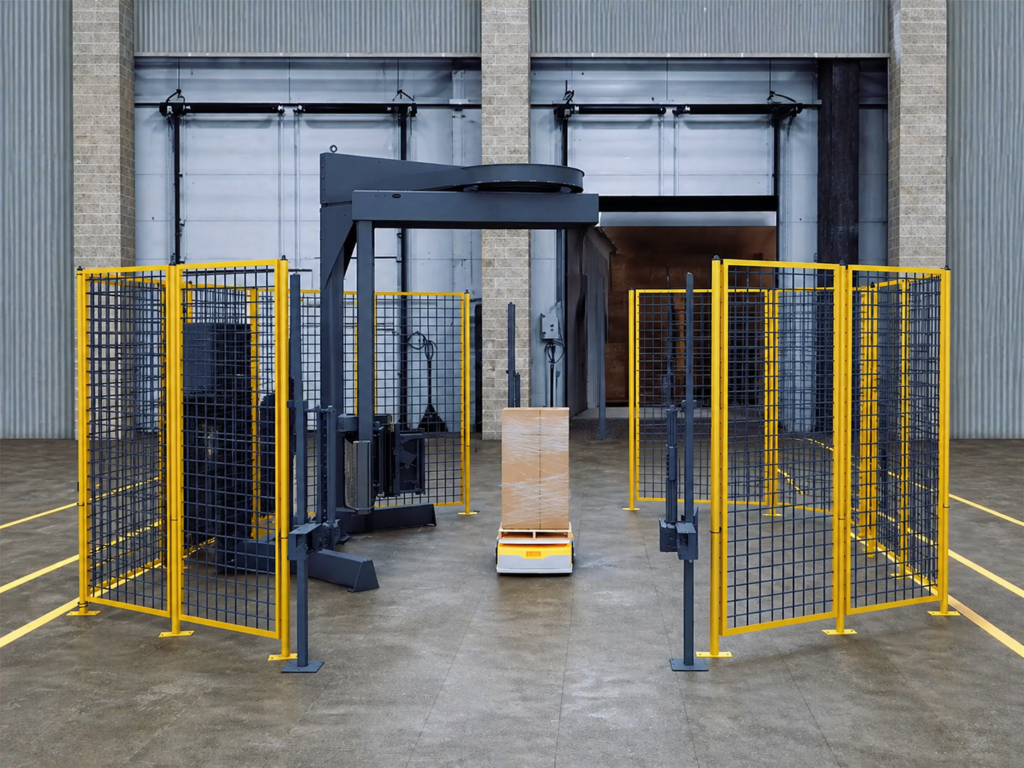
An AMR receives a pickup signal. It navigates to the stretch wrapper, takes custody of the wrapped load, and begins routing it to storage or staging. Somewhere in transit, the load shifts — either because containment force was insufficient at the bottom of the load, or because the load wasn’t properly bonded to the pallet. The product doesn’t fall immediately. But it overhangs far enough to trigger a proximity sensor on the AMR or the surrounding rack system.
The AMR stops.
If there’s an operator nearby, they address it. In a highly automated facility at full throughput, with low staffing levels by design, there may not be anyone nearby. The backlog accumulates. The WES generates an alert. The system integrator gets a call.
This is the conversation no BD engineer wants to have with a client six weeks after go-live.
The load-to-pallet bond is equally critical and equally overlooked. Stretch film wrapped down to the base of the pallet looks thorough, but it actually creates risk — forklift and AMR forks puncture the film, compromising tension and containment at the base of the load. Properly applied, the bottom film cable should be secured just beneath the pallet deck boards, above where forks would contact it. When this is done correctly, the load is locked to the pallet. When it isn’t, the product and the pallet move independently — which is exactly the scenario that causes AMR load failures mid-route.
Learn more about Lantech’s Pallet Grip® technology.
The Containment Problem Is Solvable — With the Right Equipment
What makes this a tractable problem — rather than a vague operational risk — is that the technology exists to eliminate it. The challenge is specifying equipment that delivers it consistently, across load types, without operator intervention.
Lantech’s work with a major beverage manufacturer illustrates the specific challenge of variable load types in a high-throughput environment. The facility ran multiple beverage lines with 2-liter shrink bundles — one of the most demanding load geometries in the industry. The bundles required 24–28 lbs of containment force, wouldn’t nest cleanly, and had previously been wrapped with inconsistent settings that created throughput issues and load variability. By redesigning the wrap profile — switching from 29–32 revolutions at 70 gauge film to 23–25 revolutions at 80 gauge — and activating Load Guardian® for real-time wrap control, Lantech helped the facility meet its 107 loads/hour throughput target while achieving tighter, more consistent containment force across every load.
The same principles apply in automated warehouse environments. A stretch wrapper without intelligent load profiling produces inconsistent containment across load types. A machine with Load Guardian with Ready-to-Wrap profiles eliminates the guesswork — operators select the load type, and the machine sets containment force automatically. Every load, every shift, every SKU.
What This Means for System Integrators
When a BD engineer puts together a proposal for a fully automated DC, the stretch wrapper line item rarely drives the headline conversation. But it can drive the post-go-live conversation — specifically, the one about why the system keeps stopping.
The question worth asking at the design stage is: what happens when an ineffectively wrapped load enters this system? If the answer involves an AMR halt, a manual clear, and a backlog that ripples through a $100M facility, then the stretch wrapper specification deserves more than a commodity decision.
Proper load containment isn’t just a packaging outcome. It’s a system prerequisite.
Conclusion
Pallet stability and containment force don’t belong only in a packaging conversation — they belong in the system design conversation, from the first proposal meeting. When an automated warehouse is designed to handle product variability, the stretch wrapping specification needs to match that variability.
- Containment force requirements vary significantly by load type — from 2–5 lbs for light loads to 12–20 lbs for unstable loads like PET water
Inconsistent containment force is a root cause of approximately 50% of in-transit product damage — and creates comparable disruption inside automated facilities - An ineffectively wrapped load that tips mid-route stops AMR systems, creates backlogs, and generates escalations in facilities with low staffing levels
- The load-to-pallet bond is as important as wrap coverage — film punctured by AMR forks at the pallet base compromises base containment
- Load Guardian with Ready-to-Wrap profiles eliminates operator-dependent variability, delivering consistent containment across every load type automatically
- Specifying wrapping equipment that handles load variability reliably is not an end-of-line afterthought — it’s part of what makes the automated system perform as designed
To learn more about how Lantech approaches load containment across different warehouse environments, visit lantech.com/stretch-wrappers.
FAQ
1. What is containment force and why does it matter in an automated warehouse?
Containment force is the holding pressure that stretch film applies to a pallet load, measured in pounds. Containment force requirements range from 2–5 lbs for very light loads to 12–20 lbs for very unstable loads like PET water pallets. In an automated warehouse, adequate and consistent containment force isn’t just a shipping requirement — it’s what keeps pallets stable as AMRs accelerate, turn, and maneuver through the facility. An under-wrapped load can tip or shift during AMR transit, stopping autonomous vehicles and triggering system halts that require manual intervention.
2. Can a pallet wrapped correctly for shipping still cause problems inside an automated warehouse?
Yes. Transit wrapping standards and in-facility handling requirements are related but not identical. A load that holds together on a truck — where movement is relatively smooth and forces are applied gradually — can still fail during sharp AMR maneuvers, tight turns, or acceleration events inside a DC. The physics are different. Containment force needs to be sufficient for the most demanding handling the pallet will experience, which in an automated facility is often internal movement, not the truck ride.
3. What is the most common cause of AMR load failures related to stretch wrapping?
The two most common causes are insufficient containment force at the bottom of the load, and an inadequate load-to-pallet bond. Film wrapped to the base of the pallet is vulnerable to puncture by AMR forks, which compromises tension and can cause base containment to fail mid-route. Lantech’s Pallet Grip® technology addresses this by applying a film cable just beneath the pallet deck boards — above where forks make contact — locking the load to the pallet while protecting film integrity.
4. How does Load Guardian technology help prevent load containment inconsistency across different product types?
Load Guardian with Ready-to-Wrap profiles automatically sets and maintains containment force based on the load type being wrapped. Operators select a load profile that matches their product — rather than manually adjusting wrap settings — and the machine applies the correct containment force every time. This eliminates the shift-to-shift variability that produces inconsistent loads in mixed-SKU environments. In the Lantech’s beverage manufacturer project mentioned above, activating Load Guardian was a key step in achieving consistent containment across high-difficulty 2-liter beverage loads at 107 loads per hour.
5. Why should system integrators specify containment force requirements when designing an automated DC?
Because stretch wrapping performance directly affects the reliability of every downstream system. A stretch wrapper that produces inconsistent containment force creates unpredictable load stability — which in an AMR-integrated facility translates into system halts, manual interventions, and throughput losses that aren’t captured in packaging metrics. Specifying equipment that delivers consistent, load-appropriate containment force — across all SKUs, without operator dependence — is as important to system uptime as any other component in the automation stack.